
At a glance
- Group
- Terrier
- Size
- Small
- Weight
- 15–20 lb
- Height
- 10–11 in
- Lifespan
- 13–15 years
Temperament
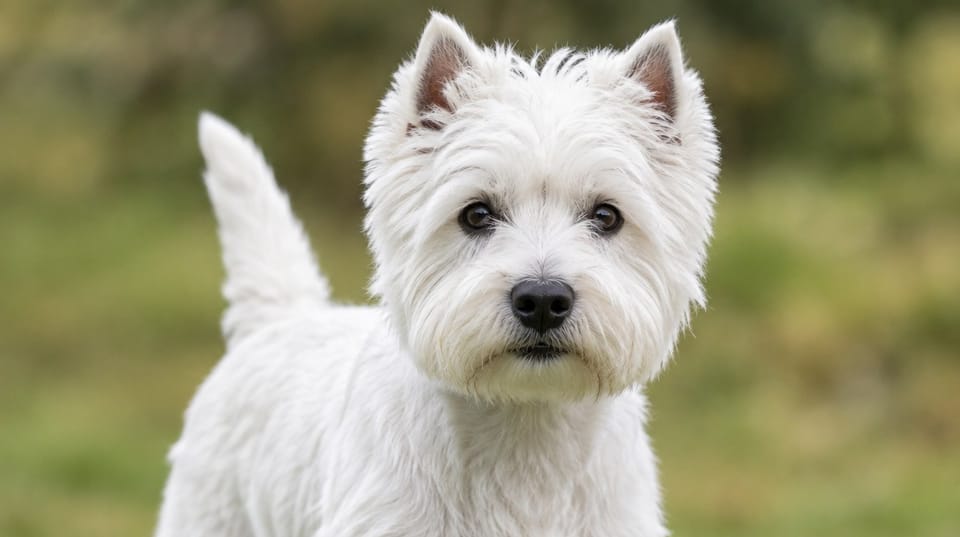
Under the white coat and the button eyes, a Westie is a working terrier, and he would like you to remember it. He was bred in the Scottish Highlands to go after foxes, badgers and rats among the rocks, alone and without waiting for instructions. What you get in your living room is a small, sturdy, cheerful dog with a great deal of self-belief.
Westies are happy dogs. They are playful well into old age, friendly with visitors and fond of their families without being clingy. A Westie likes a lap for ten minutes and then has things to do. That independence makes him easier to leave for a few hours than many small breeds.
Now the hard parts. He barks, and he has a sharp, carrying voice. Doorbells, delivery trucks, squirrels and dogs on television all get a comment. He also digs. Flower beds and lawns are fair game, and a Westie who smells a mole will excavate with real purpose.
His hunting instinct is strong. He will chase squirrels, rabbits and cats, and small pets such as hamsters and guinea pigs are not safe with him. Some Westies live peacefully with a cat they grew up with, but do not count on it. He is good with sensible children and does not put up with being pulled about. He may stand his ground with other dogs, including much bigger ones.
Exercise and activity
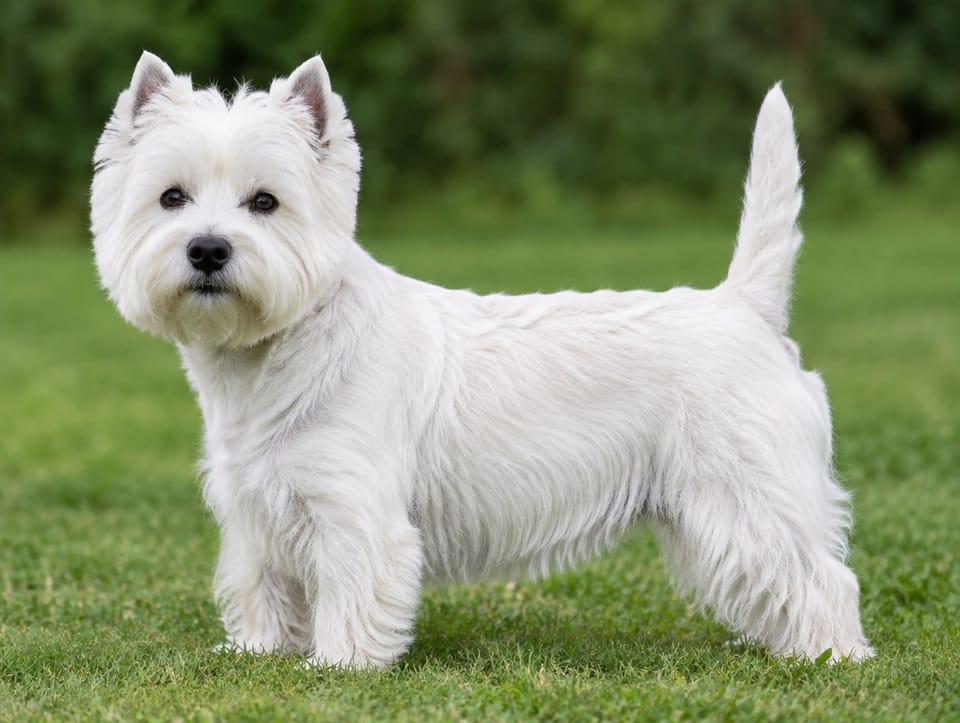
A Westie needs 45 minutes to an hour of activity a day. Two walks of 20 minutes and a lively game in the yard suit most adults. He is tougher than he looks and will happily walk several miles.
Let him use his nose and his brain. Hide treats around the yard, play tug, throw a ball, or try earthdog trials, where terriers follow a scent through a tunnel. A sandbox where he is allowed to dig can save your garden. Bury a toy in it and praise him for digging there.
Keep him on a leash anywhere that is not fenced. When a Westie sees something small run, he goes, and he does not hear you calling. Check that your fence reaches the ground with no gaps, since he can dig under a loose one.
He adapts well to apartment life if he gets his walks. The barking is the thing to manage when you share walls.
Grooming and shedding
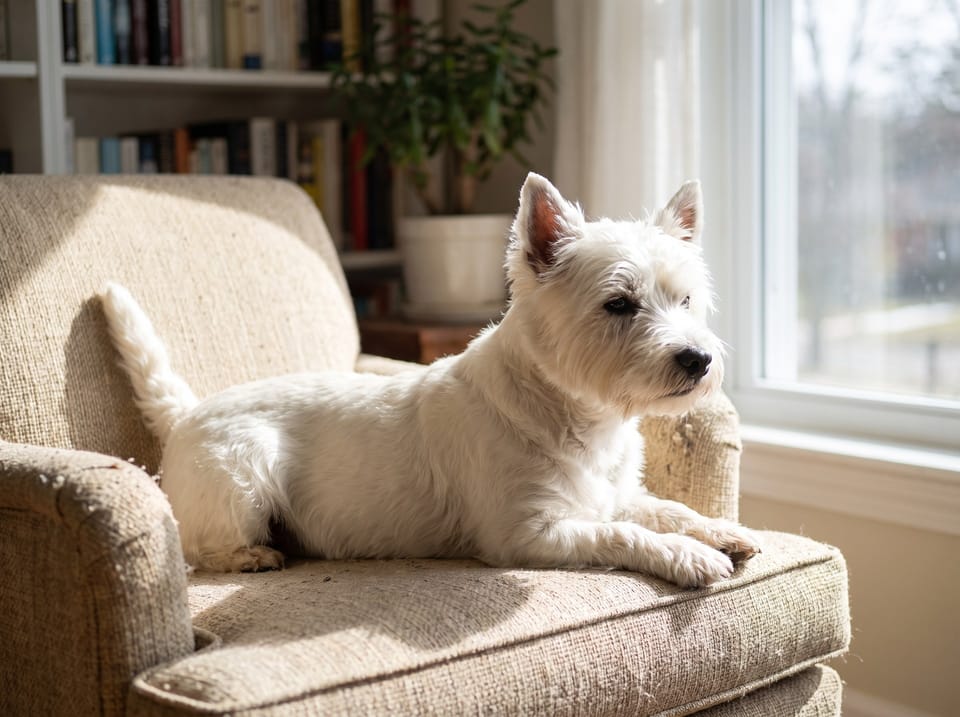
The Westie has a double coat: a hard, straight outer coat about two inches long over a soft undercoat. He sheds only lightly, and most of the loose hair stays in the coat until you brush it out.
Brush and comb him two or three times a week, about ten minutes each time, to prevent tangles and lift out dead hair. Most pet Westies are clipped by a groomer every four to six weeks. Show dogs are hand-stripped, which means the dead outer coat is plucked out to keep it harsh and bright. Clipping is easier and softens the coat over time, which does not matter for a pet.
White dogs show dirt, but the harsh coat cleans up better than you would think. Let mud dry and brush it out. Bathe him about once a month, and no more often unless your vet suggests it, because frequent washing can dry out skin that is already sensitive.
Wipe his face and beard after meals. Check his ears weekly, trim his nails every three to four weeks and brush his teeth several times a week.
Training
Westies are smart and learn quickly when there is something in it for them. They are also terriers, which means they were bred to make their own decisions. He will weigh up your request against whatever else is on offer. If the other thing is a squirrel, you will lose.
Keep training short, upbeat and well paid. Five to ten minutes with small treats or a favorite toy works far better than long drills. He gets bored with repetition, so change the exercise often. Do not get into a battle of wills with a terrier. Shouting and force make him dig in.
Work on "quiet" from the start. Reward him for stopping when asked, and do not shout over him, since he takes that as joining in. Teach a solid "leave it" and "drop it" as well. Both are useful with a dog who picks up everything he finds.
Socialize him early with people, calm dogs and handling by a groomer. Get him used to the clippers, the dryer and having his feet held while he is small.
A Westie is a reasonable choice for a first-time owner who has patience and a sense of humor. He forgives mistakes and bounces back fast.
Health watchlist
Westies commonly live 13 to 15 years. The health problem you are most likely to meet is skin disease. The breed is strongly prone to allergic skin disease, called atopic dermatitis, which causes itching, red skin, greasy coat and repeated ear and skin infections. It tends to start in young adults and needs managing for life, and the cost adds up.
Several other conditions are linked to the breed. Craniomandibular osteopathy, sometimes called "lion jaw," is an overgrowth of the jaw bones in puppies that makes chewing painful. A DNA test for it exists. Loose kneecaps occur, as does a hip condition of young small dogs called Legg-Calve-Perthes disease, in which the top of the thigh bone breaks down. Dry eye and cataracts are seen.
In older dogs, a scarring lung disease known as pulmonary fibrosis, or "Westie lung," is found in this breed more than in any other. It causes a cough and shortness of breath that slowly get worse.
The West Highland White Terrier Club of America recommends that breeding dogs have their kneecaps, hips and eyes evaluated, along with the test for craniomandibular osteopathy. Ask for the results, and ask plainly about skin problems in the parents and grandparents.
Talk to your vet at the first sign of persistent scratching, and about anything else that worries you.
Is this breed right for you?
A great fit if
- you want a small dog who is sturdy, cheerful and full of character
- you live in an apartment or a house and can give two walks a day
- you like a dog with some independence
- you will keep up with brushing and regular trips to the groomer
- you find terrier stubbornness funny
Think twice if
- you need a quiet dog
- you keep rabbits, hamsters or other small pets, or a cat who is not used to dogs
- you are proud of your flower beds
- ongoing vet bills for skin trouble would be hard to manage
- you want a dog who can be trusted off the leash
Similar breeds
 Miniature SchnauzerA bright, sturdy, low-shedding small dog with a big bark that needs regular professional grooming.
 Yorkshire TerrierA tiny, bold, barely shedding terrier who loves his person and needs daily coat care.
 Bichon FriseA happy, gentle, low-shedding small dog who loves everyone, hates being alone and needs constant grooming.