
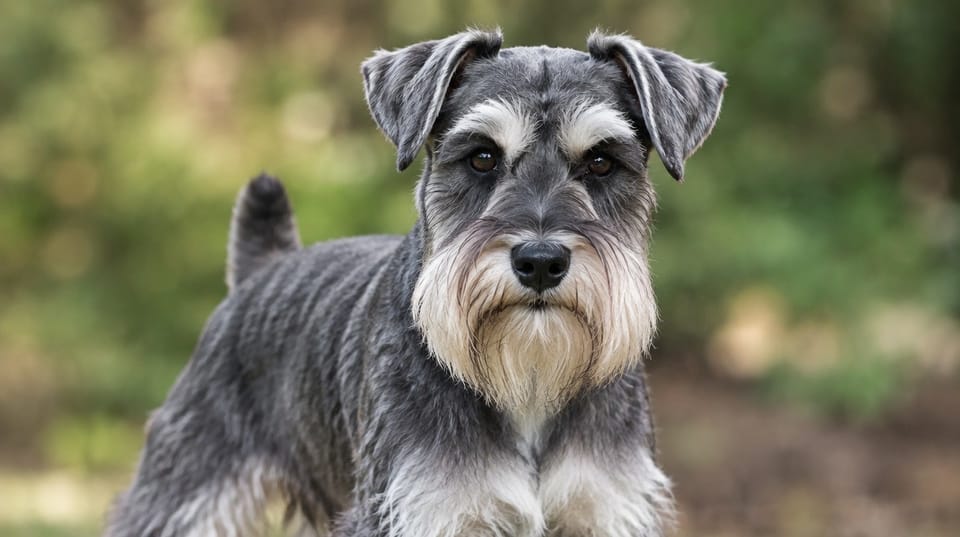
At a glance
- Group
- Terrier
- Size
- Small
- Weight
- 11–20 lb
- Height
- 12–14 in
- Lifespan
- 12–15 years
Temperament
The beard and eyebrows make a Miniature Schnauzer look like a stern old professor. The dog underneath is closer to a class clown. He is bright, busy and sociable, and he wants to be part of whatever you are doing, whether that is cooking, gardening or answering the door.
Mini Schnauzers were bred on German farms as ratters and all-purpose yard dogs. They are classed as terriers, but they are less scrappy and more people-focused than most of that group. A Mini bonds with the whole family, likes to be in the same room as you, and is usually up for a game. He is sturdy enough to play with children and small enough to live anywhere.
He is also a first-rate alarm system, and that is the first hard part of the breed. Mini Schnauzers bark. They bark at the doorbell, at footsteps in the hall, at a leaf blowing past the window, and sometimes to tell you they are bored. You can manage it with training, but you will not get rid of it.
With strangers he is alert at first and friendly once introduced. With other dogs he is generally fine, though some are bossy. The ratting instinct means small pets such as hamsters and rabbits are not safe with him, and he will chase squirrels with total commitment.
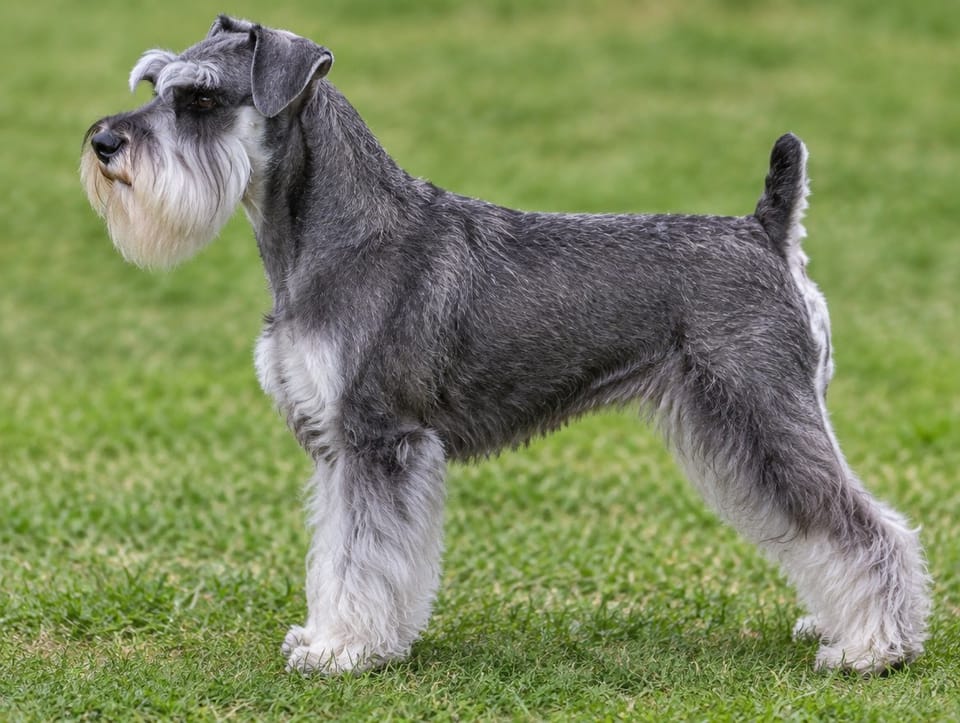
Exercise and activity
A Mini Schnauzer needs about 45 minutes to an hour of activity a day. Two brisk walks and a play session cover it for most adults. He is adaptable: happy with a city walk on weekdays and a three-mile hike on Saturday.
He needs to use his head as much as his legs. Minis are quick, agile and keen, and they do well in agility, rally, obedience and earthdog events. At home, teach tricks, hide treats around a room or use a puzzle feeder. Ten minutes of that takes the edge off better than an extra lap around the block.
Keep him on a leash or inside a fence. A Mini who spots a squirrel or rabbit will go after it, and his recall tends to vanish at that moment.
He copes with most weather. His coat gives moderate protection, though a clipped dog may want a sweater in a hard winter, and in summer heat you should walk early or late like you would with any dog.
This is one of the better breeds for an apartment in terms of size and exercise. The barking is the catch.
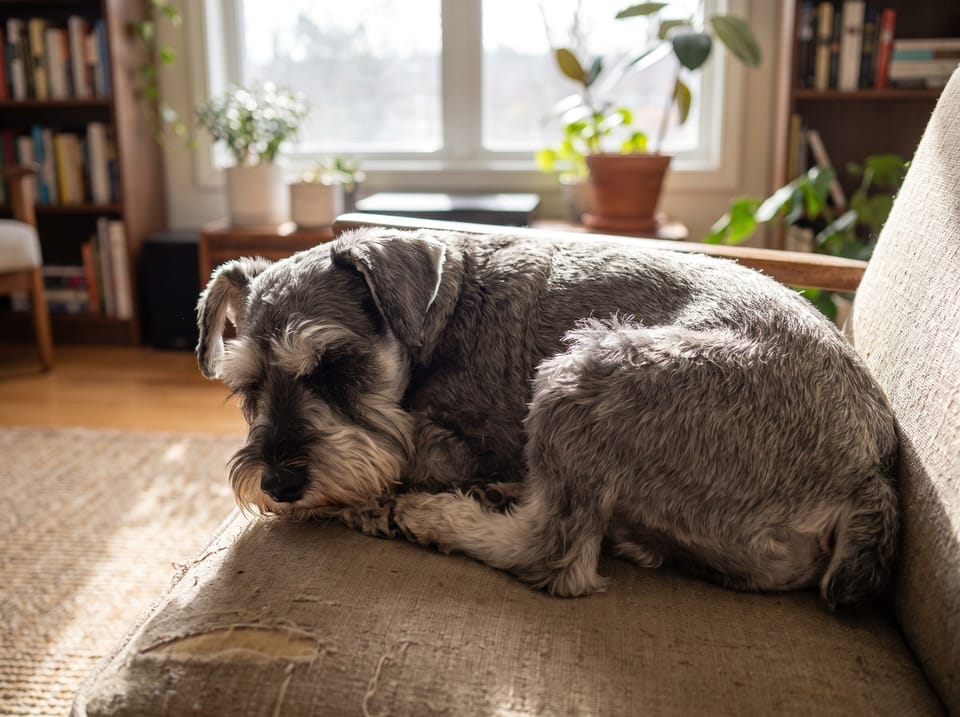
Grooming and shedding
Mini Schnauzers shed very little. The coat is a wiry outer layer over a soft undercoat, and loose hair mostly stays in the coat until it is brushed or clipped out. That is a real plus if you dislike hair on the furniture. No dog is truly allergen-free, so if someone in your home is allergic, spend time with the breed before deciding.
The trade-off is the second hard part: the coat takes work and money. Most pet Minis are clipped by a professional groomer every five to eight weeks, and you should budget for that for the life of the dog. Show dogs are hand-stripped instead, which keeps the coat hard and wiry, but it is time-consuming and few pet owners do it.
Between appointments, brush and comb two or three times a week, paying attention to the beard, leg furnishings and underarms, where mats form. Wipe and comb the beard after meals. It collects food and water and gets smelly if ignored.
Trim nails every three to four weeks, check ears weekly and brush teeth daily if you can. Small breeds are prone to dental disease.
Training
Minis are smart and they like to please, which is not always true of terriers. They learn quickly, enjoy an audience, and can be trained to a high standard by a first-time owner who is consistent.
They also get bored with repetition. Keep sessions short, change the exercise often, and reward generously. If you drill the same thing 10 times, expect him to invent a variation.
Put the barking on your training list from week one. Teach a "quiet" cue, reward him for looking at you when he hears a noise, and manage what he can see from windows. Do not shout at him to stop. To a Schnauzer that sounds like you are joining in.
Work on coming when called early and often, and be realistic about it around wildlife. Socialize him with plenty of people and calm dogs while he is young so that his natural watchfulness does not turn into suspicion or snappiness.
Use small treats and count them. This breed has particular reasons to stay lean and to avoid rich, fatty food, which brings us to health.
Health watchlist
Miniature Schnauzers are generally sturdy and long-lived, commonly reaching 12 to 15 years. The breed does have some well-known tendencies.
Many Minis have high levels of fat in the blood, and the breed is prone to pancreatitis, a painful inflammation of the pancreas. Diet matters for this breed, so ask your vet what and how much to feed, and keep table scraps and fatty treats off the menu.
Bladder stones are common. So is diabetes in middle-aged and older dogs. Tell your vet if you notice changes in how much your dog drinks or how often he urinates.
Inherited eye problems occur, including cataracts and progressive retinal atrophy, which causes gradual loss of sight. Heart conditions are seen in the breed as well. Some Minis get small bumps along the back, sometimes called schnauzer bumps.
The American Miniature Schnauzer Club recommends that breeding dogs have a cardiac exam and an eye exam by a veterinary ophthalmologist. Ask the breeder for those results and ask about pancreatitis, stones and diabetes in the family line.
Minis come in salt and pepper, black and silver, and solid black. Be wary of breeders charging extra for "rare" colors or for "teacup" or "toy" sizes, which are not part of the breed standard.
Talk to your vet about diet, weight and what screening makes sense as your dog ages.
Is this breed right for you?
A great fit if
- you want a small, sturdy, low-shedding dog with plenty of personality
- you can give 45 to 60 minutes of exercise a day
- you like training and want a dog who enjoys it too
- you live in an apartment or house and want a dog who adapts to both
- you want a dog who will let you know when someone is at the door
Think twice if
- you need a quiet dog
- you do not want to pay a groomer every five to eight weeks
- you keep rabbits, hamsters or other small pets
- you like sharing your dinner with the dog
- you want a dog you can trust off the leash anywhere
Similar breeds
 West Highland White TerrierA sturdy, cheerful, self-assured little terrier who barks, digs, chases and is prone to itchy skin.
 Yorkshire TerrierA tiny, bold, barely shedding terrier who loves his person and needs daily coat care.
 Bichon FriseA happy, gentle, low-shedding small dog who loves everyone, hates being alone and needs constant grooming.