
At a glance
- Group
- Non-Sporting
- Size
- Large
- Weight
- 40–70 lb
- Height
- 22–27 in
- Lifespan
- 10–18 years
Temperament
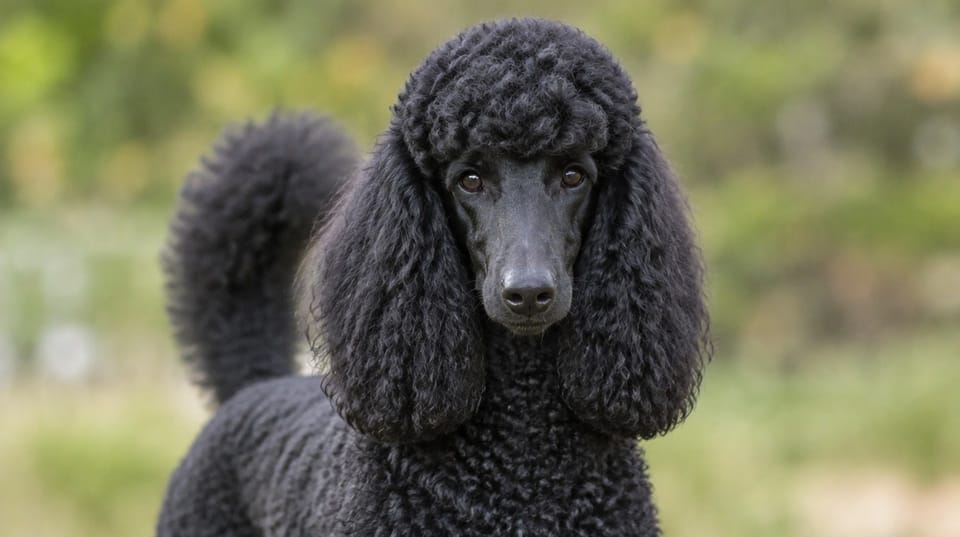
This guide is about the Standard Poodle, the largest of the three sizes. The Miniature and the Toy are the same breed in smaller bodies and share the same coat and the same quick, people-centered temperament.
Forget the show-ring haircut for a moment. Under it is an athletic, clever retriever. The Poodle began as a water dog, bred to fetch ducks. Living with a Standard means living with a dog who watches you closely, learns your routine within days and often seems to know what you are about to do before you do it.
Poodles are affectionate and funny with their own family and good with children. With strangers, many are polite but reserved at first. They are alert and will tell you when someone is at the door, and some will tell you about the neighbor's cat and a passing van as well. Barking is something to manage from the start.
They are sensitive. A Poodle notices raised voices and tension in the house and can become anxious in a chaotic home. He also needs company. This is not a dog who is content in the yard by himself, and long days alone often lead to barking or distress.
Exercise and activity
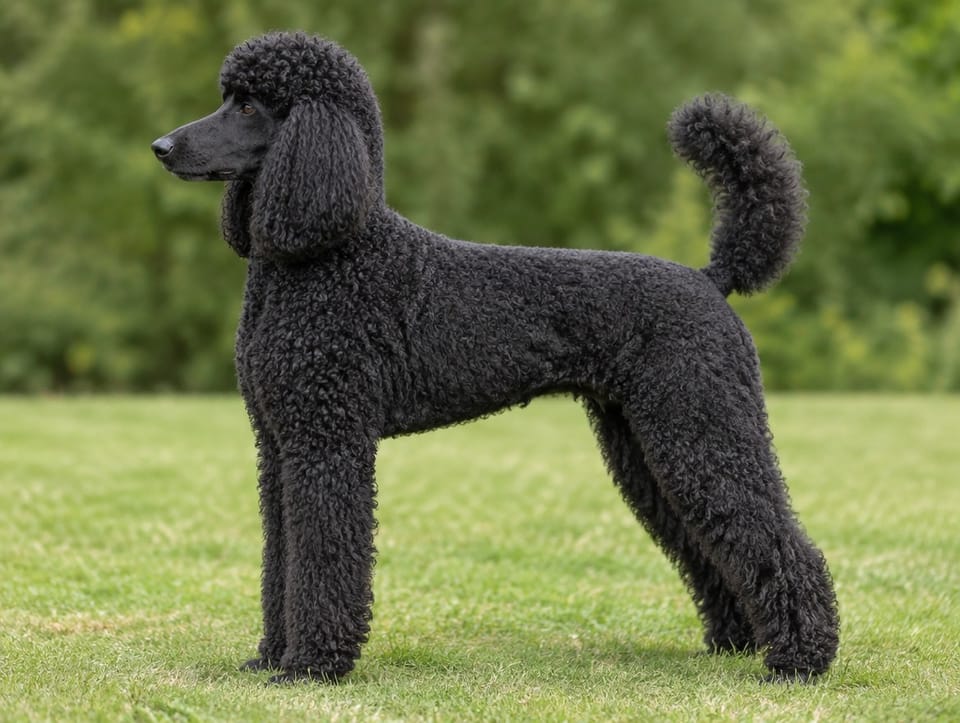
A Standard Poodle needs about 60 minutes of exercise a day, and he will happily take more. Brisk walks, running off the leash in a safe place, fetch and swimming all suit him. Most Standards love water and many are keen, natural retrievers. Once fully grown they make good jogging and hiking partners.
Exercise for the mind matters just as much with this breed. A bored Poodle is inventive, and you will not enjoy what he invents. Build in 10 to 15 minutes a day of training, puzzle feeders, scent games or learning a new trick. Poodles do very well at agility, obedience and other dog sports, and many owners find a weekly class keeps their dog noticeably calmer.
Indoors, a Standard who has had enough to do is calm and tidy, which is why some live happily in apartments in spite of their size. That only works if the daily exercise really happens.
Keep exercise gentle for growing puppies, and ask your vet when to increase it. Because bloat is a risk in the breed, ask too about timing meals around vigorous exercise.
Grooming and shedding
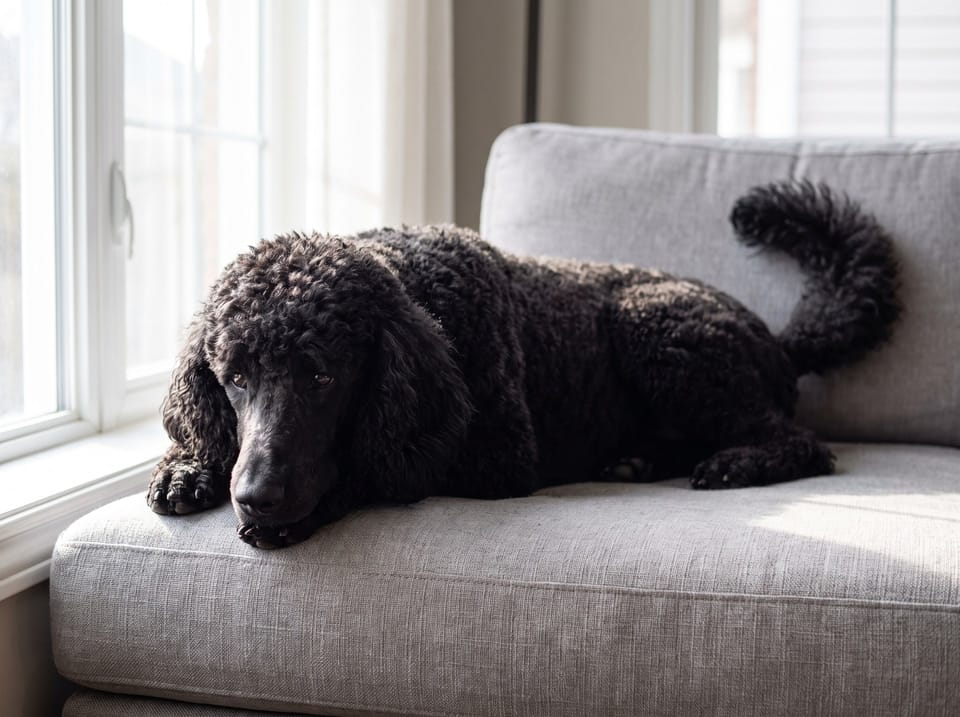
The good news first. Poodles shed very little. The coat is a single layer of tight curls, and loose hair gets caught in the curls and stays there until it is brushed out. Many people with allergies do better with Poodles than with other breeds. No dog is completely allergy-free, though, so spend time around Poodles before you commit if allergies are the reason you are choosing one.
Now the hard part, and it is a big one. Hair that does not fall out keeps growing and tangles. A Poodle coat that is neglected mats tightly against the skin, which is painful and often means shaving the dog down. Grooming is not optional with this breed, and it lasts the dog's whole life.
Most pet owners keep the coat in a short, simple clip. Even so, plan on:
- a professional groom, or clipping at home, every four to six weeks
- brushing right down to the skin two or three times a week in a short clip, and daily if you keep the coat longer
- checking the ears weekly, since hair grows inside the ear canal and the long ear flaps hold moisture
- nails every three to four weeks and teeth brushed several times a week
Groomer visits for a large dog every month or so add up to a real ongoing cost. Find out local prices before you decide. Some owners learn to clip at home, which takes practice and decent equipment.
Start handling your puppy's feet, face and ears from the first week, and take him to the groomer young, so that it becomes routine.
Training
Poodles are among the most intelligent and trainable of all breeds. A Standard often understands a new cue within a handful of repetitions, and he enjoys the work. For a first-time owner, that makes him a rewarding dog to teach.
The same brain has a catch. He learns what you did not mean to teach just as fast. If barking gets your attention, he will bark. If pulling on the leash gets him where he wants to go, he will pull. Be clear and consistent from the first day.
Use rewards, praise and play, and keep your voice calm. Poodles are sensitive and do badly with harsh handling. A sharp correction can make one worried and reluctant to try. Keep sessions short and varied, five to ten minutes at a time, because he gets bored with drilling the same thing.
Put early effort into:
- Quiet on cue. Reward silence, and do not respond to demand barking.
- Being alone. Build up time by himself in small steps from puppyhood, starting with a few minutes.
- Socializing. Introduce him to plenty of people, dogs and places so that natural reserve does not turn into shyness.
Health watchlist
Poodles often live long lives, and the range for the breed is wide, about 10 to 18 years. Standards, as the largest size, tend to fall in the lower part of that range, while Miniatures and Toys often live longer.
Standard Poodles are prone to hip dysplasia, where the hip joint forms poorly, and to several inherited eye conditions. Two problems are particularly associated with Standards. Addison's disease is a disorder of the adrenal glands. Sebaceous adenitis is an inflammatory skin disease that causes scaling and hair loss. Bloat, in which the stomach fills with gas and can twist, is a life-threatening emergency that Standards are more likely to experience than the smaller sizes. Epilepsy and a bleeding disorder called von Willebrand's disease also occur in the breed.
Responsible breeders screen their dogs. For Standards, the Poodle Club of America recommends a hip evaluation and a yearly eye examination by a veterinary ophthalmologist, and many breeders add tests for thyroid, heart or sebaceous adenitis. Ask to see the results for both parents, and ask how long the dogs in the pedigree have lived.
Talk to your vet about what to watch for in your own dog, including the signs of bloat.
Is this breed right for you?
A great fit if
- you want a dog who sheds very little
- you enjoy training and want a bright, responsive partner
- you are active and can give an hour of exercise plus some brain work every day
- someone is home for much of the day
- you have the time and budget for regular grooming
Think twice if
- you want a low-maintenance coat, because this is one of the most demanding
- monthly grooming costs would be a strain
- the dog would be alone for a full working day
- your household is loud and unpredictable
- you need a quiet dog and are not prepared to train for it
Similar breeds
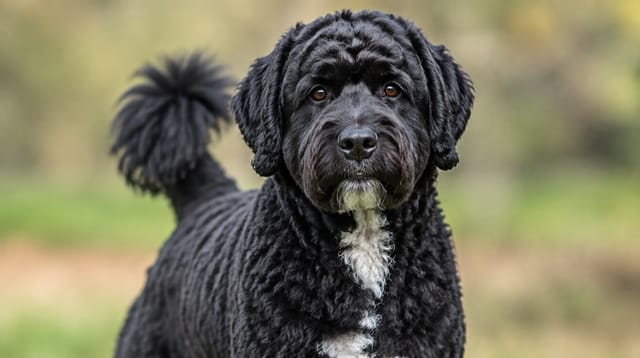 Portuguese Water DogA tireless, clever, low-shedding water dog that needs hard daily exercise and regular clipping.
 Bichon FriseA happy, gentle, low-shedding small dog who loves everyone, hates being alone and needs constant grooming.
 HavaneseA cheerful, sociable small companion that suits apartments and first-time owners but hates being left alone.