
At a glance
- Group
- Toy
- Size
- Toy
- Weight
- 4–7 lb
- Height
- 7–9 in
- Lifespan
- 12–15 years
Temperament
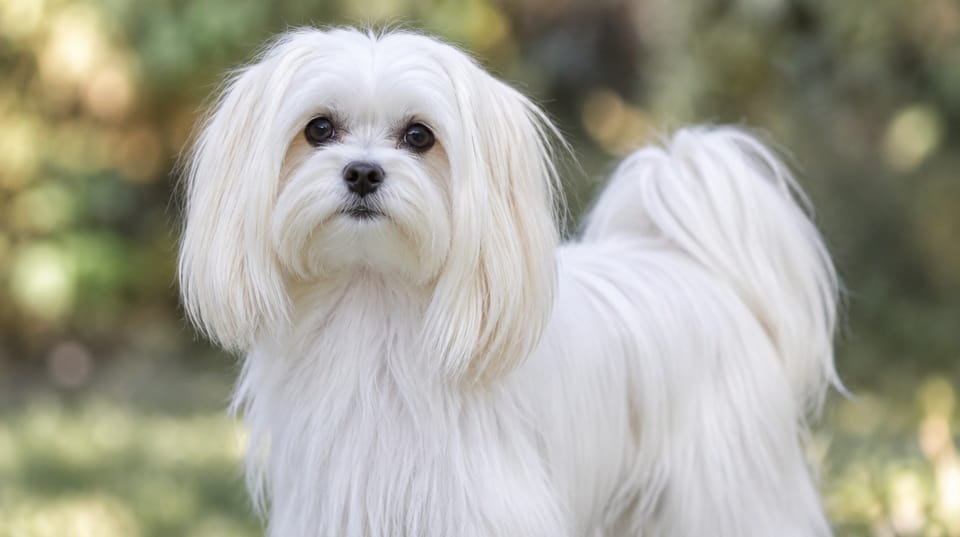
Under seven pounds of white silk, the Maltese is a real dog with a bold opinion of himself. He was bred for one purpose, to be a companion, and he has been doing that job for well over two thousand years. Living with one means having a small, bright-eyed shadow who wants to be on your lap, in your arms or at least in the same room.
He is more playful and spirited than his looks suggest. Maltese stay puppyish into old age. They trot about with a brisk, flowing gait, invent games and are fearless to the point of foolishness with much larger dogs. They are gentle and affectionate with their own people and usually a little reserved, then friendly, with visitors.
He is also an alert little watchdog, and this is the first downside. Many Maltese bark at the doorbell, at footsteps in the hallway and at anything new. It can be managed with training, but not ignored.
The second is how strongly he attaches. A Maltese bonds tightly to his person and can become distressed when left. He is a poor match for a home that is empty all day.
Then there is his size. A Maltese is fragile. He can be badly hurt by being dropped, stepped on or squeezed, which is why many breeders will not place a puppy in a home with very young children. With older, gentle children he does well.
Exercise and activity
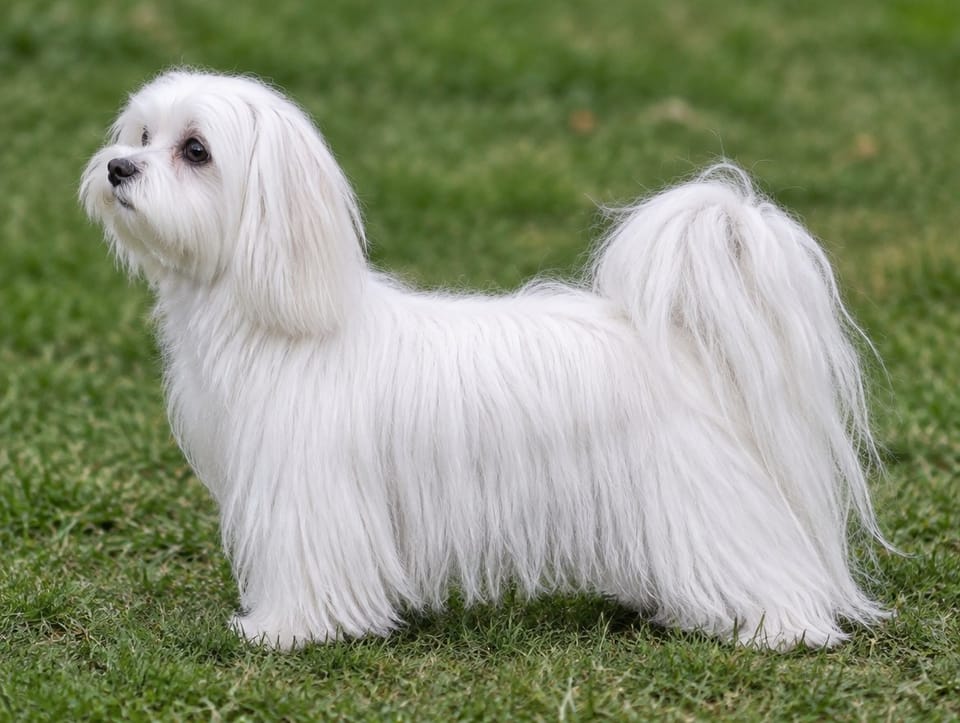
Few breeds are easier to exercise. Two walks of 15 to 20 minutes a day, plus play indoors, keep an adult Maltese fit. Much of his exercise can happen in a living room: chasing a soft toy down a hallway is a proper workout for a dog this size.
That makes him an excellent apartment dog and a good choice for older or less mobile owners. Do still take him out every day. He needs the smells, sights and encounters as much as the steps.
Use a harness instead of a collar. Toy breeds have delicate windpipes, and pressure on the throat can do harm.
Watch the weather. With a single coat and no undercoat he chills quickly in cold or wet conditions, and a sweater in winter is practical, not just cute. In summer, walk him in the cool parts of the day and keep him off hot pavement.
Outside, stay close. Big dogs can injure him in a second, even in play. Pick him up if you are unsure, and choose his playmates.
Grooming and shedding
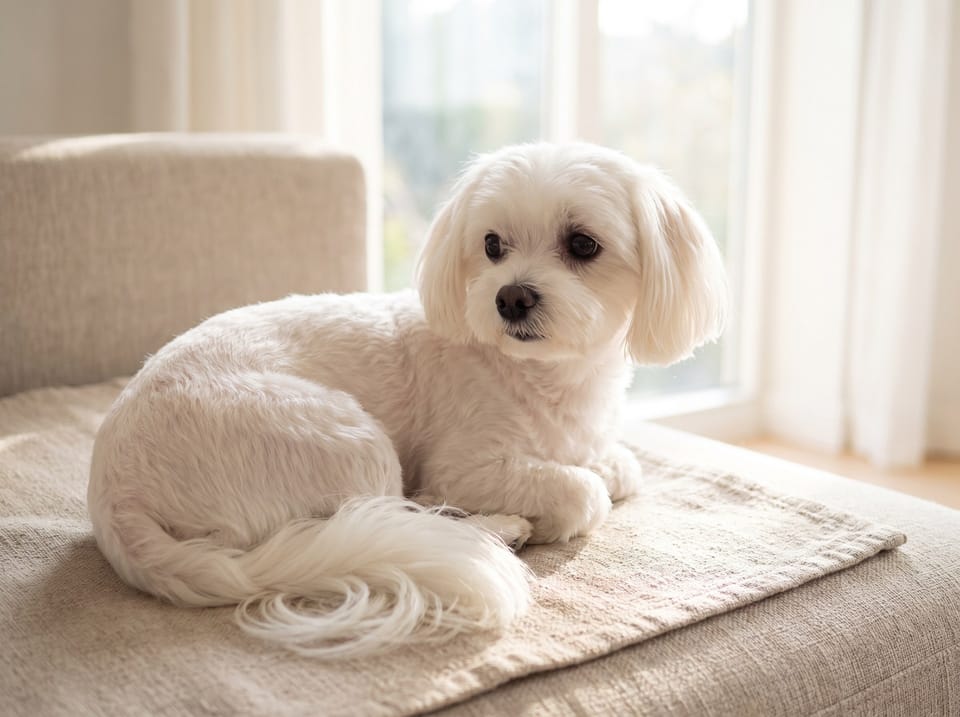
The good news is that a Maltese barely sheds. The single white coat grows continuously like hair, so very little ends up on your clothes, and many people with mild allergies find the breed easier to live with. No dog is completely allergy-free.
The catch is that hair which does not fall out has to be looked after. In a long coat, a Maltese needs gentle brushing and combing every day, 10 to 15 minutes, right down to the skin, or it mats. Most pet owners choose a short "puppy cut", which reduces brushing to two or three times a week but means a trip to a groomer every four to six weeks. Either way, grooming is a permanent cost in time or money.
Bathe him every two to three weeks with a mild shampoo and dry him fully. Keep the hair out of his eyes with a trim or a topknot.
Many Maltese get reddish-brown tear stains under the eyes. Wipe the face daily with a damp cloth and keep it dry. If the staining is heavy or the eyes are weepy, ask your vet to check for a cause.
Brush his teeth every day if you can. Toy breeds are very prone to dental disease, and this is the single most useful habit you can build. Trim nails every three to four weeks.
Training
Maltese are bright and responsive, and they love the attention that training brings. Tricks come easily to them. Keep sessions to a few minutes, use tiny treats and plenty of praise, and stay gentle. They are sensitive, and rough handling makes them fearful.
House training is the real challenge. Small bladders, a dislike of cold wet grass and the fact that tiny accidents go unnoticed all slow things down. Expect it to take several months. Go out on a strict schedule, reward him on the spot and supervise closely indoors. Some owners in apartments also teach an indoor potty spot.
Do not treat him like an ornament. A Maltese who is carried everywhere, never corrected and protected from all new things tends to become yappy, clingy and snappy. Let him walk on his own four feet, meet calm people and dogs, and follow the same house rules a bigger dog would.
Two lessons are worth starting early: being quiet on cue, and being relaxed when left alone for short periods. Build the time alone gradually, a few minutes at first.
Health watchlist
The Maltese is a long-lived breed, commonly reaching 12 to 15 years, and has fewer serious inherited problems than many. The ones to know about are these.
Slipping kneecaps are common in toy breeds, including this one, and can cause a skipping gait or lameness. Some Maltese are born with heart defects, and heart valve disease can develop in older dogs. The breed is also prone to a liver shunt, a blood vessel fault present from birth that lets blood bypass the liver. The American Maltese Association recommends that breeding dogs have a kneecap evaluation, a heart exam and a bile acid blood test, which checks liver function. Ask the breeder about all three.
Dental disease is the most common problem in everyday life. A tremor condition sometimes called white dog shaker syndrome is seen in small white breeds. Very small puppies can suffer dangerous drops in blood sugar, which is one reason to avoid breeders who advertise "teacup" Maltese. Dogs bred to be extra tiny tend to have more health problems.
Talk to your vet about dental care, your puppy's weight and feeding schedule, and what checks he should have as he ages.
Is this breed right for you?
A great fit if
- you live in an apartment or a small home
- you are home most of the day and want a constant companion
- you want a dog who sheds very little
- you prefer short, easy walks
- you enjoy grooming or will pay for a regular groomer
Think twice if
- you have children under six, or boisterous big dogs
- the house is empty during the working day
- barking would cause trouble with your neighbors
- you do not want the cost and effort of coat and dental care
- you want a rugged dog for long hikes and rough play
Similar breeds
 HavaneseA cheerful, sociable small companion that suits apartments and first-time owners but hates being left alone.
 Bichon FriseA happy, gentle, low-shedding small dog who loves everyone, hates being alone and needs constant grooming.
 Shih TzuA friendly, low-shedding lap dog that needs little exercise but daily brushing or regular clipping.