
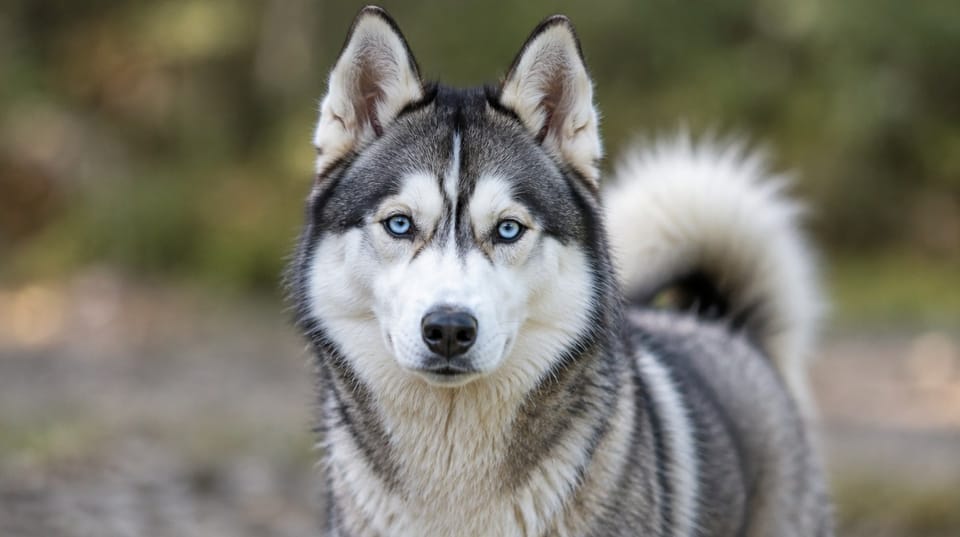
At a glance
- Group
- Working
- Size
- Medium
- Weight
- 35–60 lb
- Height
- 20–23.5 in
- Lifespan
- 12–14 years
Temperament
Nobody has ever owned a Siberian Husky and described him as obedient. Friendly, yes. Funny, beautiful, tireless and charming, certainly. But this is a dog bred by the Chukchi people of northeastern Siberia to pull light sleds enormous distances as part of a team, and he still thinks like one: sociable, independent and always ready to go.
Living with a Husky means living with a comedian who has strong opinions. He will argue with you in long, wavering howls and grumbles when dinner is late. He rarely barks, but he "talks" and howls, sometimes for the whole neighborhood to enjoy. He will dig a crater in the lawn to lie in, and he keeps himself as clean as a cat.
He loves people, all of them. Huskies are affectionate with family, gentle and playful with children, and delighted to meet strangers, which makes him a hopeless guard dog. He is a pack animal and usually enjoys other dogs.
Small animals are another story. The breed has a strong prey drive, and cats, rabbits, chickens and small pets are at real risk, even ones he has known for a while.
He hates being alone. A bored, lonely Husky howls, chews through drywall and works out how to leave.
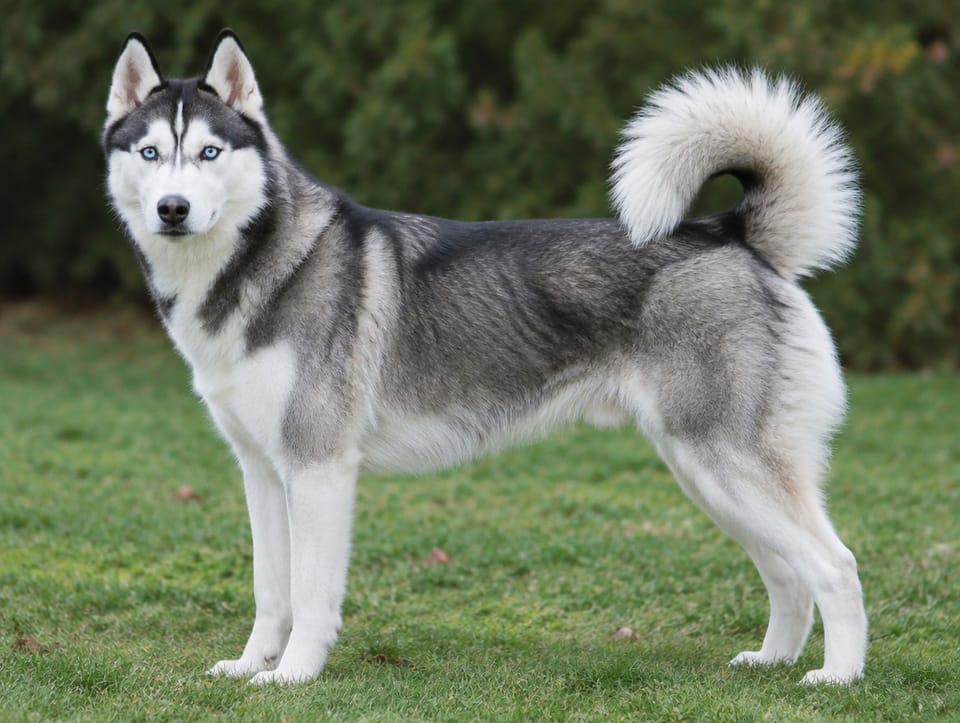
Exercise and activity
An adult Husky needs about two hours of exercise a day, and hard exercise for at least part of it. He was built to trot for hours, and a walk around the block barely registers.
Running suits him best. Jog with him, bike with him on a proper attachment, or try the sports made for sled dogs: canicross, where he pulls you on foot, bikejoring and skijoring. Long hikes are good. So is play with another dog in a secure field.
Here is the first hard part, and breed clubs are blunt about it: a Husky should never be off the leash in an unfenced area. He was bred to run, he is not inclined to check in, and no amount of training makes his recall reliable when something catches his eye. Many are lost or killed on roads every year.
The second hard part is that he is an escape artist. He climbs chain link, jumps five-foot fences, digs under them and opens latches. Your yard needs a solid fence at least six feet high, with wire or paving along the base, and you should still not leave him out there for hours unwatched.
Heat is the limit. In warm weather, exercise at dawn or after dark, keep it short and provide shade, water and a cool floor. In snow he is in his element.
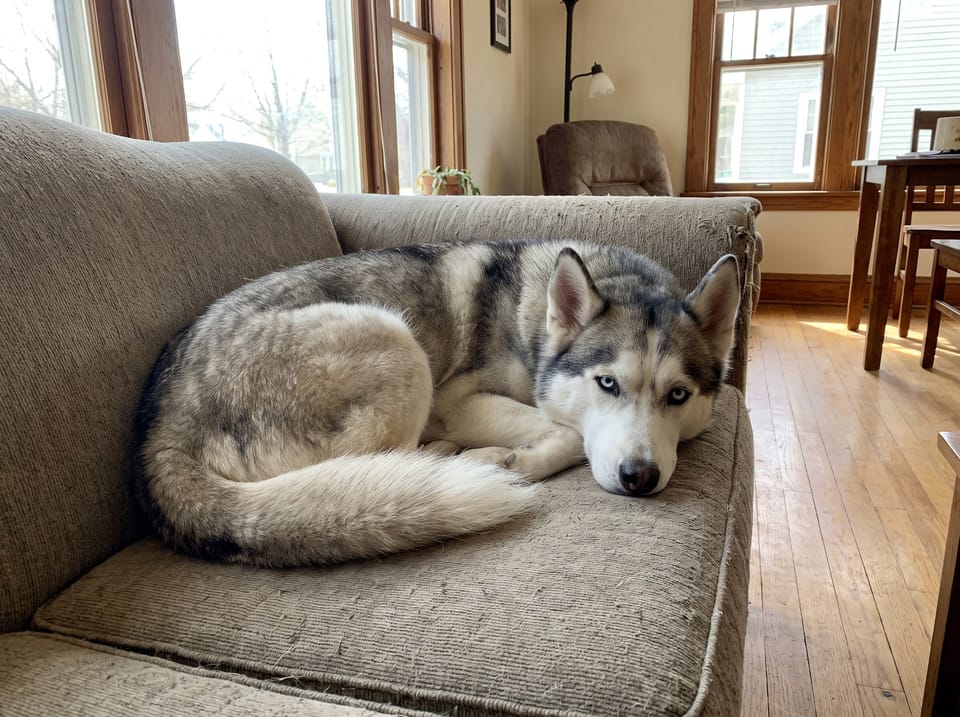
Grooming and shedding
A Husky has a thick double coat: a soft, dense undercoat beneath straight, medium-length guard hairs. It is close to self-cleaning and has very little doggy smell. Baths are needed only a few times a year.
For most of the year, brushing once or twice a week keeps things in order. Then, twice a year, he "blows" his coat. The whole undercoat comes loose over about three weeks, in tufts you can pull out by hand, and the amount is hard to believe until you have seen it. Brush every day during a blow, outdoors if you can, with an undercoat rake. In warm climates the shedding is spread more evenly through the year, which means it never really stops.
If hair on your clothes, furniture and food bothers you, this is the wrong breed.
Never shave or clip a Husky. The coat insulates against heat as well as cold and shields the skin from sunburn.
Trim nails every three to four weeks, check ears weekly and brush teeth several times a week.
Training
Huskies are intelligent and learn quickly. Obeying is a separate matter. Ask a Husky to sit and you can watch him think it over. He was bred to make his own decisions at the front of a sled, and he works with you when he sees the point.
So make sure there is a point. Use food and play, keep sessions to five or ten minutes, and stop before he gets bored. Repetition bores him. Force gets you a dog who digs in or simply ignores you. Consistency matters a great deal, because he will test every rule to see whether it still applies today.
Put your effort where it counts. Teach him to walk on a leash without towing you, which takes patience with a dog bred to pull. A well-fitted harness and a lot of rewarded practice help. Teach him to wait at doors and gates, since bolting through an open door is how many Huskies get lost. Teach a recall as well, for use in fenced areas, and never rely on it elsewhere.
Crate train from puppyhood. A crate he likes keeps him and your house safe when you cannot watch him.
Go to puppy classes and keep up the socializing. He is naturally friendly, and classes teach him to listen with other dogs around.
This is a hard first dog. People who succeed are usually runners or hikers who find his stubbornness funny.
Health watchlist
The Siberian Husky is one of the healthier purebred dogs, with a typical lifespan of 12 to 14 years.
Eyes are the chief concern. Inherited cataracts can appear in young dogs, sometimes before a year old. A clouding of the cornea called corneal dystrophy and progressive retinal atrophy, which leads to blindness, are also seen. Hip dysplasia occurs, though at a lower rate than in many breeds of this size.
The Siberian Husky Club of America asks that breeding dogs have their hips evaluated and their eyes examined by a veterinary eye specialist. The eye exam is repeated regularly, because some problems appear later. DNA tests are also listed for two rare inherited nerve disorders found in the breed. Ask the breeder for results on both parents.
Some Huskies have trouble absorbing zinc and develop crusty, hairless patches around the face. An underactive thyroid is seen in middle age.
Blue eyes, brown eyes, or one of each are all normal in this breed, and none of them indicates a health problem.
Talk to your vet about eye checks, skin changes and safe exercise in warm weather.
Is this breed right for you?
A great fit if
- you run, bike or hike most days and want a partner
- you live somewhere with cool summers or cold winters
- you have a securely fenced yard with a tall, dig-proof fence
- you have another dog, or someone is home most of the day
- you have a sense of humor about being ignored
Think twice if
- you want a dog who can be let off the leash
- you have cats, rabbits, chickens or other small pets
- you live in an apartment or have close neighbors
- you live in a hot climate
- you want a dog who does what he is told
Similar breeds
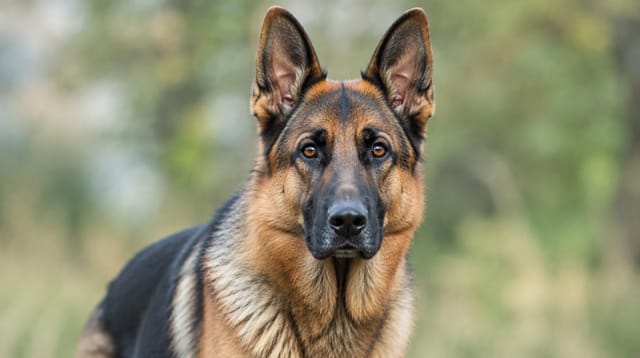 German Shepherd DogA loyal, highly trainable working dog that bonds closely with its family and needs daily exercise, training and a job to do.
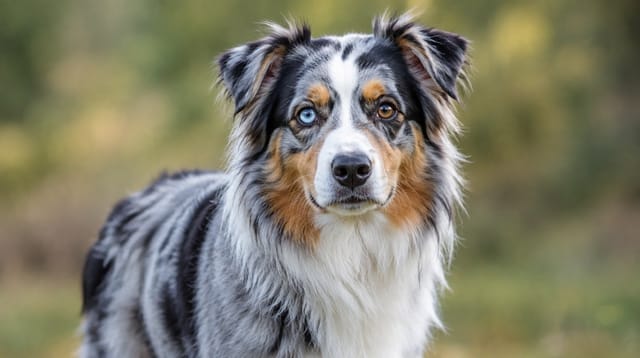 Australian ShepherdA brilliant, driven herding dog who thrives on hours of work and struggles in a quiet home.
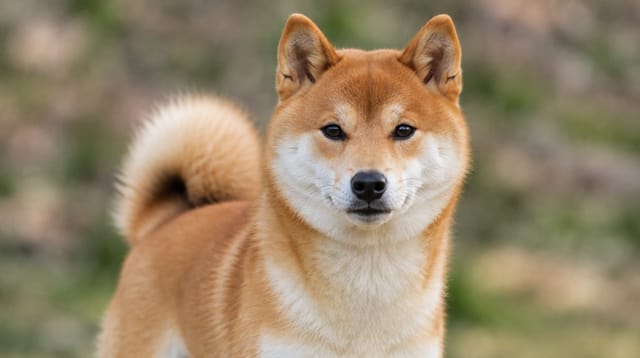 Shiba InuA clean, quiet, independent little dog with a mind of his own who can never be trusted off the leash.