
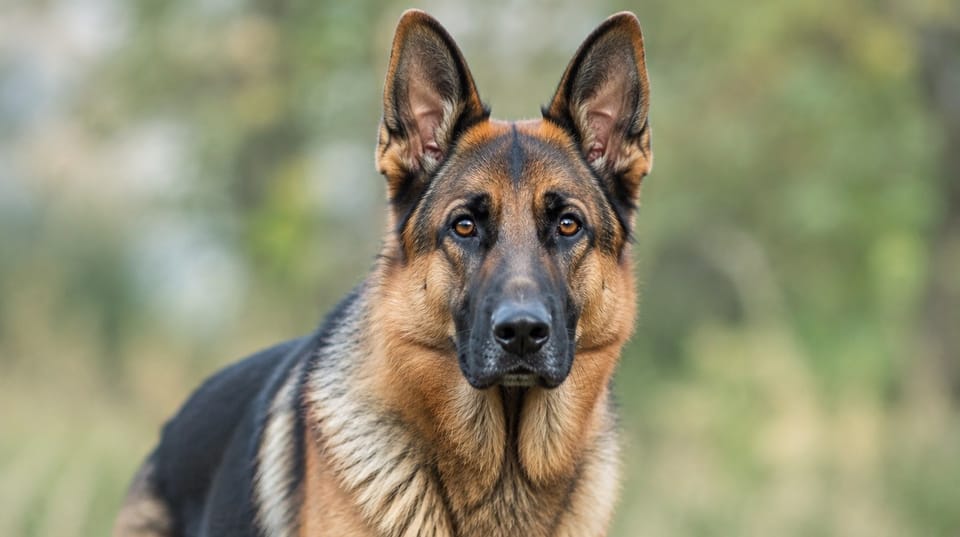
At a glance
- Group
- Herding
- Size
- Large
- Weight
- 50–90 lb
- Height
- 22–26 in
- Lifespan
- 12–14 years
Temperament
A German Shepherd chooses his people and then keeps track of them. Living with one means a large dog who follows you to the kitchen, lies across the doorway of whatever room you are in, and lifts his head every time you stand up. With his own family he is affectionate, playful and often very gentle. He is a one-household dog, and the bond is the best thing about the breed.
With strangers he is different. The breed standard describes a certain aloofness, and a well-bred Shepherd is neither nervous nor pushy with people he does not know. He watches, weighs things up and takes his time. He will not greet your guests like a Labrador would, and you should not expect him to.
He is also naturally protective and alert, and he notices everything: the gate, the car door, the person walking past. Most Shepherds are vocal about it. They bark, and many whine and grumble as well.
This is a working dog with a busy mind. Given exercise, training and company, he is calm and steady at home. Left under-occupied or alone for long hours, he becomes anxious, noisy and destructive. Shepherds are good with the children they are raised with, but a young one is big enough to knock a toddler over and may try to herd running kids, so supervise.
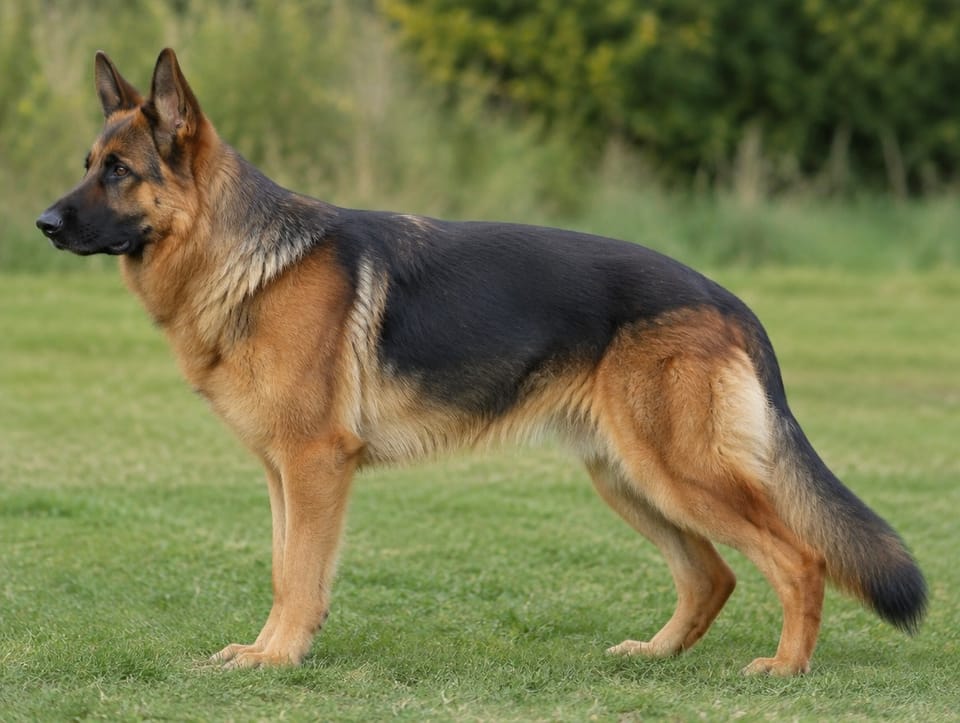
Exercise and activity
Plan on 90 minutes to two hours of activity a day for an adult, and make part of it work for his brain. Walking the same sidewalk loop twice a day will not satisfy this dog.
Mix it up: brisk walks, running off the leash in a secure place, hiking, fetch, tug, and jogging once he is fully grown. Then add something that makes him think. Fifteen minutes of obedience practice, scent games where he searches for a hidden toy, or a dog sport such as tracking, agility or rally will settle him better than an extra mile.
A Shepherd without a job will invent one, and you will not like it. Common choices are barking at the fence, digging and patrolling the windows.
Take care with puppies. Shepherds grow quickly, and their joints need time. Keep walks short, let the puppy set the pace, and avoid repeated jumping and long runs in the first year. Ask your vet when it is safe to build up.
Because bloat is a risk in this breed, ask your vet how to time meals around hard exercise.
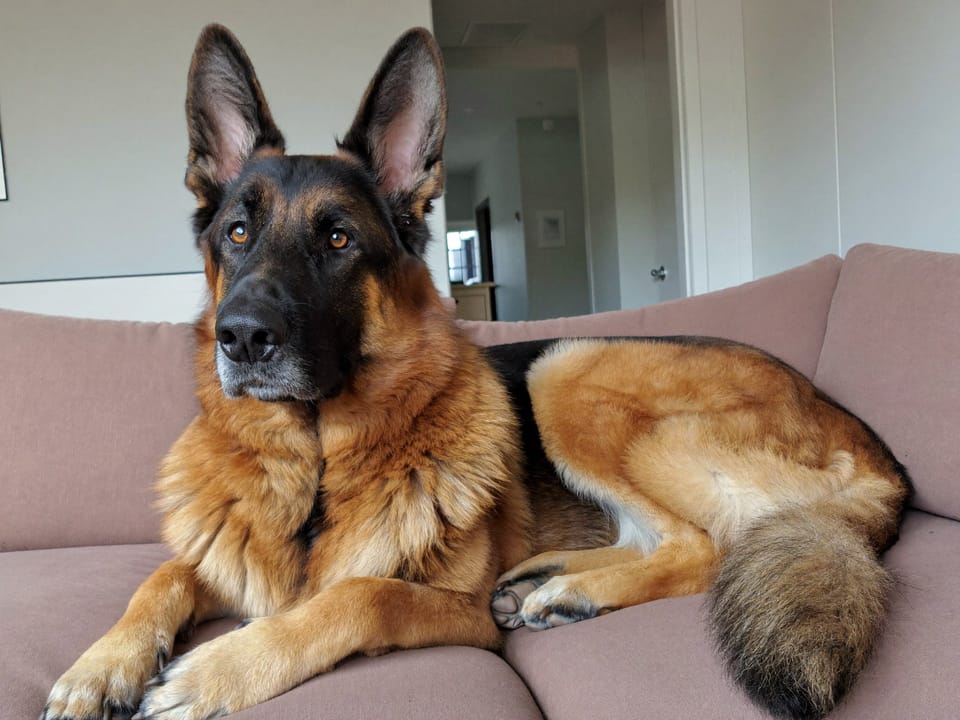
Grooming and shedding
Here is the first hard part: German Shepherds shed a great deal. Owners call them "German shedders" for a reason. The thick double coat drops hair every day of the year, and twice a year the undercoat comes out in handfuls over two or three weeks. You will vacuum often, and you will still find hair.
Brush three or four times a week with an undercoat rake or a firm brush, and every day during the heavy sheds. Allow 15 minutes. Brushing outdoors saves a lot of cleaning.
Bathe only every two to three months, since frequent baths strip the coat's natural oils. Never shave a Shepherd. The double coat insulates against heat as well as cold.
Trim nails every three to four weeks, check ears weekly and brush teeth several times a week. Get your puppy used to all of it early. Handling a reluctant 80-pound adult is no fun for anyone.
Training
German Shepherds are exceptionally trainable. They learn fast, they concentrate, and they enjoy working with their person, which is why police forces, the military and search teams rely on them. That intelligence needs direction. A clever dog picks up bad habits as quickly as good ones.
The second hard part is socialization, and it cannot be skipped. A Shepherd who does not meet enough of the world while young can grow up suspicious, reactive on the leash or fearful, and in a dog this size and strength that is a serious problem. From the day your puppy comes home, introduce him calmly to many kinds of people, friendly dogs, traffic, visitors and new places. Keep each experience pleasant and short. Continue through adolescence, when many Shepherds go through a wary, barky phase.
Enroll in a puppy class, then keep training afterward. Use rewards, clear rules and consistency. Everyone in the house should ask for the same things in the same way. Harsh handling backfires with this breed. It damages trust and can create the very defensiveness you are trying to avoid.
Teach these early: walking on a loose leash, coming when called, settling quietly on a mat, and staying calm when people arrive.
This is why we do not usually suggest a Shepherd as a first dog. It can be done, if you are committed and work with a good trainer from the start.
Health watchlist
Hip and elbow dysplasia are the best-known problems in the breed. The joints form poorly and become painful and arthritic, sometimes in quite young dogs. Responsible breeders have both parents' hips and elbows evaluated before breeding, and the German Shepherd Dog Club of America asks for these results. Ask to see them.
Degenerative myelopathy is a disease of the spinal cord that appears in older dogs and causes gradual weakness in the back legs. A DNA test shows whether a dog carries the gene linked to it, and many breeders test for it.
Bloat, in which the stomach fills with gas and can twist, is a life-threatening emergency seen in large, deep-chested breeds including this one. Learn the warning signs from your vet before you ever need them.
Shepherds are also known for sensitive digestion, including a condition where the pancreas does not produce enough digestive enzymes, and for skin allergies.
Lines differ a good deal. Dogs bred for show, for work and as pets vary in build, energy and drive, so ask the breeder what their dogs are bred to do, and meet the parents if you can. A steady, confident mother is a good sign.
Talk to your vet about joint care, a sensible growth rate for your puppy and a screening plan.
Is this breed right for you?
A great fit if
- you have owned and trained dogs before, or will work closely with a trainer
- you want a devoted dog who is deeply bonded to your household
- you can give two hours a day to exercise and training
- you enjoy training and would like to try a dog sport
- someone is home for much of the day
Think twice if
- this is your first dog and you have limited time
- you want a dog who is relaxed and friendly with every stranger
- heavy shedding all year would bother you
- you have close neighbors and thin walls
- the dog would be alone for a full working day
Similar breeds
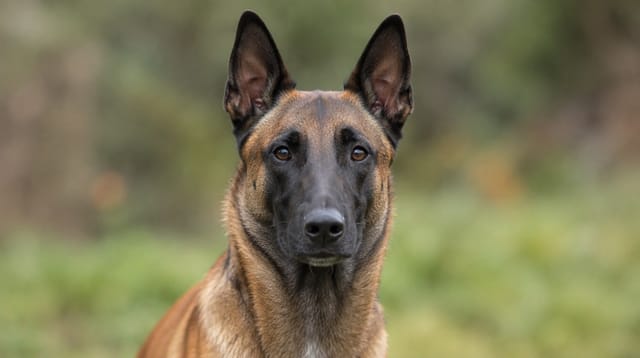 Belgian MalinoisAn intense, brilliant working dog for experienced handlers only; too much dog for most family homes.
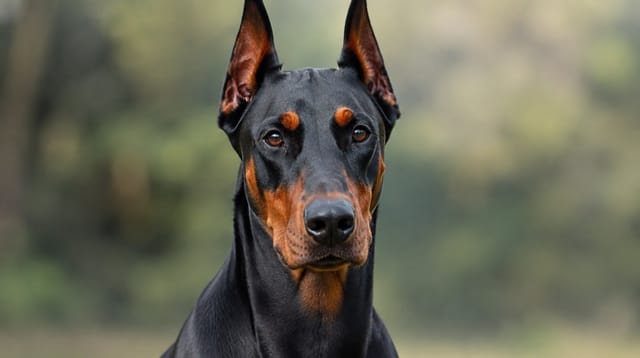 Doberman PinscherA sleek, devoted, highly trainable guardian that needs daily hard exercise and an experienced owner.
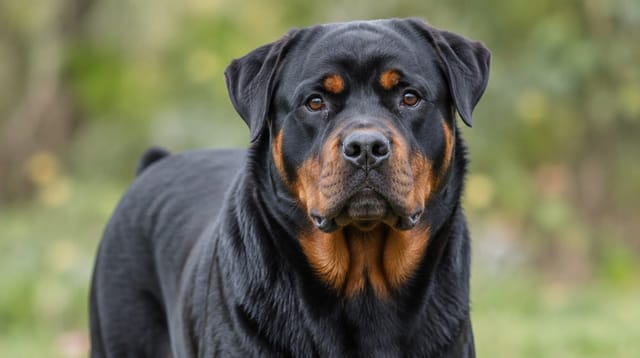 RottweilerA powerful, devoted guardian who is calm and loving at home but needs an experienced, steady owner.