

At a glance
- Group
- Toy
- Size
- Toy
- Weight
- 3–7 lb
- Height
- 6–7 in
- Lifespan
- 12–16 years
Temperament
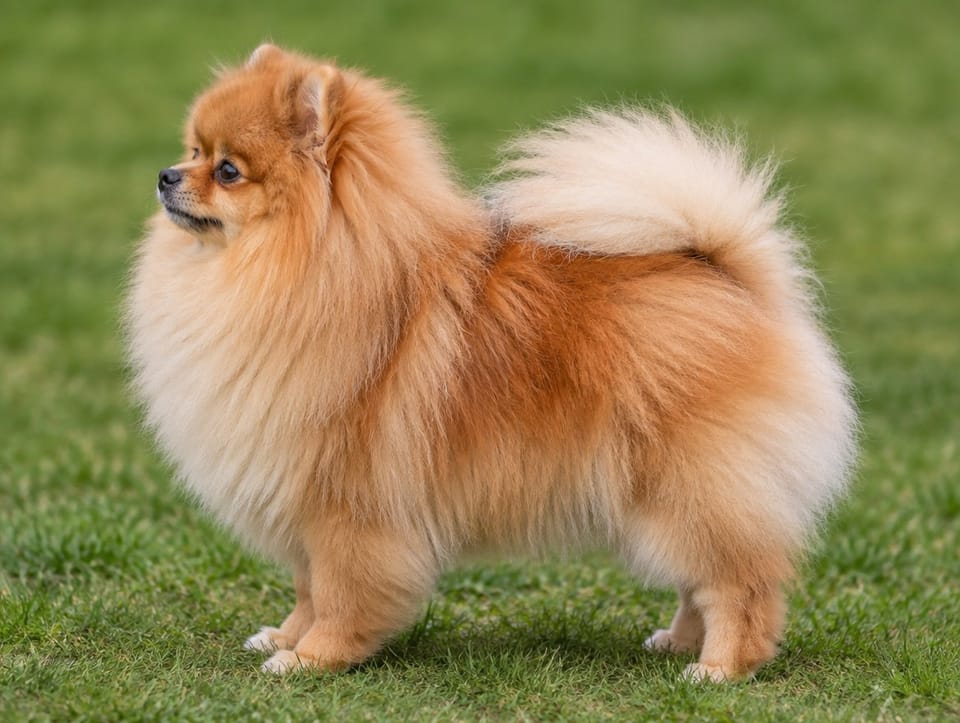
Nobody has told the Pomeranian that he weighs five pounds. He descends from large Arctic sled dogs, and he still carries himself as if he could pull one. Living with a Pom means sharing your home with a tiny, bright-eyed extrovert who struts, spins in circles when he is excited, and takes a keen interest in everything that happens in his territory.
Poms are lively and curious but not demanding in the way a working breed is. He is happy to trot after you all day and equally happy to sit on the back of the sofa and watch the street. He bonds closely with his people, often picking a favorite, and he enjoys attention and learning tricks to earn it.
He is a watchdog by temperament, and that is the first hard part. Pomeranians bark. They bark at the door, at noises in the hallway and at dogs 10 times their size. With training you can shorten it. You will not switch it off.
The second hard part is his size. A Pom is a fragile dog. A fall from a child's arms or a couch, or being stepped on, can break a leg. For that reason we do not suggest the breed for homes with children under six. Gentle older children do well with them. He is usually fine with a calm cat, and he should be supervised around big dogs, whom he may challenge.
Exercise and activity
Poms need little exercise by dog standards. Two walks of 15 to 20 minutes a day, plus play indoors, keep an adult fit. They are busy little dogs and burn a fair amount of energy just following you around the house.
Mental exercise matters as much. Poms are smart and enjoy trick training, puzzle feeders and games of hide-and-seek. Many do well in rally, agility and obedience, and they make good therapy dogs.
Walk him on a harness, not a collar. The breed is prone to a weak windpipe, and pressure on the throat is best avoided.
Watch him outdoors. A Pom can slip through a gap in a fence that you would not notice, and to a hawk, an owl or a coyote he looks like prey. Do not leave him in the yard unattended.
His thick coat keeps him comfortable in cool weather, although a dog this small loses heat quickly in real cold or wet. Heat is harder on him. In summer, walk in the cool parts of the day and keep him in the shade.
His size and modest needs make him an excellent apartment dog, provided you work on the barking.
Grooming and shedding
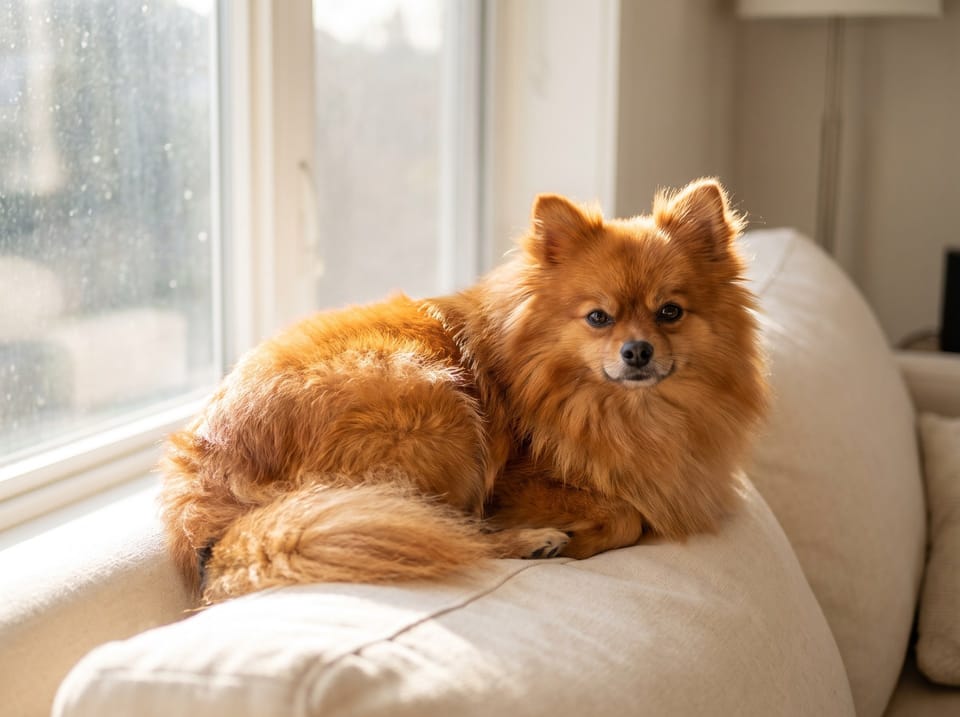
That cloud of fur is a double coat: a soft, dense undercoat with a long, harsh outer coat standing off from the body. It looks like more work than it is, but it does need regular attention.
Brush thoroughly two or three times a week, right down to the skin, with a pin brush and a metal comb. Allow 15 minutes. Pay attention behind the ears, under the legs and around the britches, where mats start. A quick surface brush is not enough. The undercoat tangles underneath while the top looks tidy.
Poms shed moderately all year and more heavily once or twice a year when the undercoat comes out. Because the dog is so small, the total amount of hair is manageable.
Many owners use a professional groomer every four to six weeks for a bath, a tidy of the feet and rear, and nails. Do not shave a Pom to the skin. The coat may grow back patchy or not at all.
Teeth need daily care. Toy breeds have crowded mouths and are prone to early dental disease, so brush every day if you can. Trim nails every two to three weeks and check ears weekly.
Training
Poms are quick and eager, and they love to show off. Teaching tricks is easy and fun for both of you. Keep sessions to five minutes, use tiny treats, and end while he still wants more.
House training is where most owners struggle. Small dogs have small bladders, and it is easy to miss an accident behind a chair. Take your puppy out very often, reward him the instant he goes, and keep him in sight or in a crate or pen when you cannot watch him. Expect it to take several months. Some owners in apartments or cold climates train to an indoor potty area as well.
Work on barking from the start. Teach a "quiet" cue, reward calm behavior when the doorbell rings, and do not pick him up or fuss over him when he barks, which rewards it.
Avoid treating him like a baby. A Pom who is carried everywhere and never asked to follow rules can become snappy and anxious. Let him walk on his own feet, meet friendly people and calm dogs, and learn basic manners like any other dog. Teach a solid "come," since a loose Pom is in real danger.
Get him used to brushing, tooth cleaning and nail trims while he is young.
Health watchlist
Pomeranians are long-lived, often reaching 12 to 16 years, and many stay lively into old age. The problems they do have are mostly those of small dogs.
Luxating patella, a kneecap that slips out of place, is common in toy breeds. You may see a dog skip a step or hold up a hind leg. A weak windpipe, known as collapsing trachea, is also seen in the breed and often shows as a honking cough.
Dental disease is very common. Some Poms develop a coat-loss condition sometimes called alopecia X or black skin disease. Heart problems, eye problems and an underactive thyroid occur as well. Very small puppies can suffer from low blood sugar.
The American Pomeranian Club recommends that breeding dogs have a patella evaluation, a cardiac exam and an eye exam by a veterinary ophthalmologist. Ask to see the results for both parents.
Be wary of "teacup" Pomeranians. The breed standard already calls for a dog of three to seven pounds, and breeding for even smaller dogs raises the risk of health problems.
Keep him lean. An extra pound is a lot on a five-pound frame and makes knee and windpipe problems worse.
Talk to your vet about dental care, weight and what to watch for in your own dog.
Is this breed right for you?
A great fit if
- you live in an apartment or a small home
- you want a bright, lively companion who is easy to carry and travel with
- you can only manage short walks
- your household is adults or gentle older children
- you enjoy brushing a dog and do not mind a regular groomer
Think twice if
- you have children under six
- you need a quiet dog or have thin walls
- you have a large, boisterous dog who plays rough
- you want a dog for long hikes or runs
- slow house training would wear your patience thin
Similar breeds
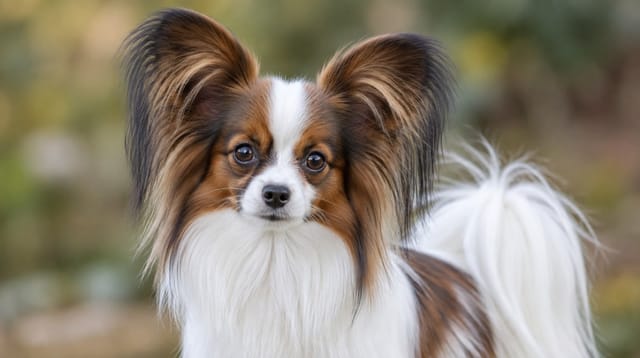 PapillonA tiny, bright, athletic toy dog that is a joy to train, barks a lot and is too fragile for toddlers.
 ChihuahuaA tiny, long-lived, fiercely loyal lap dog that barks a lot and is too fragile for small children.
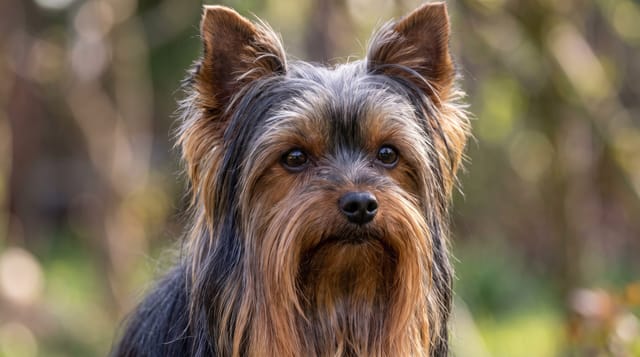 Yorkshire TerrierA tiny, bold, barely shedding terrier who loves his person and needs daily coat care.