
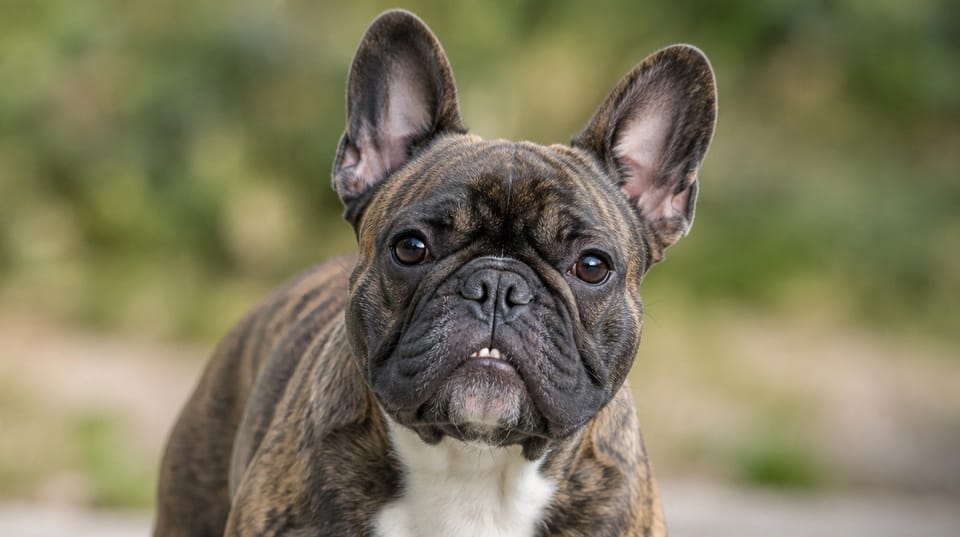
At a glance
- Group
- Non-Sporting
- Size
- Small
- Weight
- 16–28 lb
- Height
- 11–13 in
- Lifespan
- 10–12 years
Temperament
A French Bulldog is a small dog with a big presence. Living with one means having a warm, solid, snoring companion who follows you from room to room and thinks your lap belongs to him. Frenchies are clowns. They play in short, silly bursts, then fall asleep in odd positions and snore loudly enough to be heard through a door.
They were bred purely as companions and it shows. A Frenchie is friendly with visitors, tolerant with children and usually easy with other dogs. He is not a yappy dog. Most bark only when something is worth mentioning, which makes them good neighbors in an apartment.
What they do make is noise of other kinds: snorting, grunting, snoring and a fair amount of wind. Owners find it endearing. You should know about it before you commit.
Frenchies are attached to their people. Most cope with being left for three or four hours once they are used to it. A full working day alone, every day, is too long for a dog whose whole purpose is company.
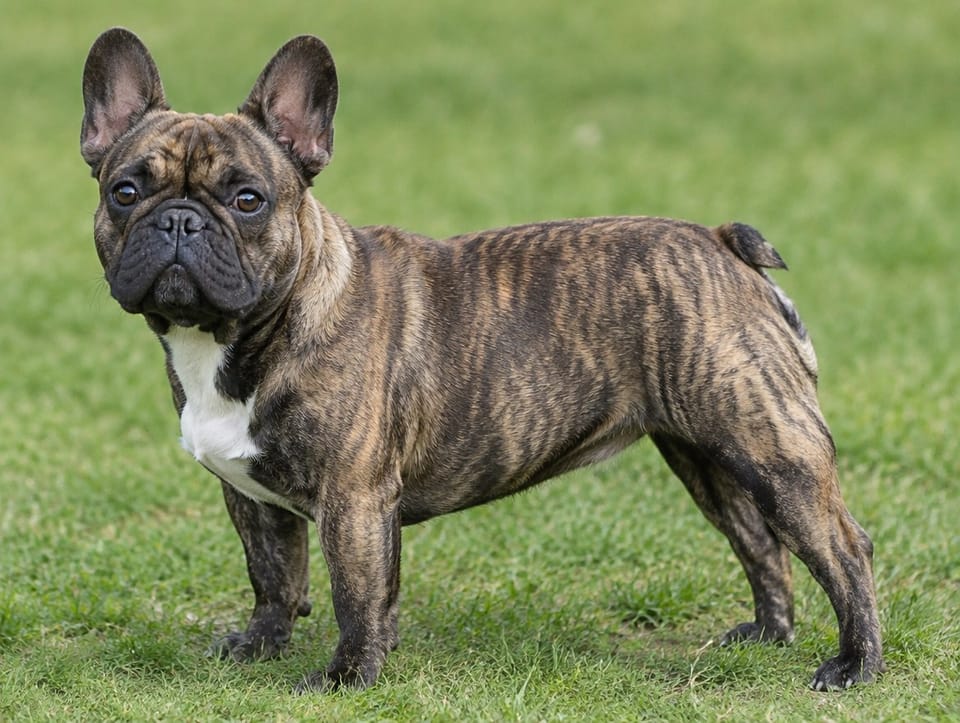
Exercise and activity
Frenchies need less exercise than almost any other popular breed. Two easy walks of 15 to 20 minutes a day, plus some play indoors, keep most adults fit and content. That makes them one of the best breeds for apartment life and for owners who are not very active.
The limit is their breathing. The short, flat face that gives the breed its look also narrows the airway, so a Frenchie cannot cool himself by panting as well as a longer-nosed dog can. Heat is dangerous for them. In warm weather, walk early in the morning or after sunset, keep it short, carry water and stay in the shade. On a hot or humid day, a toilet break and a game in a cool room is enough. Never leave one in a car, even briefly.
They are not built for jogging, long hikes or cycling beside you. If you want a running partner, look at another breed.
Most French Bulldogs cannot swim. They are heavy in the front and short in the leg, and they sink. Keep yours away from pools and ponds unless he is wearing a life jacket and you are within arm's reach.
Use a harness instead of a collar, so that nothing presses on the throat.
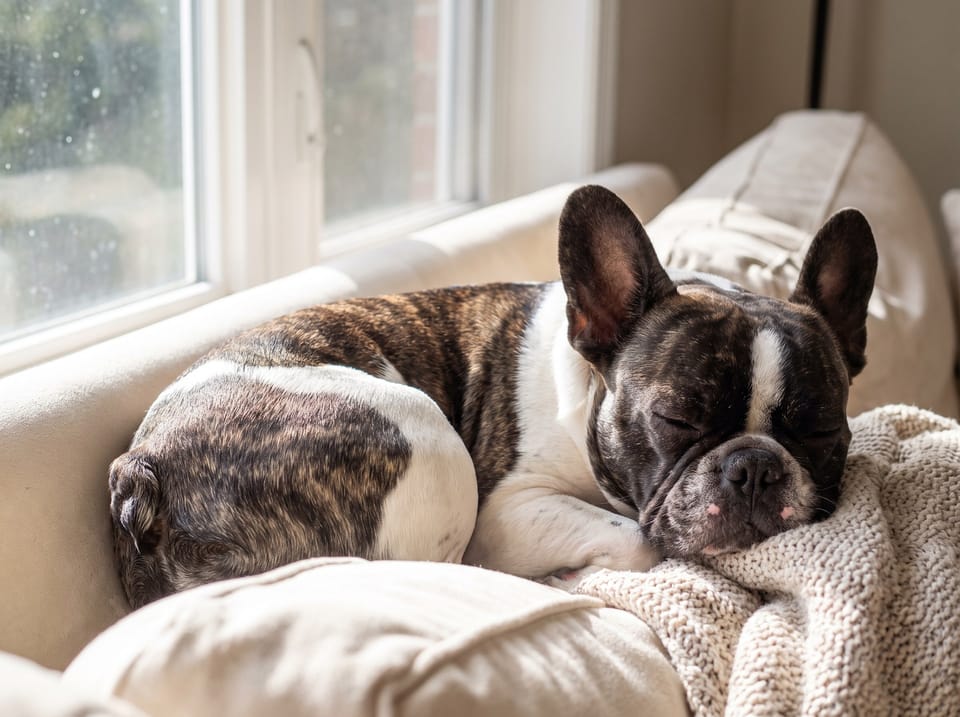
Grooming and shedding
The coat is short and simple to look after. A weekly brush with a rubber mitt or soft brush takes five minutes and lifts out loose hair. Frenchies do shed, moderately and all year, with a little more in spring and fall. The hairs are short and stiff and they work their way into fabric.
The real grooming job is the skin. The wrinkles on the face trap moisture and dirt, and so does the pocket around the tail on some dogs. Wipe the folds gently and dry them well several times a week, daily if your dog is prone to redness. Skipping this leads to sore, smelly skin.
Check the big upright ears once a week and wipe away any dirt you can see. Trim nails every three to four weeks, since a dog who walks little does not wear them down. Brush teeth several times a week. Short jaws crowd the teeth and make them harder to keep clean.
A bath once a month is usually enough. Dry the folds carefully afterward.
Training
Frenchies are clever and they like people, but they are also stubborn. Ask a Frenchie to do something and he will often pause to consider whether it is worth his while. Training works well when you make it a game and pay in food. It goes badly when you nag or lose your temper, because he will simply stop taking part.
Keep sessions to five minutes, two or three times a day. Use tiny treats, and take them out of his daily food allowance, because this breed puts on weight easily.
House training is the part owners most often find slow. Many Frenchies take several months to be reliable. Take your puppy out after every meal, nap and play session, reward him the moment he goes, and stick to the routine without exceptions. Patience and consistency get you there.
Start socializing early. Let your puppy meet different people, calm dogs and everyday sounds in his first months. Also get him used to having his face, ears and feet handled, since you will be cleaning them for the rest of his life.
Health watchlist
This is the hardest part of owning a Frenchie, and the one to think about longest. French Bulldogs have more health problems than most breeds, and many of them come directly from the body shape. Vet bills can be high. Many owners take out pet insurance while the puppy is young.
The main concern is breathing. Narrow nostrils and a long soft palate make some Frenchies struggle for air, especially in heat, during exercise or when excited. Dogs vary a great deal. Some breathe quietly and comfortably, and others are affected enough to need surgery. Anesthesia also carries more risk in short-faced dogs.
The short, stocky build is linked to malformed vertebrae and to disc problems in the back. Skin allergies, infections in the skin folds and ear infections are common. The large, prominent eyes are easily scratched, and cherry eye is seen in the breed.
Choosing the breeder carefully matters more here than with almost any other dog. The French Bull Dog Club of America recommends that breeding dogs have their hips, kneecaps, eyes and heart checked. Ask to meet the parents and listen to them breathe after they have been moving about. They should have open nostrils and should not be noisy at rest. Be wary of anyone selling "rare" colors such as blue or merle. The breed standard does not accept them, and they are usually a sign that looks or price were put ahead of health.
Keep your Frenchie lean. Extra weight makes breathing and back problems worse.
Talk to your vet early about your own dog's breathing, weight and what to watch for.
Is this breed right for you?
A great fit if
- you live in an apartment or a home without a yard
- you want a cuddly, funny companion more than an exercise partner
- you are home for most of the day, or can break up the dog's time alone
- you have children or regular visitors and want a friendly, sturdy small dog
- you can budget for insurance and vet care
Think twice if
- you live somewhere hot and do not have air conditioning
- you want a dog for running, hiking or long days outdoors
- snoring, snorting and wind would get on your nerves
- an unexpected vet bill would be a serious strain
- you want a dog you can leave alone for a full working day
Similar breeds
 Boston TerrierA cheerful, tuxedo-coated companion that is easy to train and groom but sensitive to heat and cold.
 PugA sturdy, comical, people-loving companion who suits apartments, sheds heavily and struggles in heat.
 BulldogA gentle, stubborn, low-energy homebody with heavy health needs who cannot cope with heat.