
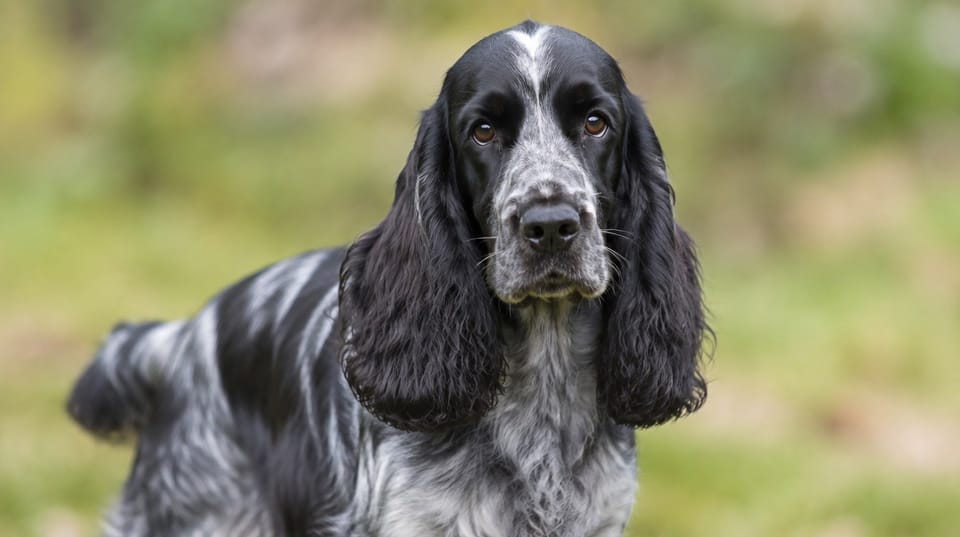
At a glance
- Group
- Sporting
- Size
- Medium
- Weight
- 26–34 lb
- Height
- 15–17 in
- Lifespan
- 12–14 years
Temperament
An English Cocker Spaniel has two speeds. Outdoors he is a busy, nose-down hunting dog who covers three times the ground you do. Indoors, once he has had his run, he is a soft, leaning, sofa-sharing companion who wants a hand on him. Owners use the word "merry" for both versions, and the constantly wagging tail explains why.
In the United States the name causes confusion, so it is worth being clear. The English Cocker and the Cocker Spaniel (the American Cocker) were one breed until the 1940s and are now two. The English Cocker is the taller and heavier of the pair, at 15 to 17 inches and 26 to 34 pounds. He has a longer muzzle, a flatter skull, a shorter and easier coat, and much more of the original gundog in his character. The American Cocker is smaller, rounder in the head, far heavier in coat and bred mainly as a companion. If you want the dog who will hike all day and still bring you a toy at night, you are reading about the right one.
English Cockers are affectionate with the whole family, good with children and friendly with other dogs. They are also nosy, greedy and attached to you to the point of following you into the bathroom. Most do not cope well with long hours alone.
You will also hear about two types. Show-bred dogs are heavier, with more coat and a calmer nature. Field-bred dogs, often called working Cockers, are lighter, faster and need far more to do. Ask the breeder which you are looking at.
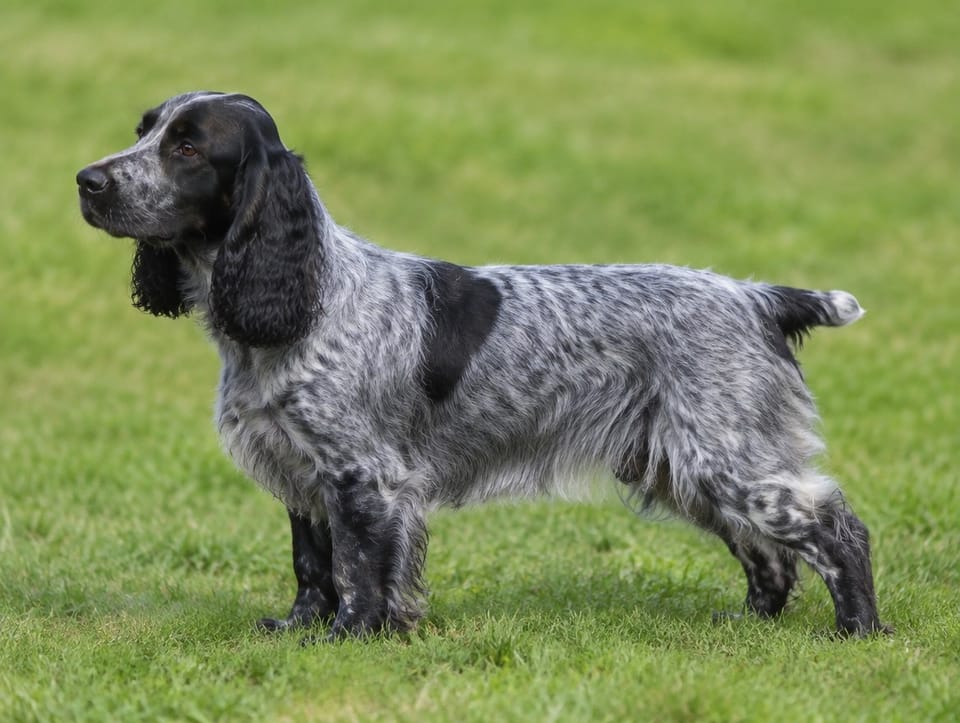
Exercise and activity
Plan on at least an hour a day for a show-bred adult, and closer to an hour and a half for a field-bred one. A stroll on a short leash does not count for much. This dog wants to use his nose, push through cover and carry things.
The best exercise lets him hunt. Walks in woods and fields, retrieving a ball or a canvas dummy, and searching for hidden toys all satisfy the instinct he was bred with. Many English Cockers love water. They also do very well at agility, scent work and hunt tests if you want a hobby to share.
Because he follows his nose, work on recall before you trust him off the leash. A Cocker on a scent can be a long way off before he remembers you exist. A long line is useful while he is learning.
Under-exercised English Cockers become noisy and restless, and may take to stealing and carrying off household objects. That retrieving urge needs an outlet. Give him things he is allowed to carry.
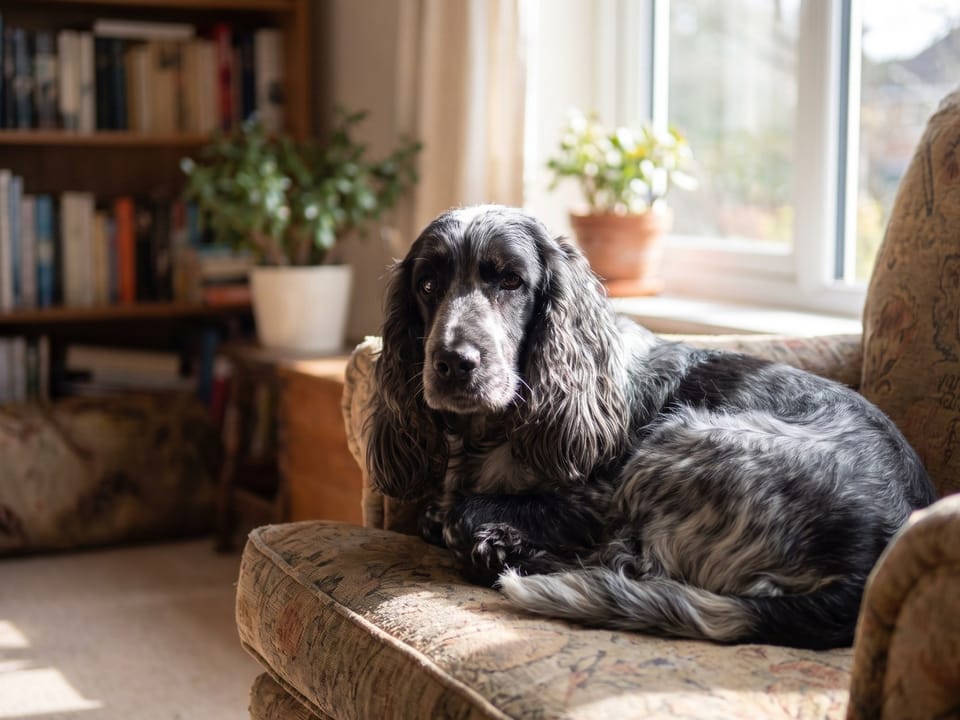
Grooming and shedding
The coat is medium-length, flat and silky, with longer feathering on the ears, chest, belly and legs. It is noticeably less work than the American Cocker's coat, but it is not low-maintenance.
Brush and comb two or three times a week, about 10 to 15 minutes each time, paying attention to the ears, armpits and the feathering behind the legs, where tangles form. Check him over after every country walk, because the feathering collects burrs, grass seeds and mud.
Every six to eight weeks the coat needs tidying. Show owners hand-strip it to keep the texture. Most pet owners use a professional groomer, who will trim the feet, ears and feathering and thin or clip the body coat. Be aware that clipping makes the coat grow back thicker and fluffier.
Shedding is moderate and steady. Expect fine hairs on floors and dark clothes all year.
The long ears are the weak point. They cover the ear canal and trail in food, water and wet grass. Look inside them weekly, wipe away dirt and dry them after swimming. Trim nails every three to four weeks and brush teeth several times a week.
Training
This is an easy breed to teach and a pleasure to work with. English Cockers are bright, eager and strongly motivated by food and by fetching, so you have two rewards to use. Short, upbeat sessions of five to ten minutes get quick results.
They are also soft dogs. Harsh corrections make an English Cocker worried and less willing, so keep your voice calm and reward what you want.
The first honest difficulty is the nose. Outdoors, smells compete with you for his attention, and they often win. Start recall training in the house, then the yard, then quiet open spaces, and pay generously every time he comes. Teaching a "leave it" early also helps, since this breed will eat almost anything he finds.
The second is clinginess. Teach your puppy from the start that being alone for short periods is normal. Leave him for a few minutes with something to chew and build up gradually. Dogs who never learn this can become distressed and loud when left.
Some English Cockers guard food or stolen treasures. Prevent it early by swapping things for treats instead of chasing him and prying his mouth open. If guarding does develop, get help from a qualified trainer.
Health watchlist
English Cockers are generally sound and often reach 12 to 14 years, but there are inherited conditions to know about.
Progressive retinal atrophy causes gradual loss of sight and has a DNA test, so two carriers need never be bred together. Hip dysplasia and slipping kneecaps both occur. The English Cocker Spaniel Club of America recommends that breeding dogs have a hip evaluation, a kneecap evaluation and the DNA test for the common form of progressive retinal atrophy. Ask the breeder for the results.
An inherited kidney disease called familial nephropathy, which affects young dogs, is also known in the breed, and a DNA test exists for it. Deafness from birth is seen occasionally, mostly in dogs with a lot of white in the coat.
Ear infections are the most common routine problem, for the reason given above. Some dogs have skin allergies.
Weight is the other thing to watch. English Cockers are hungry dogs with persuasive eyes, and extra pounds are hard on their joints. Measure meals and count the training treats.
Talk to your vet about ear care, the right weight for your dog and which checks make sense as he ages.
Is this breed right for you?
A great fit if
- you walk for an hour or more every day and like getting out into the countryside
- you want a cheerful, affectionate dog who joins in everything
- you have children and want a sturdy, medium-sized playmate for them
- you would enjoy training, retrieving games or a dog sport
- someone is home for much of the day
Think twice if
- you want a quiet lap dog; the American Cocker or a Cavalier may suit you better
- the dog would be alone for a full working day
- muddy feathering and regular grooming bills would annoy you
- you need a reliable off-leash dog without putting in the recall work
- you are considering a field-bred puppy but cannot offer a real job
Similar breeds
 Cocker SpanielA merry, gentle little spaniel who adores company and needs a great deal of coat and ear care.
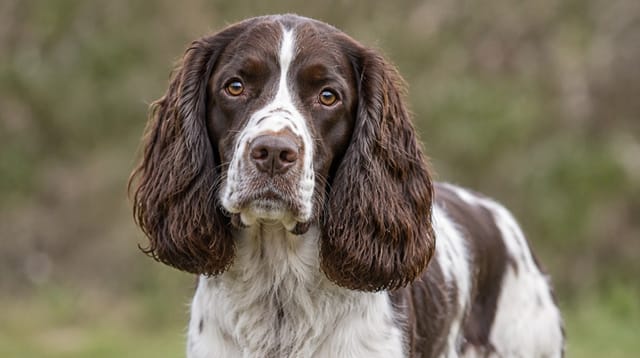 English Springer SpanielA merry, affectionate, easy-to-train gundog that needs plenty of exercise, company and ear care.
 BrittanyA sweet-natured, tireless bird dog with an easy coat that needs up to two hours of running every day.