

At a glance
- Group
- Sporting
- Size
- Small
- Weight
- 20–30 lb
- Height
- 13.5–15.5 in
- Lifespan
- 10–14 years
Temperament
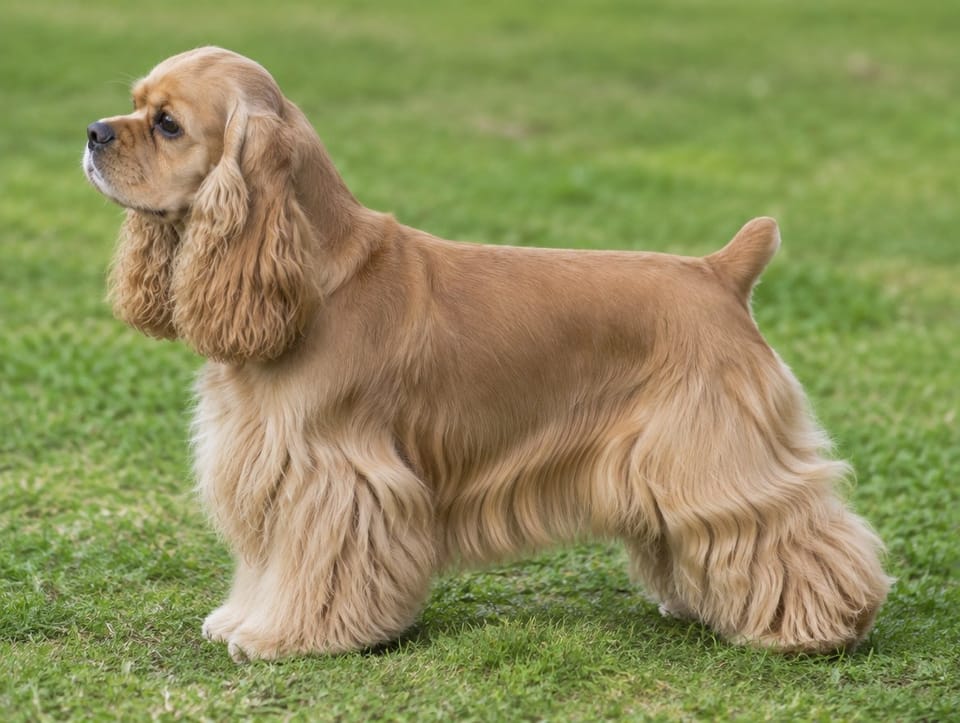
The first thing you notice about a Cocker Spaniel at home is the tail. It is short, it never stops, and it takes the whole back end of the dog with it. The breed standard asks for a "merry" dog, and a well-bred Cocker is exactly that: cheerful, soft-natured, keen to be in your lap and convinced that every visitor has come to see him.
This is the Cocker Spaniel as the American Kennel Club names him, known everywhere else as the American Cocker Spaniel. He is the smallest of the sporting breeds, at 20 to 30 pounds, and for most of the last century he has been bred far more as a companion than as a gundog. That shows. He is gentler and less driven than his cousin the English Cocker Spaniel, who is a little taller, longer in the muzzle, carries much less coat and still has more of the working bird dog in him. If you want the softer house dog with the big round eyes and the full skirt of coat, this is the one.
Cockers are sensitive. A sharp voice upsets them, and a tense household can make one anxious. Some are prone to submissive or excited peeing as youngsters, which they usually grow out of if you keep greetings calm. They are good with considerate children and other dogs, and most live peacefully with cats.
They do not like being alone. A Cocker left for a full working day often barks, chews or frets. Three or four hours is a reasonable limit for most.
Exercise and activity
A Cocker needs about 45 minutes to an hour of activity a day. Two walks of 20 to 30 minutes, plus a game of fetch in the yard or hallway, suits most adults well.
Remember what he was bred for. Cockers flushed and retrieved woodcock, and the nose still works. Many love to quarter back and forth through long grass with their tail going, and most will chase birds. Keep him on a leash or a long line near roads until his recall is solid.
Retrieving games, short scent games with hidden treats and beginner agility all suit the breed and tire him out more pleasantly than a march around the block.
One practical cost: everything he walks through ends up in his coat. Burrs, seeds, mud and wet leaves all cling to the feathering on his legs, ears and belly, so a walk in the woods is followed by ten minutes with a comb.

Grooming and shedding
This is the first hard part, and you should take it seriously. The Cocker's long, silky coat is the most demanding of any sporting breed. Left alone it mats quickly, especially behind the ears, in the armpits and on the legs, and mats pull on the skin and hide sores.
A full coat needs a thorough brush and comb every day or every other day, about 15 minutes each time, working right down to the skin. Most pet owners do the sensible thing and have the dog clipped into a short "puppy cut". Even then, plan on brushing two or three times a week and a visit to a professional groomer every four to six weeks, for the life of the dog.
Shedding is moderate. Much of the loose hair gets caught in the coat instead of landing on your floor, which is one reason the brushing matters.
The ears need their own routine. They are long, heavy and hairy, and they close off the ear canal so that it stays warm and damp. Check and wipe them weekly and dry them after baths and swims. Wipe around the eyes daily, trim nails every three to four weeks and brush teeth several times a week.
Training
Cockers want to please you, and they learn quickly when training is kind. Use food, praise and play, keep sessions to five or ten minutes, and you will have a dog who sits, comes and walks nicely within a few months.
What does not work is pressure. Shout at a Cocker or handle him roughly and he shuts down, or becomes nervous and harder to live with. Be gentle and consistent, and ask the whole family to do the same.
House training can take longer than you expect, particularly with the excited peeing mentioned above. Take your puppy out often, greet him quietly when you come home and never scold him for an accident.
Two things are worth teaching from the first week. One is to be handled: paws, ears, mouth, the brush and the sound of clippers, with treats, so that grooming is not a fight for the next twelve years. The other is to be alone for short periods, building up slowly from a few minutes, so that he learns you always come back.
Socialize him well. A Cocker who meets plenty of friendly people and dogs as a puppy grows into the merry dog the standard describes. One who does not can become shy or snappy.
Health watchlist
The second hard part is that Cockers have a long list of possible health problems, and the breed's popularity has meant a lot of careless breeding. Where your puppy comes from matters a great deal.
Eyes come first. Cataracts, glaucoma and progressive retinal atrophy, a gradual loss of sight, are all seen in the breed, along with cherry eye and eyelid problems. Hip dysplasia occurs too. The American Spaniel Club recommends that breeding dogs have a hip evaluation and a regular eye examination by a veterinary ophthalmologist. Ask to see the results for both parents.
Ear infections are the most common everyday problem, because of the ear shape described above. Many Cockers also have skin allergies, and some have slipping kneecaps, thyroid disease or an immune condition that attacks the dog's own red blood cells.
Cockers love food and put on weight easily. A lean Cocker is healthier in almost every way.
A good breeder will talk openly about problems in their lines. Be cautious of anyone who has puppies always available, cannot show you health results or will not let you meet the mother.
Talk to your vet about an ear-care routine, eye checks and a healthy weight for your dog.
Is this breed right for you?
A great fit if
- you want an affectionate, cheerful dog of a manageable size
- someone is home for most of the day
- you enjoy grooming, or can pay for a groomer every four to six weeks
- you prefer gentle, reward-based training
- you have older or calm children
Think twice if
- you want a low-maintenance coat
- the dog would be alone for a full working day
- your household is loud, rough or short-tempered
- regular grooming and possible eye or ear bills would stretch your budget
- you want a tough, tireless outdoor dog; look at the English Cocker or a Springer instead
Similar breeds
 English Cocker SpanielA merry, busy bird dog who is active outdoors, affectionate at home and happiest with plenty to do.
 Cavalier King Charles SpanielA sweet, gentle lap spaniel who suits almost any home, with a serious inherited heart risk.
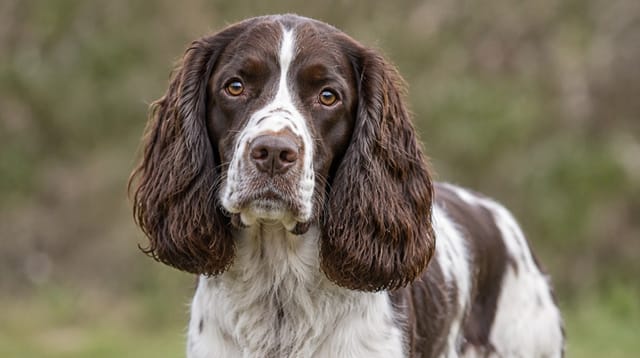 English Springer SpanielA merry, affectionate, easy-to-train gundog that needs plenty of exercise, company and ear care.