
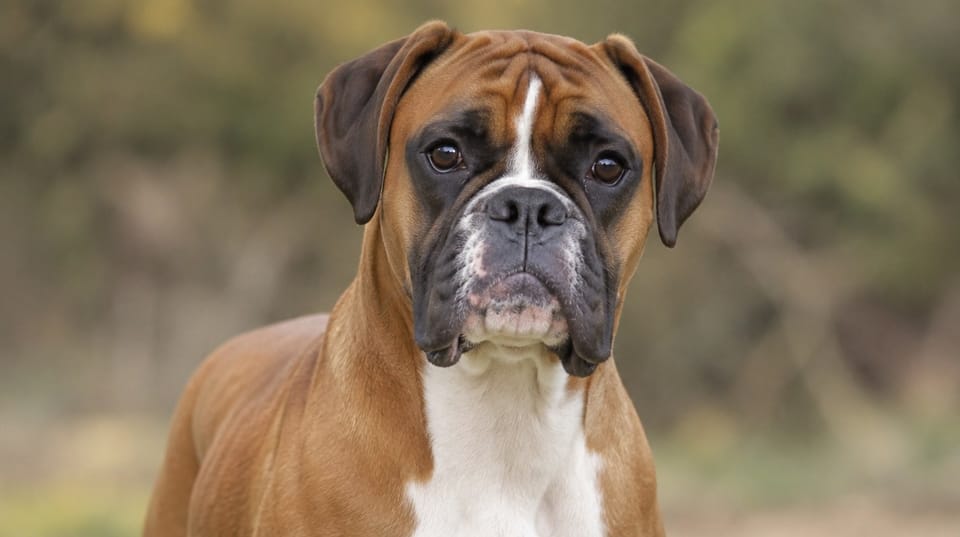
At a glance
- Group
- Working
- Size
- Large
- Weight
- 50–80 lb
- Height
- 21.5–25 in
- Lifespan
- 10–12 years
Temperament
Boxers stay puppies for a long time. Most do not settle into adulthood until they are about three, and even then a good part of the puppy remains. Life with a Boxer involves a lot of bouncing, a full-body wiggle when you come home that owners call the "kidney bean," and a dog who uses his front paws like hands to bat at toys, at other dogs and at you.
Under the clowning is a steady, devoted family dog. Boxers adore their people and are known for patience with children. They were bred in Germany as working and guard dogs, and they still watch over the household. A Boxer will meet a friendly visitor with enthusiasm and will also stand his ground if something seems wrong. He is not a nuisance barker. When he does bark, it usually means something.
The exuberance is the first hard part. A 70-pound dog who greets people by leaping at chest height can flatten a small child or an elderly relative without meaning any harm. That is why we suggest close supervision with under-sixes, however gentle his intentions.
Boxers need company. Left alone for long stretches, they become anxious and destructive. Many get along well with other dogs, though some, males especially, do not tolerate dogs of the same sex.
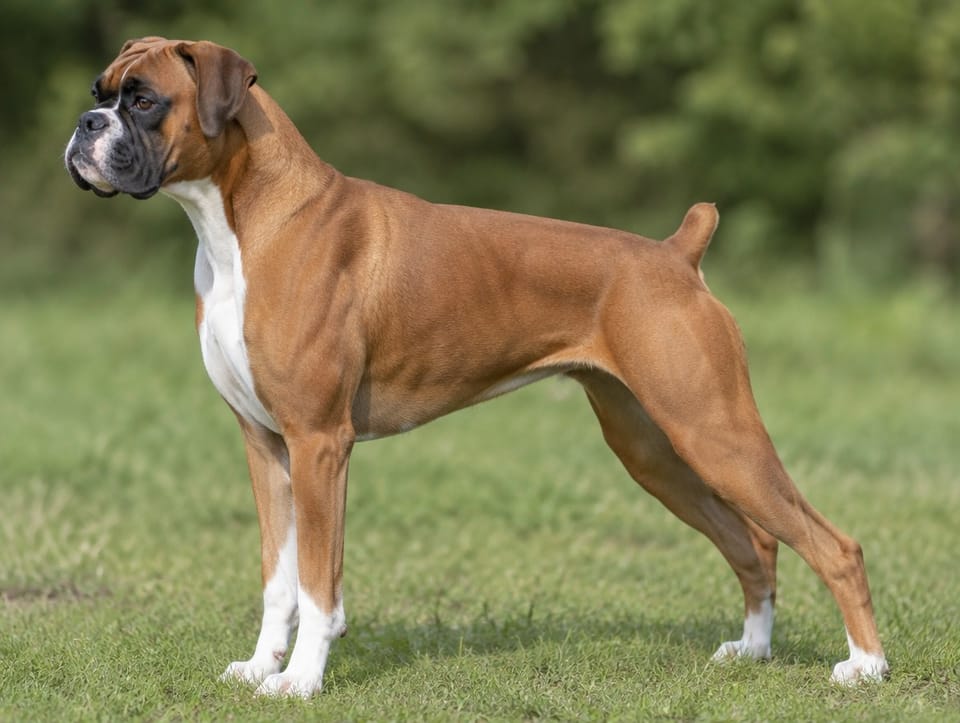
Exercise and activity
Give an adult Boxer at least an hour of real activity a day, and more for a young one. He needs to run, wrestle and play, not just walk. Brisk walks, fetch, tug, games with another friendly dog and time in a fenced yard all work.
Boxers have a strong chase instinct and little road sense, so use a leash or a secure fence. They jump well, too. A low fence will not hold a motivated Boxer.
Weather is the second hard part. The shortened muzzle makes it harder for a Boxer to cool himself by panting, so he overheats quickly. In hot or humid weather, exercise early in the morning or after dark, keep sessions short, and bring water. His thin, short coat is no better in the cold. In winter he will want a coat and shorter outings. This is an indoor dog in every season.
Hold back on hard running and jumping while he is growing, roughly the first 18 months, to protect his joints. And because Boxers are deep-chested and at risk of bloat, ask your vet how to time meals around exercise.
A tired Boxer is a delightful house dog. One who has not had enough to do will find his own project, usually involving your couch cushions.
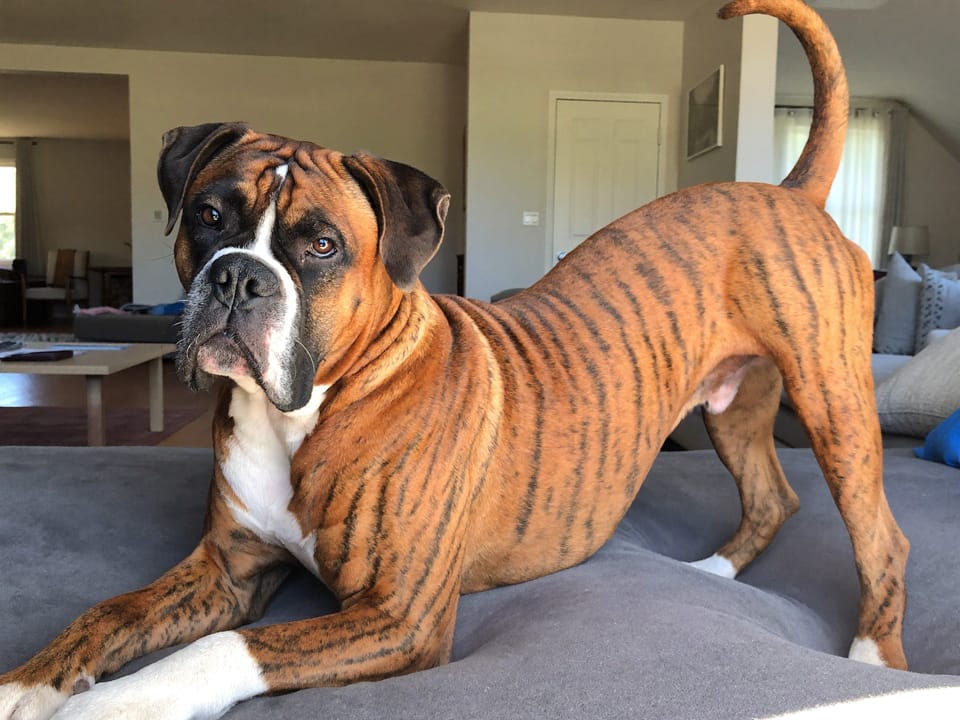
Grooming and shedding
The coat is short, tight and glossy and needs very little care. Brush once a week with a rubber mitt or soft bristle brush to lift loose hair, and bathe every couple of months or when he has rolled in something.
Boxers do shed, lightly to moderately, all year. The hairs are short and fine. Weekly brushing keeps it under control.
They are naturally clean dogs, and many groom themselves a bit like cats. Expect some drool, though, especially after drinking or when food is around, and some snoring. Wipe the folds around the muzzle when they get damp or dirty.
Trim nails every two to three weeks, check ears weekly, and brush teeth several times a week.
White Boxers and Boxers with a lot of white have skin that sunburns easily. Ask your vet about sun protection if your dog is pale.
Training
Boxers are intelligent and willing, and they learn quickly when the lesson is fun. They are also easily bored and have a stubborn streak. Repeat the same exercise too many times and he will start improvising or simply flop on the floor.
Keep sessions short and lively: five to 10 minutes, a few times a day, with treats, toys and plenty of praise. Boxers are sensitive to tone. Harsh corrections make them shut down or dig in. Patience and a sense of humor get better results.
Start early, because the puppy you can pick up at 10 weeks will weigh 60 pounds or more within a year. Priorities are keeping four feet on the floor when greeting people, walking on a loose leash, coming when called, and settling calmly indoors. Ask every visitor to ignore him until he is sitting. It takes months of repetition, and it is worth it.
Socialize him well. Take him to puppy class and introduce him to many people, places and calm dogs during his first year. A well-socialized Boxer is confident and friendly. One who missed out can be pushy or suspicious with strange dogs.
Boxers do well in obedience, agility and scent work, and many work as service and therapy dogs. Giving him a job, even a simple one, makes him easier to live with.
Health watchlist
Boxers are prone to several serious conditions, and you should go in with your eyes open.
Heart disease is the main concern. The breed is known for a condition often called Boxer cardiomyopathy, in which the heart beats irregularly, and for aortic stenosis, a narrowing near the heart's main outflow valve. Either can be present without obvious signs.
Cancer is more common in Boxers than in many other breeds, including skin tumors, lymphoma and brain tumors. Check your dog over regularly and show your vet any new lump.
Other conditions seen in the breed are hip dysplasia, an underactive thyroid, and degenerative myelopathy, a spinal cord disease of older dogs. Bloat is a life-threatening emergency in deep-chested dogs, so learn the warning signs from your vet before you need them. The short muzzle means some Boxers are noisy breathers and handle heat and anesthesia less well than longer-nosed dogs.
The American Boxer Club recommends that breeding dogs have hip and elbow evaluations, a thyroid evaluation, heart screening for aortic stenosis, annual Holter monitoring for Boxer cardiomyopathy, and DNA tests for a gene linked to that cardiomyopathy and for degenerative myelopathy. Ask the breeder to show you results for both parents and ask how long dogs in the line have lived.
Because of the heart and cancer risks, many owners take out pet insurance while the puppy is young.
Talk to your vet about heart screening and a checkup schedule for your own dog.
Is this breed right for you?
A great fit if
- you want a playful, affectionate dog who is devoted to the whole family
- you have school-age children with energy to match his
- you can give an hour or more of active exercise every day
- someone is home for much of the day
- you want a short, easy-care coat
Think twice if
- you want a calm, dignified dog from day one
- you have toddlers or frail relatives who could be knocked over
- you live in a hot climate without air conditioning
- you are out of the house for a full working day
- drool, snoring and gas would bother you
- large vet bills would be a serious strain
Similar breeds
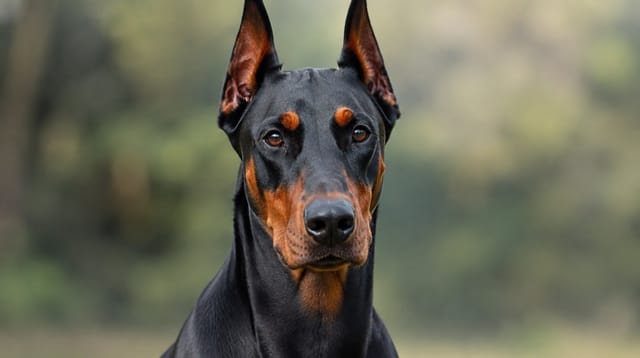 Doberman PinscherA sleek, devoted, highly trainable guardian that needs daily hard exercise and an experienced owner.
 Labrador RetrieverAn outgoing, tireless, food-loving retriever that is easy to train and needs a lot of daily exercise.
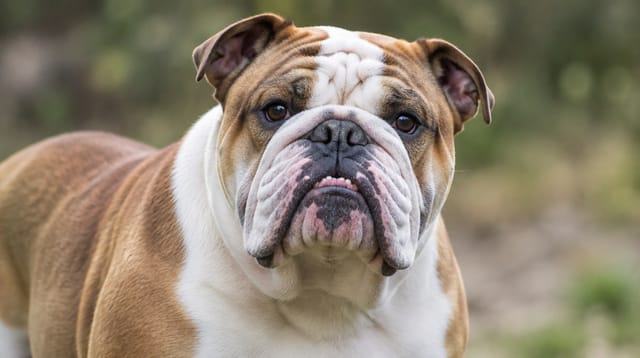 BulldogA gentle, stubborn, low-energy homebody with heavy health needs who cannot cope with heat.