

At a glance
- Group
- Hound
- Size
- Small
- Weight
- 15–30 lb
- Height
- 13–15 in
- Lifespan
- 10–15 years
Temperament
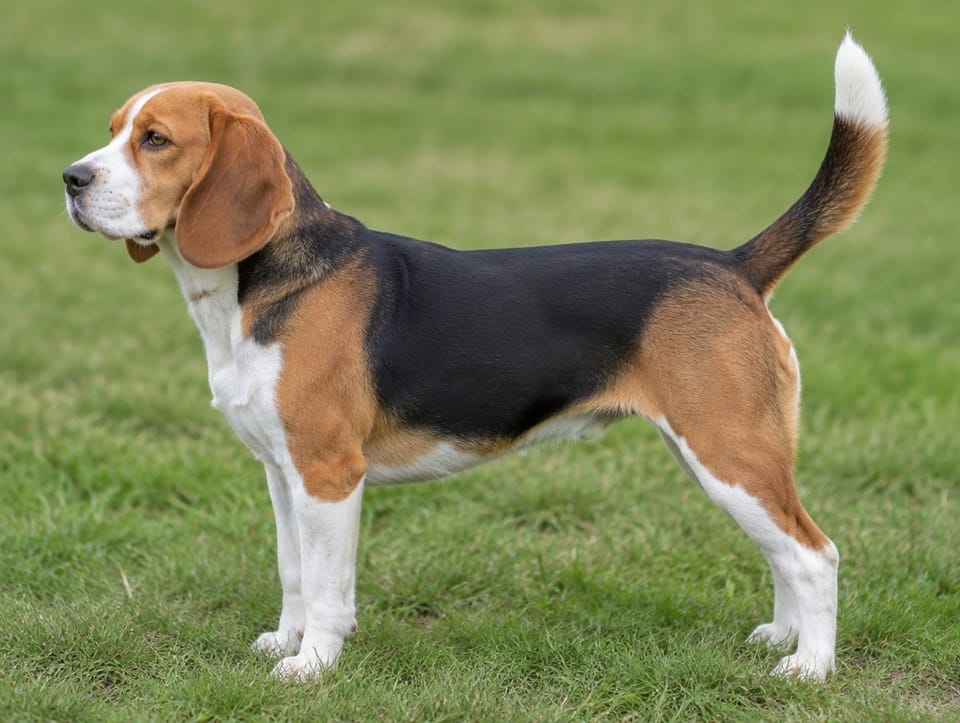
Everything a Beagle does starts with his nose. He was bred to follow rabbit scent in a pack, for hours, in full voice, and the family Beagle on your sofa still has all of that equipment. Understand the nose and you understand the dog.
The pack part is the good news. Beagles are cheerful, sociable and gentle. They like people, they like other dogs, and they are one of the most reliable breeds with children. A Beagle is sturdy enough for rough-and-tumble play, small enough not to flatten a five-year-old, and almost never moody. There is very little guarding instinct here. Most will greet a burglar and show him where the treats are kept.
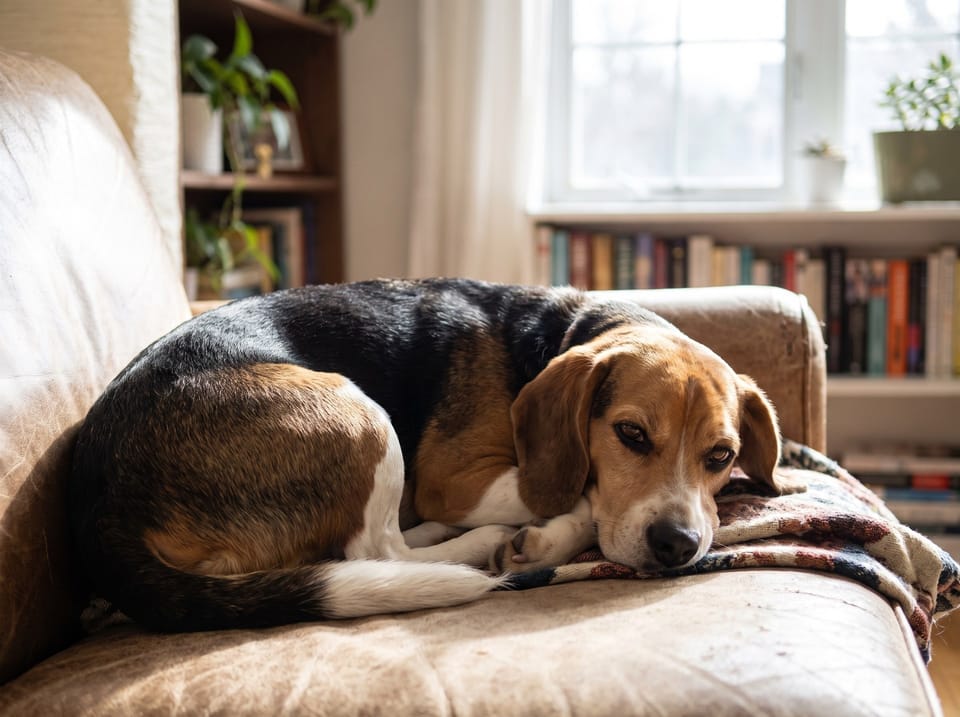
The same pack instinct means a Beagle does not like being alone. Left for long hours he gets bored and lonely, and he tells the neighborhood about it. This is the first hard part: Beagles have three voices, a bark, a yodeling bay and a long mournful howl, and they carry. In a house with company and exercise, most are reasonably quiet. In an empty apartment, they are not.
He is also a committed thief. Food on a counter, a lunch box in a backpack, the kitchen trash: a Beagle will find all of it. Plan your kitchen accordingly.
Exercise and activity
An adult Beagle needs at least an hour of exercise a day, and he is happiest with more. Split it into two outings, and let part of each be a "sniff walk" where he sets the route with his nose. Twenty minutes of serious sniffing settles a Beagle better than twenty minutes of marching.
Good extras are scent games in the yard, hiding his dinner in a snuffle mat or scattering it in the grass, and play with another dog. Many Beagles also make steady jogging partners once fully grown.
Here is the second hard part. A Beagle on a scent trail goes deaf to you. Outside a securely fenced area he should be on a leash, always. This is not a training failure; it is what the breed was built for. Use a long line, 20 to 30 feet, if you want to give him more freedom in open spaces.
Your yard needs a real fence. The American Kennel Club suggests at least five feet high and secured at the bottom, because Beagles both climb and dig. A yard on its own is not exercise, though. A Beagle left alone outside will simply look for the way out.
Grooming and shedding
The Beagle's short, dense coat is easy to care for, but do not mistake easy for hair-free. Beagles shed moderately all year and more heavily in spring, when the thicker winter coat comes out.
Brush once a week with a rubber grooming mitt or a medium-bristle brush, and two or three times a week during the spring shed. It takes about ten minutes. Bathe every month or two, or after he has rolled in something, which he will. Some Beagles have a noticeable "hound" smell, and regular brushing and washing his bedding helps.
The ears need the most attention. They are long, they hang down, and little air gets in. Look inside once a week and ask your vet to show you how to clean them safely. Trim nails every three to four weeks and brush teeth several times a week.
Training
Beagles are bright, but they were bred to think for themselves at the front of a hunt, far from any handler. That makes them independent learners. A Beagle asks, "What is in it for me?" and the honest answer has to be food.
Luckily, food is something he cares about a great deal. Train before meals, use small treats, keep sessions to five or ten minutes, and you will be surprised how quickly he learns. Train without rewards, or with harsh corrections, and he will wander off to do something more interesting. Patience and a little creativity win.
Put your early effort into four things. First, coming when called, practiced in a fenced space, while accepting it will never be fully reliable around wildlife. Second, walking on a loose leash, since a nose-down Beagle pulls hard. Third, "leave it" and "drop it," for everything he finds on the sidewalk. Fourth, being calm when left, built up gradually from a few minutes.
House training can take longer than with some breeds. A strict routine and a crate used kindly help a lot.
Measure his food. Beagles will eat until they are ill, and they gain weight easily. Take training treats out of the daily ration.
Health watchlist
Beagles are generally sturdy, and many live 10 to 15 years. The most common problem is one you control: obesity. An overweight Beagle is at greater risk of joint and back trouble and tends to live a shorter life. You should be able to feel his ribs without pressing hard.
Ear infections are frequent because of the long, closed ear. Beagles can also develop hypothyroidism, epilepsy, hip dysplasia, slipping kneecaps and several eye conditions, including cherry eye. Disc problems in the back occur in the breed as well.
The National Beagle Club of America's recommended screening for breeding dogs covers the hips, heart, eyes and thyroid, along with a DNA test for Musladin-Lueke syndrome, an inherited condition that affects the skin and joints. Ask a breeder to show you the results for both parents, and ask whether epilepsy has appeared in their lines.
Talk to your vet about a healthy target weight for your Beagle and about how to look after his ears.
Is this breed right for you?
A great fit if
- you have children and want a friendly, sturdy, playful dog
- someone is home for much of the day, or you already have another dog
- you have a securely fenced yard
- you enjoy long walks and do not mind stopping at every lamp post
- you like a dog with a sense of mischief
Think twice if
- you live in an apartment with shared walls
- the dog would be alone for a full working day
- you dream of off-leash hikes with a dog who stays close
- you want quick, precise obedience
- you tend to leave food within reach
Similar breeds
 Basset HoundA placid, sociable, low-slung scent hound: easygoing at home, stubborn in training and loud when lonely.
 DachshundA bold, funny, long-backed little hound who barks a lot and needs his spine protected for life.
 Cocker SpanielA merry, gentle little spaniel who adores company and needs a great deal of coat and ear care.