
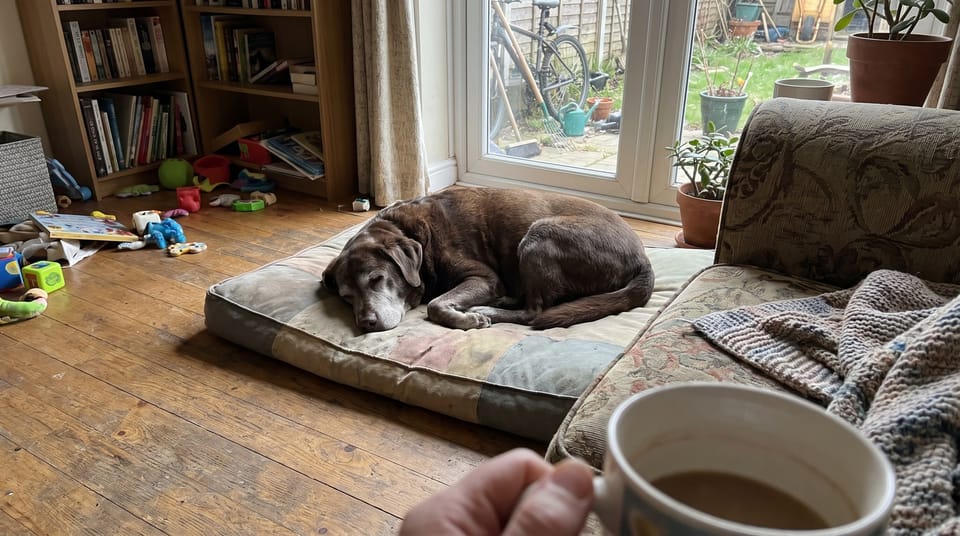
Your dog used to follow you into the kitchen at the first rustle of a bread bag. Now you finish making lunch before a gray muzzle lifts from the bed. You might wonder whether this is simply what getting older looks like, or whether you have missed something.
Older dogs often spend more time resting and may need longer to recover after familiar outings. But a gradual change in routine is different from a sudden loss of energy. The useful question is not just how long your dog sleeps. It is how your dog feels and acts while awake.
Look at the dog who wakes up
An older dog may nap through chores, choose a shorter walk, and settle down earlier in the evening. Changing activity levels and the extra effort of getting around can leave more room for rest. Some time that looks like sleep may simply be quiet lounging.
A reassuring pattern is gradual: your dog wakes readily, notices you, eats normally, and still enjoys familiar things. That might mean a slow sniff around the yard instead of chasing a ball. Your dog can have a smaller day and still have a good one.
For the next three days, if your dog otherwise seems well, jot down a few details:
- When your dog settles and wakes, including restless periods overnight.
- Whether meals, drinking, and bathroom habits seem usual.
- How easily your dog stands and walks across the room.
- Whether your dog shows interest in a favorite person, toy, or outing.
You do not need to measure every nap. A few notes in your phone can reveal a change that is hard to remember later.
Do not wait to finish the notes if your dog seems unwell. Call your vet if the extra sleeping is new or comes with reduced appetite, unusual thirst, trouble getting up, or less interest in everyday life. Trouble breathing, collapse, or being unusually difficult to wake calls for emergency veterinary help.
Make the resting spot easier to use
Start by watching your dog lie down and get up. A bed can feel soft to your hand yet sink so deeply that standing becomes a struggle. Look for cushioning that supports your dog without swallowing their feet, with an entrance they can step across easily.
Place the bed on a level surface near family activity, with enough quiet for uninterrupted naps. Keep it away from drafts, strong direct sunlight, and busy doorways. Your dog should be able to stretch out and move somewhere cooler without climbing stairs.
Try these changes one at a time:
- Put a nonslip rug between the bed and the nearest doorway.
- Keep water within an easy walk, where a spill will not make the floor slippery.
- Wash the cover when soiled and check daily for dampness or bunched fabric.
- Leave a clear route to the usual bathroom exit.
The hard part may be persuading your dog to use a better spot. Put the new bed beside the old one and add a familiar blanket. Give your dog a choice. If getting comfortable still involves repeated circling, panting at rest, or getting up again and again, contact your vet rather than continuing to rearrange bedding.
Keep a little shape in the day
More sleep does not mean your dog needs every activity removed. Familiar meals, bathroom breaks, and gentle outings give the day a comfortable rhythm.
Let your dog set the pace. You might offer a five-minute sniffing outing instead of one long neighborhood loop, then see how your dog moves afterward and later that evening. Five minutes is an example, not a target your dog must meet. Turn back sooner if your dog hesitates, lags, or seems uncomfortable.
Offer quiet company while your dog is awake. A few minutes sitting together outside or an easy search for a familiar toy may be enough. Let your dog disengage and rest.
Avoid keeping your dog awake to try to force a better night’s sleep. Instead, keep the evening predictable, with a calm bathroom opportunity before bed. If your dog starts waking repeatedly overnight, needing extra bathroom trips, or wandering instead of settling, tell your vet.
Notice what has changed besides sleep
The tricky part is that sleeping more can look harmless when the change happens a little at a time. Compare your dog with their own recent routine, not a younger dog or a remembered puppy version.
You may notice that your dog still gets up for dinner but leaves half the bowl. Or the morning walk still happens, but standing afterward takes several attempts. Those details matter more than a single total of hours asleep.
Arrange a vet visit for a persistent increase in sleeping, even if you cannot identify another clear change. Call sooner if you notice coughing, weight changes, bathroom accidents, limping, confusion, or signs of discomfort. If your dog suddenly seems markedly weak or lethargic, seek veterinary advice that day.
You do not have to decide what is causing the change before calling. Describing what you see is enough.
Bring the everyday details to the visit
Take your short sleep notes and mention when the change began. Explain what your dog has stopped doing, whether nights are different, and whether appetite or bathroom habits have shifted.
If an unusual movement or restless spell happens naturally, a short video can help you show what you mean. Do not make your dog repeat something uncomfortable to record it.
While waiting for the appointment, keep rest easy to reach and outings comfortable. If your dog worsens, call again and describe the new signs. An appointment booked for next week should not become a reason to wait through a sudden change today.