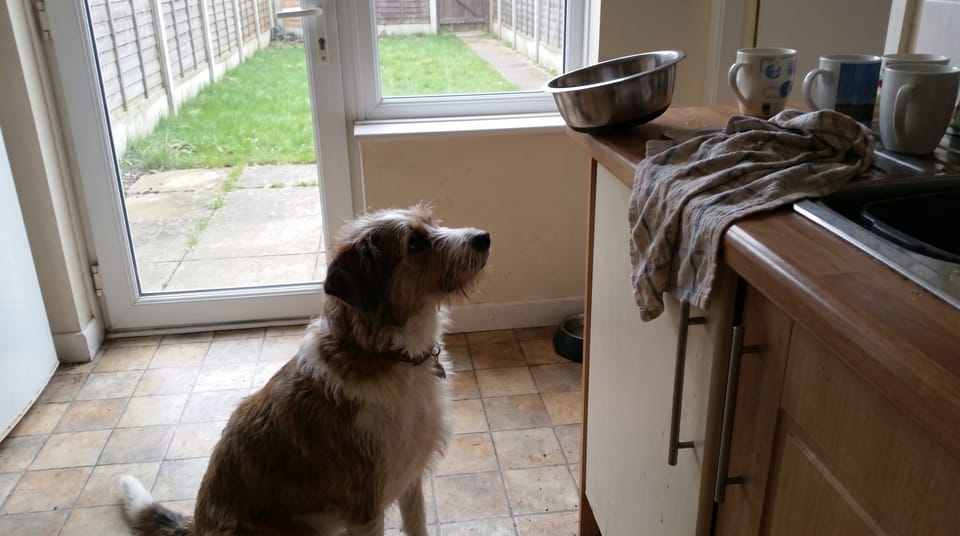
Your dog is waiting by the refrigerator while you look at a bowl of raw meat and wonder whether dinner should feel this complicated. You want food your dog enjoys. You also want to put the bowl down without worrying about your toddler touching it afterward.
Raw feeding has an understandable appeal. You can recognize the ingredients, and preparing meals can feel like a practical way to care for your dog. But recognizable ingredients do not guarantee a safe or balanced dinner.
Raw feeding carries two separate concerns: germs and nutritional balance. Careful handling can reduce contamination, but it cannot make raw meat germ-free. A balanced recipe can address nutrient needs, but it does not remove the germs. Both questions belong in a conversation with your vet before you switch.
What makes raw feeding appealing?
You may hear that raw meals produce smaller stools, a shinier coat, or more enthusiasm at dinner. Those observations can matter to an owner, but they do not establish that uncooked food caused the improvement or that the diet is safe over time.
Changing foods changes several things at once, including fat, fiber, calories, and protein sources. A dog eagerly finishing dinner tells you something about appetite, not whether that dinner supplies every needed nutrient.
If your real goal is relief from itching, recurring loose stools, or poor appetite, start with your vet. Guessing at a food solution can delay finding the reason your dog feels uncomfortable.
You can also ask about a complete and balanced cooked option. Wanting more control over ingredients does not require serving them raw.
The risk travels beyond the bowl
Raw meat can carry harmful bacteria, including Salmonella and Listeria. Your dog may become sick, but a dog that seems perfectly well can also shed germs in stool. A clean-looking bowl and normal-looking poop cannot tell you whether bacteria are present.
That makes this a household decision. Young children, older adults, pregnant people, and anyone with a weakened immune system face greater concerns from foodborne illness. If someone in your home falls into those groups, discuss that with your vet before bringing raw pet food into the kitchen.
Your dog's health matters, too. Puppies, older dogs, and dogs with certain illnesses may be more vulnerable. Raw food deserves particular caution when your dog or someone at home has reduced defenses against infection.
The hard part is keeping contamination contained through ordinary life. You handle a portion, touch the refrigerator door, rinse a bowl, and reach for a towel. Later, your dog licks your hand. Each step offers another route for germs to move.
Freezing does not reliably eliminate harmful bacteria. Frozen, freeze-dried, and dehydrated raw products should not be assumed sterile, either.
Make kitchen habits concrete
If you already serve raw food, treat its preparation as carefully as you would raw meat for your own dinner. Keep your dog away from the counter while you work, and keep pet food separate from food that is ready to eat.
Build these steps into every meal:
- Thaw food in a covered, leakproof container in the refrigerator, away from ready-to-eat foods. Follow the package's storage and thawing directions.
- Use separate utensils and a washable preparation surface. Do not rinse raw meat, which can splash germs around the sink.
- Wash your hands with soap and water for at least 20 seconds after handling the food, its packaging, or the bowl.
- Wash bowls and utensils after each meal with hot, soapy water. Clean and then disinfect affected surfaces with a product suitable for that surface, following its contact time and rinsing directions.
- Remove leftovers promptly when your dog finishes. Do not leave raw food out for grazing or return served leftovers to the main supply.
- Pick up poop promptly, wash your hands afterward, and keep children away from feeding and cleanup areas.
Cleaning reduces risk; it does not erase it. If raw juices spill, keep pets and children away while you clean and disinfect the area. Replace a contaminated kitchen towel before anyone uses it again.
A bowl of meat is not a complete diet
Meat, organs, and bones can look like a varied meal while still supplying too much of some nutrients and too little of others. Nutritional problems may develop before you notice visible changes.
Growing puppies have especially little room for mistakes. Calcium and phosphorus need the right amounts and balance. Adding extra bone or a spoonful of a supplement by guesswork can create another problem.
For packaged food, look for a nutritional adequacy statement saying it is complete and balanced for your dog's life stage. Products intended only for intermittent or supplemental feeding should not become the entire diet. That statement addresses nutrition, not freedom from bacteria.
For homemade meals, ask your vet for a referral to someone with advanced veterinary nutrition training. Bring the exact recipe, including supplements and amounts. Swapping ingredients can change its balance.
Bones deserve their own discussion. Raw bones can break teeth or cause choking and digestive blockages. They are not a dependable shortcut to balanced nutrition or dental care.
Know when to put the plan on hold
If your dog develops vomiting, diarrhea, unusual tiredness, or stops eating, stop serving the suspected food and call your vet. Mention the raw diet and when symptoms began. Keep the packaging, lot number, and recipe details available.
Repeated vomiting, bloody stool, belly pain, collapse, or trouble keeping water down warrants prompt veterinary attention. Choking or difficulty breathing is an emergency. Do not wait for a diet change to fix those signs.
Before your next food purchase, bring your vet a three-day record of meals, treats, supplements, and stool changes. Include your dog's age, health concerns, and who shares your home. That gives you something concrete to discuss: a feeding plan that fits both your dog and the people washing the bowl.