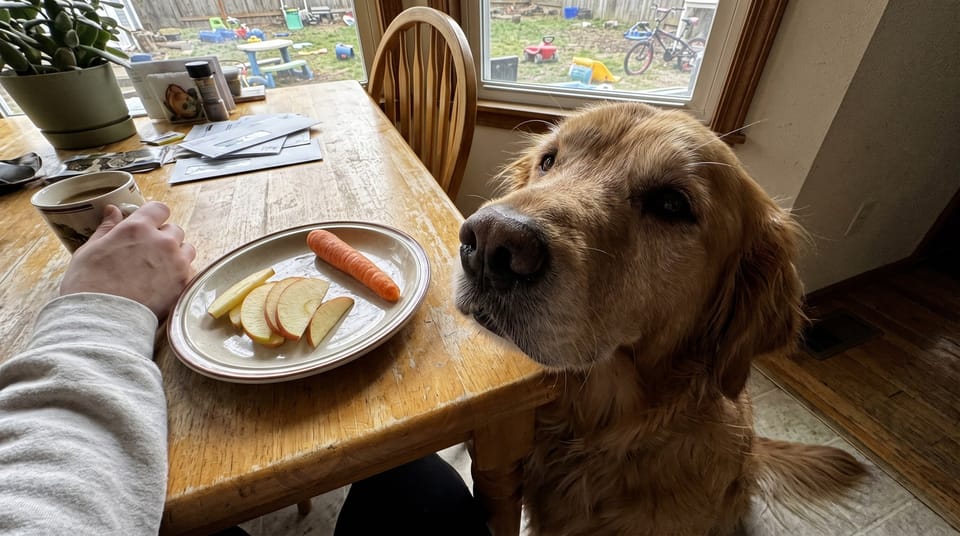
Your dog’s chin lands on your knee just as you slice an apple. Sharing a little feels harmless, and with the right food and preparation, it usually is. The tricky part is that foods sitting beside each other on your counter can have very different consequences for your dog.
A small piece of plain apple or carrot is usually fine for a healthy dog. Grapes, raisins, chocolate, onions, and anything containing xylitol need a different response. If your dog has eaten a potentially poisonous food, call your vet or an emergency veterinary clinic right away. Don’t wait for symptoms.
Start with a tiny, plain treat
For a first taste, offer one pea-sized piece to a small dog or one bite-sized piece to a larger dog. Cut firm foods small enough that your dog can swallow them easily. A whole carrot or a large apple wedge can become a choking hazard, especially with a dog who gulps.
Choose one new food, then watch for vomiting, loose stool, itching, or discomfort over the next 24 hours. That window helps you notice intolerance; it is not a waiting period after a possible poisoning.
Treats should stay a small extra alongside your dog’s complete, balanced food. A handful of snacks can be a lot for a tiny dog. If your dog needs to lose weight, eats a prescription diet, or has a medical condition, ask your vet which extras fit and how much to offer.
Before you share, run through this kitchen checklist:
- Remove seeds, cores, pits, bones, and tough peels.
- Set aside your dog’s portion before adding butter, salt, sauces, or seasoning.
- Check packaged food ingredients, even when you have bought the food before.
- Put the remaining food and scraps somewhere your dog cannot reach.
Foods you can usually share
These are practical options for small, occasional treats. Use this checklist while preparing them:
- Apples: Wash, remove the core and seeds, and cut the flesh into small pieces.
- Carrots: Wash and finely chop, grate, or cook until soft. Skip butter and seasoning.
- Blueberries: Wash and offer a few individually. Squash them for a very small dog.
- Green beans: Serve plain, chopped, and fresh or cooked. Avoid casseroles and seasoned canned beans.
- Cucumber: Wash and cut into small pieces. Thick chunks can be difficult to chew.
- Banana: Peel and offer a thin slice or two. Keep this sweet snack occasional.
- Watermelon: Remove the rind and seeds, then offer a small piece of flesh.
- Chicken or turkey: Cook thoroughly and remove every bone, along with skin and excess fat. Serve plain.
- Egg: Cook through without oil, butter, or seasoning, then share a small piece.
- Rice or oatmeal: Cook in water and serve a little, plain and cooled. Neither replaces a balanced meal.
Peanut butter takes an extra label check. Only offer a small smear if it contains no xylitol, sometimes labeled “birch sugar.” It is rich and easy to overdo.
Cheese and plain yogurt are less dependable choices. Some dogs get gas or diarrhea from dairy, and cheese can be fatty and salty. You do not need either in your treat rotation.
Foods to keep out of reach
The hard part is often recognizing an unsafe ingredient inside something ordinary. A muffin may contain raisins. Gravy may contain onion powder. Sugar-free gum in a bag may contain xylitol.
Use this checklist when clearing counters and putting groceries away:
- Grapes and raisins: Keep away all varieties, including raisins baked into bread or cookies. They can cause kidney injury, and there is no reliable safe amount to offer.
- Xylitol: Check sugar-free gum, candy, baked goods, and nut butters. It can cause a dangerous drop in blood sugar and liver injury.
- Chocolate and cocoa: Keep every type away. Dark chocolate, baking chocolate, and cocoa powder are especially concerning.
- Onions, garlic, leeks, and chives: Avoid raw, cooked, dried, and powdered forms. They can damage red blood cells.
- Alcohol and raw yeast dough: Keep drinks, fermenting mixtures, and rising dough inaccessible. Raw yeast dough can expand in the stomach and produce alcohol.
- Coffee, tea, and other caffeine sources: Keep grounds, beans, tea bags, and concentrated products out of reach.
- Macadamia nuts: Keep the nuts and foods containing them away from your dog.
Other kitchen hazards deserve attention too. Cooked bones can splinter or cause blockages. Corncobs, fruit pits, and skewers can become stuck. Very fatty scraps may trigger serious digestive illness. Moldy food and compost can also be dangerous.
What to do right away
If your dog eats something unsafe, the first few minutes are for getting help, even if your dog seems comfortable.
- Move the food away. Prevent another bite and keep other pets clear.
- Call your vet or an emergency veterinary clinic immediately. If you cannot reach one, contact an animal poison service.
- Gather the details while calling. Have your dog’s approximate weight, the food or ingredient, the possible amount, and the time it happened.
- Save the packaging. Take it, remaining food, or a photo of the ingredient label with you.
- Follow the veterinary instructions. Do not make your dog vomit or give salt, oil, milk, or another home remedy unless specifically directed.
If your dog collapses, has a seizure, struggles to breathe, or cannot stand, go to an emergency veterinary clinic immediately. Have someone call ahead if possible.
Repeated vomiting, marked weakness, belly pain, or blood in stool also needs prompt veterinary attention. When you are unsure what disappeared from the counter, say that plainly. You do not need a perfect ingredient list before making the call.