Your dog finishes breakfast, licks the bowl, and looks at you as if something has gone terribly wrong. You check the food bag again. Was that scoop enough?
The chart gives you a place to begin, but your dog's empty bowl cannot tell you whether the amount is right. A better check is what happens to your dog's shape and weight over the next few weeks.
Start with a measured daily amount, include treats, and look for ribs you can feel easily beneath a light covering and a waist behind the rib cage. Keep portions consistent while you watch. If weight keeps creeping up or down, bring your notes to your vet.
Read the chart before you fill the cup
Find the feeding chart for your dog's life stage and weight. Check whether the amount shown is per day or per meal. Confusing those two can make a big difference.
If the chart suggests 2 cups a day and you serve two meals, that means 1 cup at breakfast and 1 cup at dinner, before accounting for extras. It does not mean 2 cups each time the bowl comes out.
Check the measurement, too. A standard measuring cup is different from a coffee mug or the scoop that happened to fit inside the bag.
For an adult dog already at a comfortable weight, the chart's matching weight range is a reasonable starting point. If your dog needs to gain or lose weight, ask your vet which weight and feeding amount to use. Guessing from a hoped-for number on the scale can lead you astray.
Puppies, pregnant or nursing dogs, and dogs with medical conditions need a more individual plan. A puppy's growing body is not a good place to try an adult dog's portion-cutting routine.
Make the same scoop mean the same amount
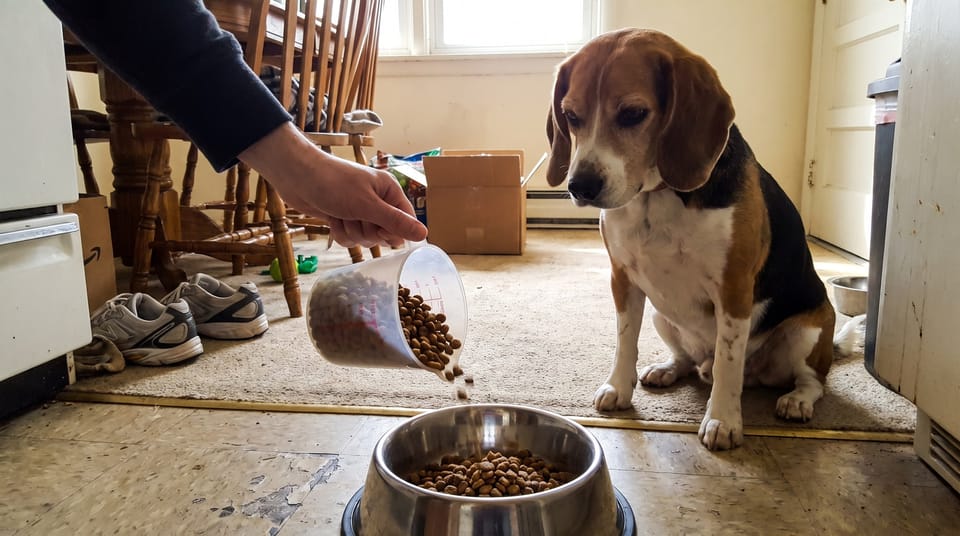
Pick one standard measuring cup and keep it with the food. Fill it the same way every time, with the kibble level at the top instead of heaped into a little hill. Avoid packing it down.
If the bag lists portions in grams and you have a kitchen scale, weighing can make meals more consistent. Otherwise, careful use of the same measuring cup is a workable habit.
Write the daily amount somewhere everyone who feeds your dog can see. For a dog eating twice daily, a simple breakfast-and-dinner checklist helps prevent the very convincing “nobody fed me” performance.
For the first seven days, keep a short record:
- Measure each meal before putting it in the bowl.
- Note treats, chews, toppers, and table scraps.
- Record food left behind as well as food served.
- Mark who fed each meal.
The hard part is often the household, not the measuring. If several people give snacks, put the day's planned treats in one container. Everyone takes from that container, so extras stop being invisible.
Watch the waist over the next few weeks
Choose one day each week for a quick body check. Look down at your standing dog. You should generally see a waist narrowing behind the ribs. From the side, look for the belly to tuck upward toward the back legs.
Then use your hands. With gentle pressure, you should be able to feel individual ribs beneath a light covering. A thick coat can hide a waist, so looking alone may mislead you.
These checks take about two minutes. Body shapes differ, and your vet can show you what a comfortable condition looks and feels like for your particular dog.
Take a top and side photo at the start, then repeat after two to four weeks with your dog standing similarly. If you can weigh your dog safely, use the same scale under similar conditions. A clinic weight check may be easier for a large dog.
One reading is less useful than a pattern. Watch the photos, rib feel, waist, and weight together. Do not keep changing dinner because your dog looked rounder after one meal or begged harder on Tuesday.
Count treats before changing meals
Treats are food, even when they arrive during a walk or disappear in one bite. Dental chews and spoonfuls of toppers belong in the tally, too.
Keep your dog's complete food as the main source of nourishment. You can set aside some of the measured daily kibble for rewards instead of adding another handful from the bag.
If your otherwise healthy adult dog's waist is gradually disappearing, first check for heaped cups, duplicate meals, and uncounted extras. Fix those inconsistencies before cutting the main meal.
If a portion adjustment is still needed, make one small, measured change and write it down. Avoid a big cut or several changes at once. Ask your vet to help choose the adjustment if you are unsure, especially for a very small dog, where a tablespoon represents more of the daily ration.
Keep watching over the following two to four weeks. Begging can make consistency difficult. An empty bowl by itself is not a reason to increase portions.
Bring a drifting weight to your vet
If weight keeps moving in the wrong direction despite consistent portions, contact your vet. Bring the food label, your feeding notes, and any weight records. Those details make the conversation more useful than “about a scoop.”
Do not wait several weeks if your dog loses weight unexpectedly, stops eating, or develops vomiting, diarrhea, unusual thirst, or a marked change in energy. Those changes belong with your vet rather than another experiment with the measuring cup.
Before the appointment, write down when the change began and what your dog actually eats in a day, including anything offered by other people.