
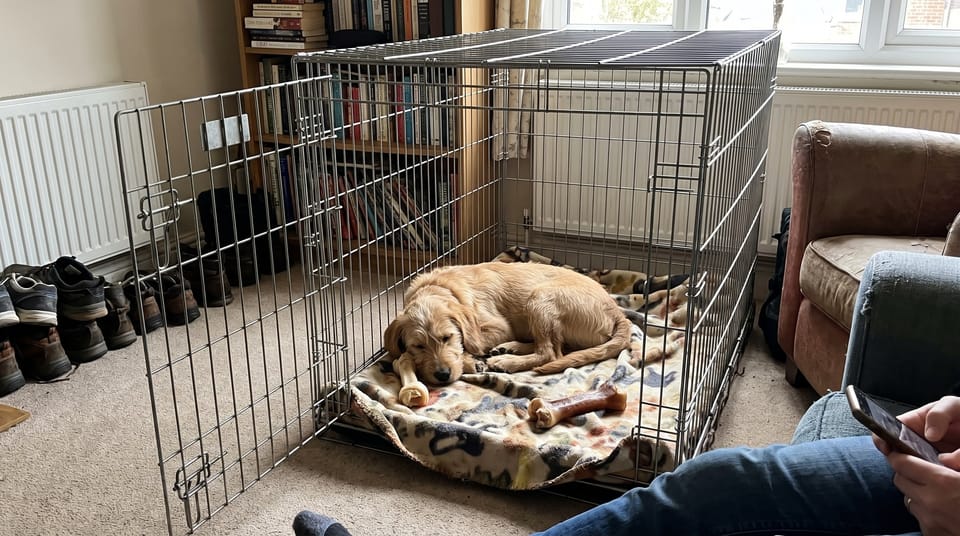
You drop a treat into the crate, and your puppy stretches forward with both back feet planted outside. One quick grab, then a retreat. You may have pictured a cozy nap. Your dog is still deciding whether this strange little room feels safe.
Start with that decision. The first goal is a dog who walks in willingly and can walk back out. Closing the door comes later. For now, a few relaxed visits are enough.
Make the first visits easy
Put the crate in a quiet corner where your dog can still see you. Choose one with enough room to stand normally, turn around, and lie comfortably on one side. Secure the door fully open so it cannot swing against your dog.
Add a blanket only if your dog leaves fabric alone. Remove collars and harnesses before crate time so they cannot catch on the bars. Save unfamiliar chews for supervised use.
Try this after a potty break, when your dog is awake but settled:
- Drop one small treat near the entrance. Let your dog approach without being pulled or pushed.
- Put the next treat just inside. If your dog hesitates, move it closer to the opening.
- After a willing step inside, offer another treat, then let your dog leave.
- Repeat three to five times and finish after about one minute.
Stay beside the crate without blocking the exit. If your dog walks away, let the session end. Try an easier version later.
Serve the next meal at the entrance. Over several meals, move the bowl farther inside, only as far as your dog will comfortably follow. Keep the door open. If your dog will not eat, bring the bowl forward again.
For the first day or two, these visits and meals may be your whole plan. You already have useful progress when your dog approaches freely, eats comfortably, and stops rushing back out.
Close the door for a heartbeat
Once your dog readily enters and stays to eat, sit beside the crate during a meal. Touch the door, then drop a piece of kibble into the bowl. Next, move the door a few inches and reward again.
If your dog stays loose and keeps eating, try a tiny closure:
- Close the door for one second, leaving it unlatched at first.
- Give a treat through the bars, keeping your fingers clear.
- Open the door while your dog is still comfortable.
- Repeat up to three times, then finish.
Work toward briefly latching it, then opening it again. Across later sessions, try three seconds, five seconds, and ten seconds. Mix in easier turns instead of making every repetition longer.
Change one thing at a time. A longer closure is enough of a challenge without also standing up or leaving the room.
If your dog stops eating, stiffens, or watches the latch closely, open the door and make the next repetition easier. You might return to touching the door without moving it. That smaller step gives you something your dog can handle.
Build over days, without a deadline
The hard part is that your schedule may move faster than your dog’s comfort. Ten calm seconds today do not promise an hour tomorrow.
Aim for two or three sessions a day, usually one to three minutes each. End sooner if your dog loses interest. Once 30 seconds with you sitting nearby looks comfortable over several sessions, try one minute. Then return to an easy ten seconds.
Watch your dog more closely than the clock. A loose body, normal eating, and choosing to settle suggest you can try a small increase. Repeatedly getting up or staring at the door suggests you should shorten the next turn.
Add distance separately. Stand up and sit down. Later, take one step away and return. Eventually, disappear through a doorway for one second. Come back before your dog worries, and build from there.
Practice after potty trips. Before a longer rest, offer some gentle activity and another chance to go outside. Keep water needs in mind, and do not restrict drinking to stretch crate time.
While you build comfort, use a puppy-safe room, a suitable pen, or someone’s help for periods your dog cannot yet manage in the crate.
Treat whining as information
Whining can mean several things: needing to potty, wanting company, feeling frustrated, or being frightened. The sound alone cannot tell you which.
If your puppy wakes and whines, or it has been a while since the last potty trip, take them straight outside. Keep the trip quiet, then reassess whether they are ready to settle.
For a brief whimper with otherwise relaxed behavior, move closer. If a natural pause happens, open the door then. But do not wait for silence while your dog’s distress builds. You do not need to withhold help to teach comfort.
Escalating cries, heavy panting when it is not warm, drooling, or frantic escape attempts mean the session needs to end. Return calmly and let your dog out safely. Next time, go back to a much easier step.
If that distress repeats even during tiny closures, stop practicing closed-door sessions and seek help from a reward-based trainer. Contact your veterinarian if the behavior is sudden or your dog seems unwell.
Leave room for an ordinary nap
Keep the crate open between sessions. Occasionally place a treat inside for your dog to discover. When your dog wanders in to rest, let that choice stay peaceful instead of immediately closing the door.
At bedtime, having the crate near you can make it easier to notice stirring and respond to potty needs. A puppy may still need overnight trips even when daytime practice goes well.
Leave tomorrow’s practice small enough to succeed: breakfast with the door open, a few seconds latched while you sit nearby, then a chance to come out and stretch.