
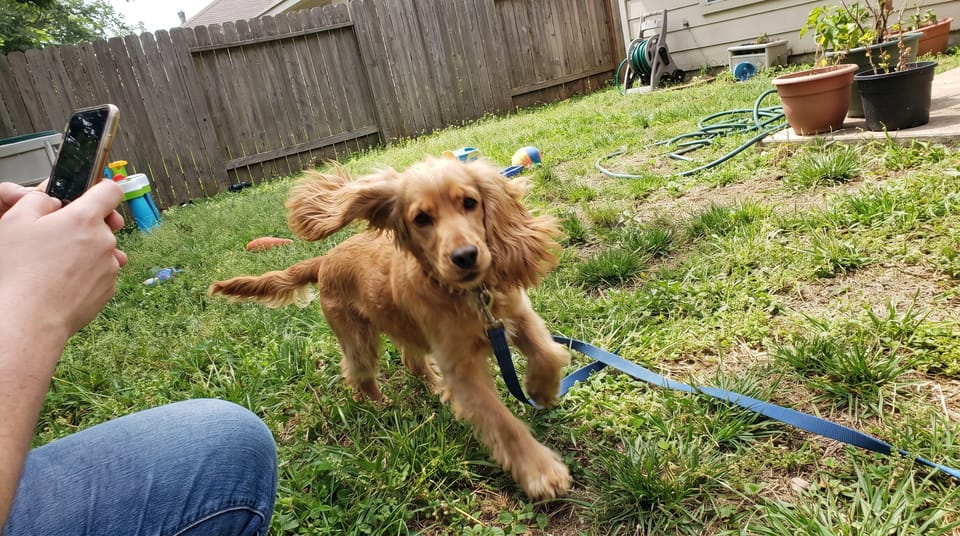
Your dog hears the treat bag from two rooms away. Out in the yard, though, you say “come” and get one ear twitch while the sniffing continues. Say it three more times and you have a familiar little routine, just not the one you wanted.
A useful recall starts with easier moments. You say one word, your dog comes all the way to you, and something good happens. Practice that in the kitchen before asking for it beside a squirrel. Outside a secure fence, a long line gives you room to practice while keeping your dog close enough to manage.
Start where coming to you is easy
Choose a short cue, such as “come” or “here.” Put a few pea-sized pieces of a treat your dog loves in your pocket. Start in a quiet kitchen when your dog is awake and interested, with no dinner bowl or dropped crumbs competing for attention.
For your first session:
- Stand two or three feet away. When your dog looks toward you, say your cue once in a friendly voice.
- Take two quick steps backward. As your dog reaches you, say “yes” and feed a treat close to your legs.
- Gently touch the harness, give another treat, then say “go sniff” and let your dog move away.
- Repeat three to five times, then finish. Keep the session under two minutes.
That harness touch matters. Coming close enough to grab a treat and dart away is different from coming within reach. If your dog ducks away from your hand, leave the touch out of recall practice for now. Separately, practice moving your hand a little toward the harness, feeding a treat, and stopping before your dog pulls away.
Try two short sessions a day for three days. Add a few feet only when your dog turns promptly and comes straight over. Say the cue once, reward the arrival, and make the next attempt easier if it fails. Those three habits matter more than covering distance.
Take the same game into the yard
The hard part is that your kitchen cue may mean very little beside yesterday’s rabbit tracks. When you change places, shorten the distance again. Begin within three feet of your dog in the quietest part of the yard.
In an unfenced space, attach a 15- to 20-foot long line to a well-fitting harness. Hold the line, keeping loose loops clear of your feet. Never wrap it around your hand. Choose open ground away from roads, playground equipment, and anything the line could catch on.
Start with only a few feet available. Call when your dog finishes a sniff or glances your way, then back up and reward the trip to you. Gradually allow more distance while keeping slack in the line. Move with your dog so a sudden dash does not end in a hard stop.
The line is your backup, not a way to pull your dog through the lesson. If your dog does not respond, walk closer without jerking it. Get their attention with a cheerful sound or movement, reward them when they reach you, and reset somewhere easier.
Spend three to five minutes here. You can finish after three good returns instead of waiting for one that goes wrong.
Make coming back worth the interruption
A single dry biscuit may be welcome in the kitchen and easy to ignore outdoors. Bring small, soft treats your dog eagerly eats. For a particularly good return, give three little pieces one at a time while your dog stays beside you.
Food is only part of the reward. Often, you can release your dog right back to the sniff they left. Call, feed, briefly touch the harness, then say “go sniff.” Returning to you becomes a pleasant pause in the outing.
Never use your recall cue to bring your dog over for something they hate. If coming when called regularly leads straight to an unwanted bath or nail trim, hesitation makes sense.
When an unpleasant chore is necessary, walk over calmly and help your dog transition without using the cue. Practice handling separately with rewards and smaller steps. Even when you need to end a walk, leave time for treats and a short sniff together after clipping on the regular leash.
Let the park be the next small step
Choose a quiet park where dogs and long lines are allowed. Start at the edge, far from dogs playing, running children, and picnic food. Keep hold of the line. A busy off-leash area is a poor place for this practice.
For the first visit, use the same short distance you used in the yard. Ask for three easy returns during a ten-minute sniff walk. If your dog cannot turn toward you or take a favorite treat, move farther from the activity.
Change one thing at a time: distance, distraction, or location. A successful return from ten feet on empty grass does not mean your dog is ready for ten feet beside a bouncing ball.
Keep using the line in open spaces. No recall is a guarantee around traffic or wildlife.
Give a stale cue a fresh start
If “come” has become background noise, choose a new word and rebuild it in the kitchen. Everyone in the household should use the same new cue and reward the same full arrival.
For the first week, arrange easy opportunities rather than testing it against distractions. Keep the old routine from creeping back: no repeated calling from across the yard, and no calling when your dog is already absorbed in something you cannot compete with.
If your dog arrives slowly, reward them anyway. Next time, shorten the distance or choose a quieter moment. Keep a few treats near the back door so an ordinary trip outside can include one easy return and another minute of sniffing.