
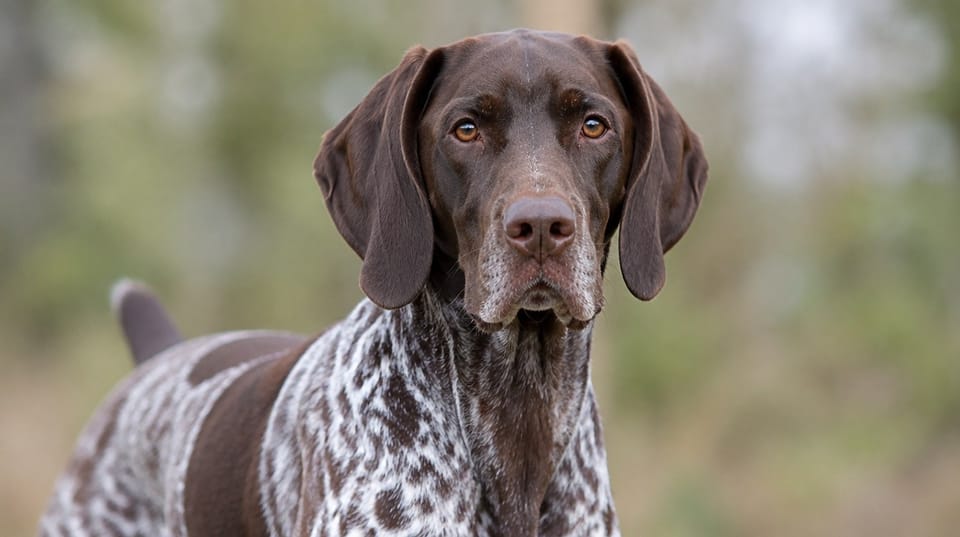
At a glance
- Group
- Sporting
- Size
- Large
- Weight
- 45–70 lb
- Height
- 21–25 in
- Lifespan
- 10–12 years
Temperament
Ask anyone who owns a German Shorthaired Pointer what the dog is like and the first word is usually "busy." The GSP was developed in Germany as an all-purpose hunting dog, expected to find birds, point them, retrieve from land and water and keep going all day. He brings that engine into your house.
He also brings a great deal of affection. A GSP is a people dog. He wants to be touching you, preferably while sitting on you, and he greets you after a ten-minute absence as if you had been gone a month. He is friendly with visitors, bright, playful and eager to be included in everything. With enough exercise he is a lovely house dog who sleeps in a heap at your feet.
Without enough exercise he is a different animal, and this is the first hard part. An under-worked GSP paces, whines, jumps fences, chews furniture and invents his own entertainment. Almost every GSP given up to rescue is there because the owners underestimated this.
The second hard part is how long it lasts. GSPs mature slowly. Expect puppy-level energy and silliness until about two years old, in a body that reaches 55 to 70 pounds in a male well before then. They are good with children, but a young one is bouncy enough to send a small child flying, so supervise.
He does not do well alone for long stretches. Boredom and loneliness together bring out the worst in him.
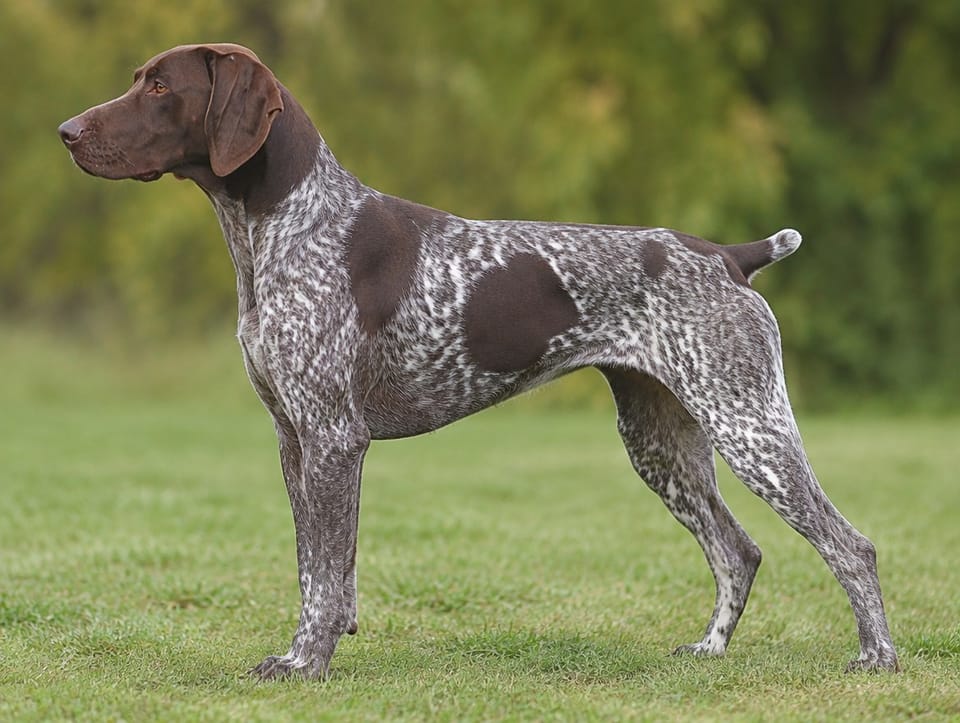
Exercise and activity
Plan on two hours a day for an adult, and make at least one of those hours hard exercise: running, not walking. A stroll around the block does not register with this breed.
GSPs make superb partners for runners, cyclists, hikers and hunters. Once he is fully grown, he can run five or ten miles with you and still be ready to play. Most love water and are strong swimmers, and their webbed feet help. Fetch, especially into a lake, is a good way to tire him when you are short on time.
Give him work for his nose and brain as well. Hunting and field training are the obvious outlets. If you do not hunt, try scent work, agility, dock diving or tracking. Fifteen minutes of searching for hidden toys takes the edge off a rainy day.
He needs a secure place to run. A six-foot fence is sensible, because GSPs jump and climb. Out in the open, his hunting instinct will carry him a long way after birds, so build a strong recall before you trust him off the leash.
Go easy on puppies. Keep runs short and on soft ground until growth is finished, and ask your vet when he is ready for distance. Because the breed is at risk of bloat, ask your vet how to time meals around hard exercise.
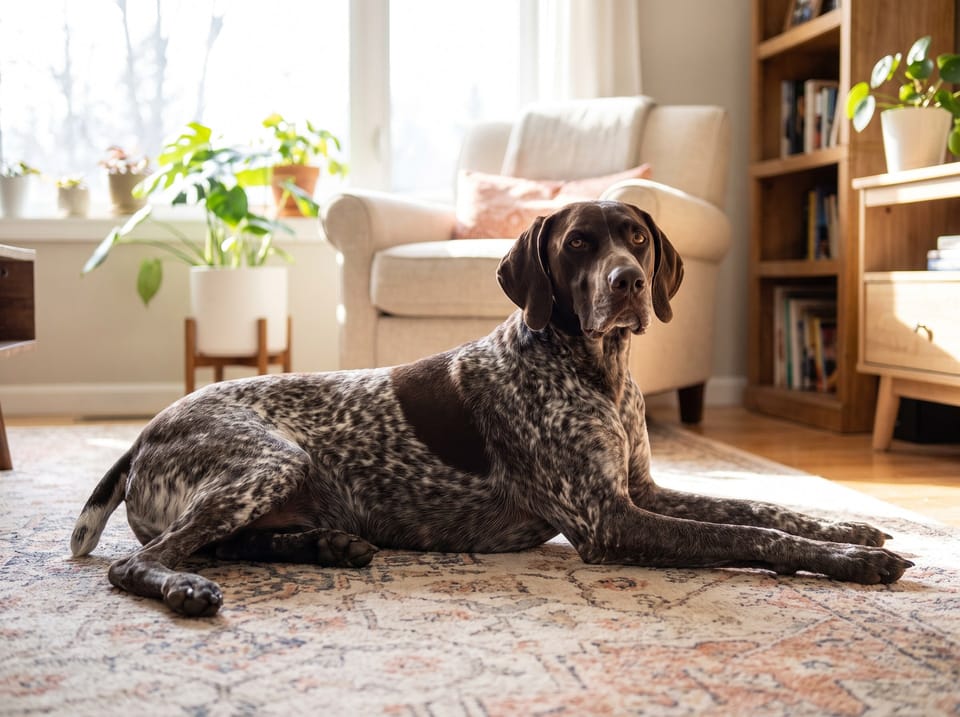
Grooming and shedding
The coat is short, thick and tough, and it takes very little work. Brush once a week with a rubber mitt or firm bristle brush. Bathe him only when he needs it, which after a swim in a pond may be often.
GSPs shed moderately all year, with a heavier spell in spring and fall. The hairs are short and stiff and they weave themselves into upholstery and clothing, where they are harder to remove than long hair. Brushing two or three times a week during the heavy weeks helps.
After any day in the field, check him over: feet and between the toes for cuts and grass seeds, ears for dirt, and skin for ticks. Dry and check the ears after swimming, since drop ears hold moisture. Trim nails every three to four weeks. Active dogs still need it, especially the dewclaws. Brush teeth several times a week.
Training
German Shorthaired Pointers are intelligent, cooperative and keen to work with you. They are among the easier sporting breeds to teach, provided you can get their attention, and that is the challenge. A young GSP is distractible. A bird, a leaf or a smell can end the lesson.
So exercise first, train second. Ten minutes of training after a run is worth an hour before one. Keep sessions short and varied, use food and toys, and stay consistent. They are sensitive dogs and do not respond well to harsh handling, which makes them worried or shut down.
Start with a puppy class and keep going. The skills that matter most are coming when called, walking on a loose leash, a calm greeting with four feet on the floor, and settling on a mat. Teach the settle on purpose. This breed does not come with an off switch, and you have to install one.
Crate training helps a great deal in the first two years, both for house training and to protect your belongings when you cannot watch him.
Be realistic about small animals. GSPs have a strong prey drive. Many learn to live with a cat they are raised with, but some never can be trusted, and pet birds, rabbits and backyard chickens are at real risk.
Health watchlist
GSPs are generally healthy and usually live 10 to 12 years.
Bloat is the emergency to know about. The stomach fills with gas and can twist, and it is life-threatening in deep-chested breeds like this one. Learn the warning signs from your vet before you need them.
Hip dysplasia and elbow dysplasia occur. Some heart conditions are seen in the breed, as are inherited eye problems, including progressive retinal atrophy and cone degeneration, which causes day blindness.
The German Shorthaired Pointer Club of America's recommended screening for breeding dogs covers hips, elbows, heart and eyes, along with a DNA test for cone degeneration. Ask the breeder to show you results for both parents. Ask too whether their dogs are bred mainly for field work or for the show ring and family life, since field lines are often even more driven.
Active dogs pick up injuries: cut pads, torn nails, strains and grass seeds in ears and paws. Talk to your vet about bloat, joint care and tick protection for the area where you live.
Is this breed right for you?
A great fit if
- you run, hike, cycle or hunt and want a dog who keeps up
- you can give two hours a day, every day, whatever the weather
- you have a house with a securely fenced yard
- you want an affectionate dog who stays close to the family
- you enjoy training and might try a dog sport
Think twice if
- you live in an apartment
- your idea of exercise is a daily walk around the neighborhood
- the dog would be alone through a working day
- you keep cats, rabbits, chickens or pet birds
- you want a calm dog before his third birthday
Similar breeds
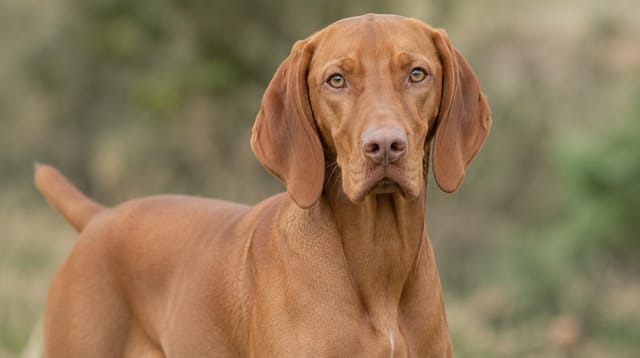 VizslaA red-gold, endlessly energetic gundog who sticks to his people like Velcro and hates being left.
 BrittanyA sweet-natured, tireless bird dog with an easy coat that needs up to two hours of running every day.
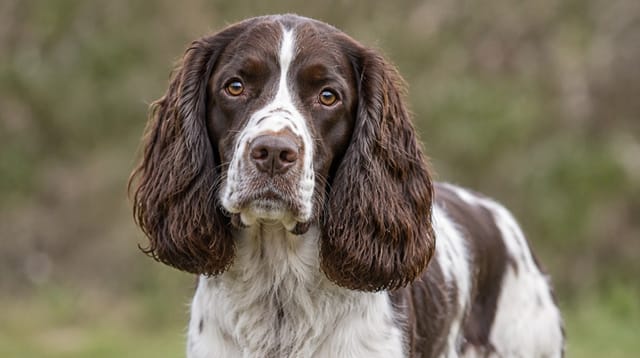 English Springer SpanielA merry, affectionate, easy-to-train gundog that needs plenty of exercise, company and ear care.