
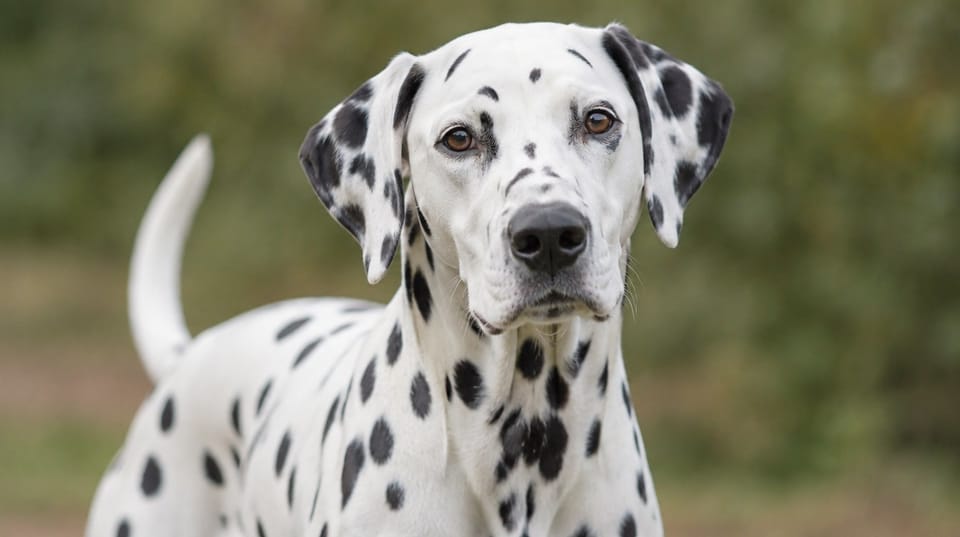
At a glance
- Group
- Non-Sporting
- Size
- Large
- Weight
- 45–70 lb
- Height
- 19–24 in
- Lifespan
- 11–13 years
Temperament
Long before the movies, the Dalmatian earned his living by running. He was the coach dog, trotting beside horse-drawn carriages for 20 or 30 miles a day and guarding the horses and luggage at night. Later he ran with horse-drawn fire engines. Keep that picture in mind, because it explains almost everything about the dog: the stamina, the watchfulness and the need to be on the move.
A Dalmatian is devoted to his own people and likes to be close to them. He is playful, often clownish, and has a long memory for both kindness and unfairness. With strangers he tends to be reserved and dignified until he has decided about them, and he makes a good watchdog.
He is a sensitive dog in a strong body. He does not cope well with rough handling or with being shut away from the family. Left alone and under-exercised, he becomes destructive, noisy and hard to live with. Many Dalmatians given up to rescue were bought for their looks by people who did not expect so much energy.
He can be very good with children, but a young Dalmatian is 50 or 60 pounds of bounce and can easily knock a small child down. He suits families with older, active kids better than families with toddlers.
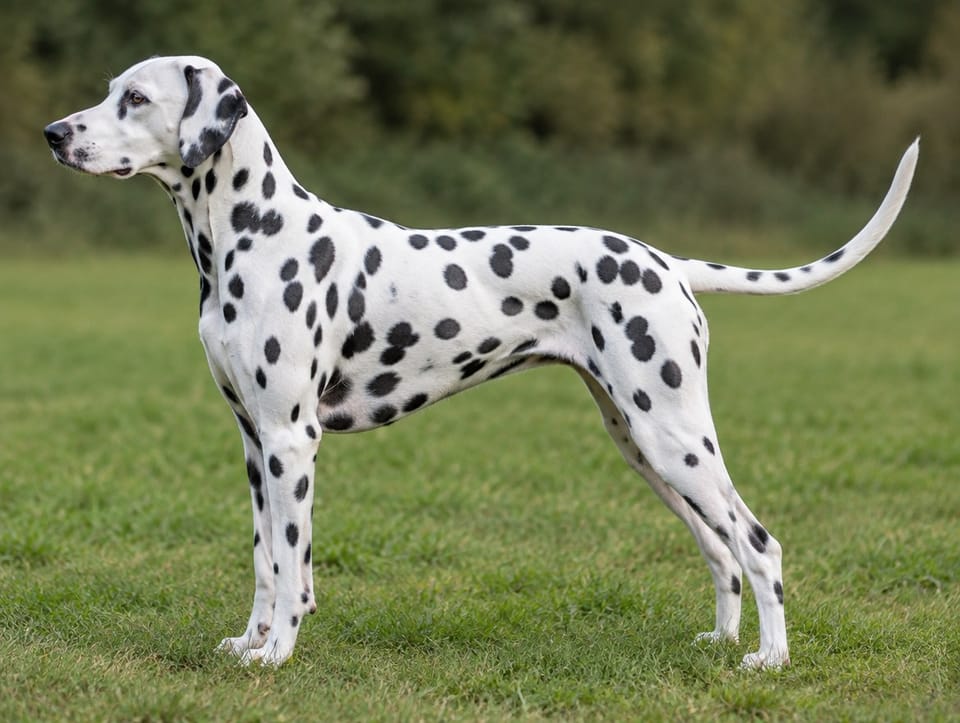
Exercise and activity
This is the first hard part. An adult Dalmatian needs 90 minutes to two hours of vigorous exercise every day. A walk on a leash is not enough. He needs to run.
He is one of the best breeds for a runner or cyclist, once he is fully grown at about 18 months to two years. He will trot beside you for miles and be ready to go again the next morning. He also enjoys hiking, fetch, agility and road trials, a sport in which Dalmatians follow a horse and rider as their ancestors did.
Use a fenced area for off-leash running. He covers ground quickly and may follow his nose or his curiosity out of sight.
Add training and games for his mind. A Dalmatian who has run for an hour and then learned something new will sleep. One who has only walked around the block will look for something to do, and you will not like his choices: chewing, digging, jumping fences and barking.
His short coat gives little protection from cold, so he will want a jacket in a hard winter. Give him shade and water in summer. He belongs indoors with his family at night.
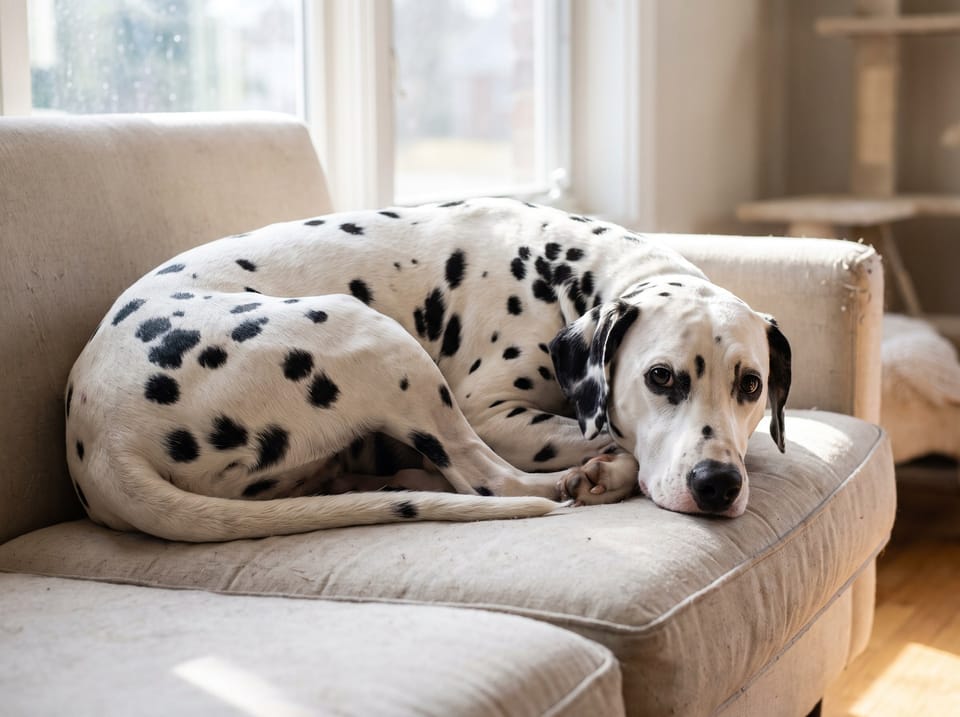
Grooming and shedding
The coat is short, sleek and easy to keep clean. It also sheds more than almost any other short coat, and this is the second hard part. Dalmatians shed all year, every day. The hairs are short, stiff and white, and they weave themselves into clothes, upholstery and car seats, where they are difficult to remove.
Brushing helps a great deal. Go over him with a rubber curry mitt or a soft bristle brush three or four times a week for five to ten minutes, outside if possible. You will lift out hair that would otherwise land on your floor.
He has little doggy odor and needs a bath only every couple of months. Trim his nails every three to four weeks, check his ears weekly and brush his teeth several times a week.
Puppies are born pure white. The spots, which are black or liver brown, begin to appear at about two weeks and go on developing for months.
Training
Dalmatians are intelligent and learn quickly. They are also independent thinkers with a stubborn streak, and they get bored with repetition. Keep sessions short and varied, about ten minutes, and use rewards he really cares about.
He remembers how he is treated. Harsh corrections make a Dalmatian sulky or defensive, and he may stop trusting the person who gave them. Fair, calm, consistent handling brings out a keen and funny training partner.
Socialize him thoroughly as a puppy. Introduce him to many kinds of people, friendly dogs, children, traffic and new places, and keep it up through adolescence. A Dalmatian who misses this can become shy or wary, and that is hard to undo.
Teach good manners early, while he is small: walking on a loose leash, keeping his feet on the floor when greeting, coming when called and settling on a mat. A puppy class is well worth it.
If your puppy has hearing in only one ear, he will be a normal pet. A dog who is deaf in both ears can be trained with hand signals, but he needs an experienced and committed owner.
We do not usually suggest a Dalmatian as a first dog. An active first-time owner who works with a good trainer can succeed.
Health watchlist
Two inherited issues stand out in this breed.
The first is deafness, which is linked to the genes that produce the white coat. Studies have found that roughly one Dalmatian in twelve is deaf in both ears and about one in five hears in only one ear. Hearing can be tested in puppies from five or six weeks of age with a BAER test. Responsible breeders test every puppy in the litter and tell you the result.
The second is in the urinary system. Dalmatians process uric acid differently from other dogs, and it can form urate stones in the bladder. Stones can block the flow of urine, most often in males, and a blockage is an emergency. Straining, dribbling or blood in the urine means a call to the vet straight away. Ask your vet about diet and water for your dog.
Hip dysplasia occurs, as do skin allergies. The Dalmatian Club of America recommends a BAER hearing test and a hip evaluation for breeding dogs. Ask to see both.
Dalmatians typically live 11 to 13 years.
Talk to your vet about urinary health from the first visit, and about anything else that concerns you.
Is this breed right for you?
A great fit if
- you run, cycle or hike most days and want a dog beside you
- you have a house with a fenced yard
- you have had dogs before, or will train with professional help
- your children are school age or older
- someone is home for a good part of the day
Think twice if
- you chose the breed mainly for its spots
- white hair on everything you own would bother you
- you want a calm dog for apartment life
- you have toddlers
- you cannot give close to two hours of exercise a day
Similar breeds
 VizslaA red-gold, endlessly energetic gundog who sticks to his people like Velcro and hates being left.
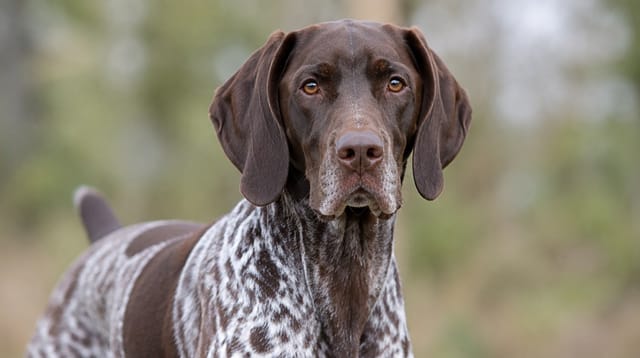 German Shorthaired PointerA tireless, affectionate bird dog for runners and hunters; too much dog for a quiet household.
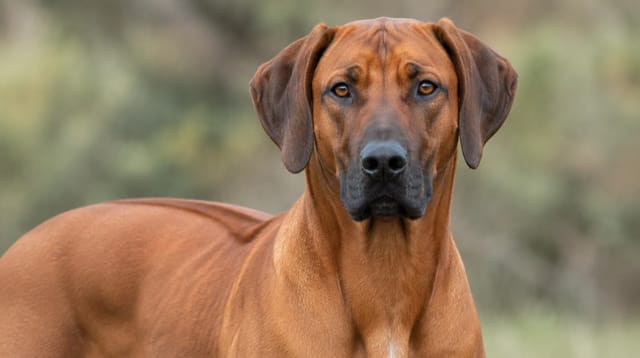 Rhodesian RidgebackA dignified, athletic hound, loyal to family and reserved with strangers, who needs an experienced owner.