You reach for the dinner scoop and realize your dog has already had a pocketful of rewards on the walk, a chew after lunch, and several bites while you cooked. Now the bowl gets a sniff and a polite walk away.
You do not need to choose between rewarding your dog and feeding a sensible dinner. The easiest starting point is to make the rewards part of the food you already planned to serve. Save the special extras for moments when they help, and make each piece small enough to disappear in a quick bite.
Set aside the rewards before breakfast
Measure your dog's usual daily food into one container before you serve any meals. Use the amount you and your vet have settled on, rather than adding a fresh scoop whenever a bowl looks empty.
Take a small handful from that container for practice. That handful is part of breakfast or dinner, so it does not get replaced later.
For a simple morning routine:
- Measure the day's food and set aside a small portion.
- Put five to ten pieces in a pocket or washable treat pouch.
- Practice something familiar for two minutes, such as coming when called across the kitchen.
- Feed meals from the remaining food.
- Return unused, clean pieces to the day's container.
You can reward a glance toward you, four paws on the floor, or a calm pause while you clip on the leash. You do not need a formal session to use those pieces well.
If your dog eats canned food, reserve a spoonful in a covered container in the refrigerator. Offer tiny portions from a spoon during a short session, letting your dog lick without biting the utensil. Follow the food's storage directions.
That is enough to get started today: measure first, reserve some food, practice briefly, and keep extra treats modest.
Make special treats small and easy to eat
The useful part of a training treat is the moment your dog receives it. A big biscuit does not necessarily make that moment better. It may just leave you waiting while your dog chews and drops crumbs.
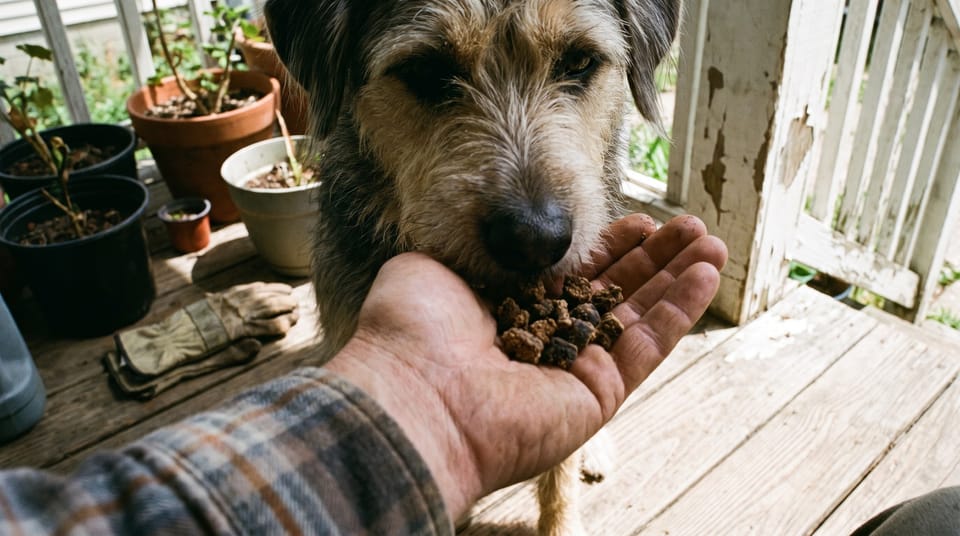
Choose soft treats you can tear into small pieces. For many dogs, a piece about the size of a pea is plenty. A small dog may need something smaller. Adjust the size and texture so your dog can take and swallow it comfortably.
Try cutting up a few treats before your walk. Count the resulting pieces instead of assuming each whole treat needs to be one reward. If a treat breaks into six usable bits, you have six chances to reward your dog.
Check the package for calories per treat. Tiny does not always mean light, especially with rich, dense treats. Cutting a treat changes the portion size, but it does not change the total amount of food in your pouch.
Keep your everyday food for easy practice. Bring a few more appealing pieces for harder moments, such as checking in with you outside. You can alternate them without making every reward an extra.
Give everyone the same daily supply
The hard part is often keeping track of what happens between meals. You might use only a few treats, while someone else hands out a chew and another person shares a snack.
Set out one labeled container for the day's extra treats. Everyone takes from it. Keep the reserved meal food separate so you can see which rewards are already included in meals.
Remember that chews and food tucked into toys count, too. A stuffed toy can hold part of breakfast instead of becoming another meal.
Extras should stay a small part of the day, with your dog's complete and balanced food supplying most of what they eat. If you cannot tell what that means for your dog's size and food, ask your vet for a daily treat allowance in calories. That gives you something useful to compare with package labels.
Avoid subtracting a handful of dinner to make room for a handful of treats. Equal volumes can contain very different amounts of energy, and treats may not provide the same nourishment.
When regular food loses its appeal
Your dog may happily work for kibble in the kitchen and ignore it beside a busy sidewalk. That does not automatically mean you need a bigger treat.
Move farther from the distraction. Ask for one easy action, reward it, and pause. Try three repetitions somewhere quiet before deciding the food is the problem.
You can also practice shortly before a normal meal, using part of that meal. Keep the session to two or three minutes. Do not withhold meals to make your dog cooperate.
If your dog gets grabby, place a piece on the floor for an exercise where that works, away from other animals. Pause and reset before offering another. Keep fingers out of the scramble.
If your dog turns away, stop pushing food. They may need more space, a quieter setting, or simply a break.
Let dinner tell you when to adjust
If dinner regularly goes unfinished after treat-heavy afternoons, reduce the extras the next day and use more of the measured meal food for rewards. Keep a simple note for three days: meals offered, treats given, and food left behind.
Do not assume every appetite change comes from treats. A sudden or persistent change, trouble chewing, vomiting, diarrhea, or unexpected weight change belongs with your vet. Get advice sooner if your dog seems unwell.
If your dog eats a prescribed diet or has food restrictions, ask your vet which rewards fit before introducing anything new. You may be able to use the prescribed food itself.
For tomorrow's practice, put five pieces from breakfast beside the leash. Reward a few easy successes, then serve the rest of the meal.