
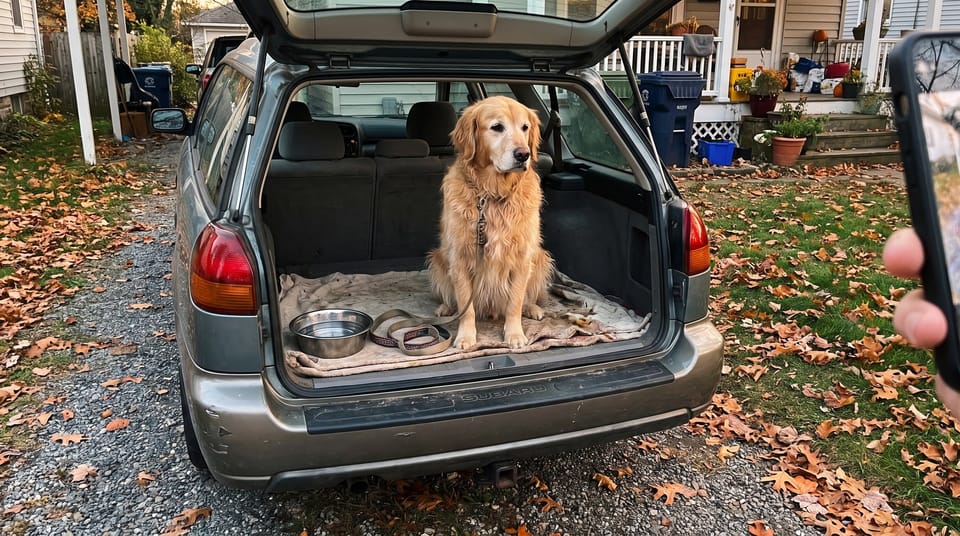
Your dog is waiting beside the car, the morning feels cool, and that trail covered in leaves looks like an easy afternoon. Then you remember the water bowl is still drying by the sink. Fall outings have a way of feeling simpler than they are, especially when sunshine at home turns into wind beside a lake.
Give yourself 15 minutes to pack and check the route before loading up. Bring drinking water, use a secure car restraint, and choose a walk with an easy turnaround. Those three decisions give you room to handle a closed trail, a tired dog, or weather that changes before lunch.
Pack for the dog you have today
1. Bring water and a bowl you can reach.
Pack your dog’s drinking water separately from your own, with extra for delays and a rinse if needed. Keep the bowl near the door instead of underneath your picnic. Offer water before walking, at a break about 20 minutes in, and sooner whenever your dog seems thirsty. That timing is a reminder, not a limit.
Don’t count on a campground faucet working in fall. If you run short, shorten the outing and head somewhere you can refill. Keep your dog away from puddles and lake water.
2. Check the route, daylight, and your dog’s energy.
Confirm that dogs are allowed and check leash rules before leaving. Look at the forecast for your destination, including wind and rain, and plan to reach the car before dark.
Start with a 10-minute stretch where turning back is easy. If your dog keeps lagging, stopping, or trying to head back, make it a shorter day. The hard part is giving up the overlook you drove an hour to see. A comfortable sniff around the picnic area still counts as an outing.
Make the drive and arrival easier
3. Secure your dog before the car moves.
Use a properly fitted car harness designed for restraint or a secured crate suited to your dog’s size. Check the attachment before every departure. A loose dog can distract you or get thrown forward during a sudden stop.
Keep the leash within reach, and attach it before opening the door at your destination. Ask passengers to wait while you handle that step. Parking lots bring unfamiliar dogs, moving cars, and plenty of reasons to jump out quickly.
4. Pack a small bag for ordinary messes.
Bring waste bags, a towel, a familiar snack, and your dog’s usual meal if you will be out at mealtime. Add a dry blanket and, if your dog normally wears one, a familiar coat for chilly breaks.
Put a spare leash in the bag, too. Check that identification is attached and readable. Keep your phone charged, and save your vet’s number plus a nearby emergency clinic’s details before entering an area with unreliable service. Take your dog with you at stops rather than planning to leave them waiting in the car.
Watch what hides under the leaves
5. Check for ticks and burrs during breaks.
Spend two minutes looking over your dog after a brushy section. Check around the ears, collar, legs, and between the toes. On longer coats, part the fur so you can see closer to the skin.
Burrs can hide where legs meet the body and make walking uncomfortable. If something is tangled tightly, close to an eye, or painful to touch, stop fussing with it and call your vet for help. If you find an attached tick and aren’t sure what to do, ask your vet.
6. Walk around deep leaf piles and mushrooms.
Keep your dog close enough that you can see what their nose finds. Deep leaves can cover litter, sharp sticks, and uneven ground. Choose shallow leaves on a visible path for sniffing breaks.
Steer around mushrooms without trying to decide which ones are harmless. If your dog eats a mushroom or you suspect they did, call a vet promptly, even if they seem fine. Take a photo if you can do so safely, and note the location and time. Don’t wait for symptoms before asking for help.
Give water and weather some space
7. Plan a dry visit to the lake.
Bring the leash out before you reach the shoreline. Your dog may see a swimming opportunity even when you see a cold, windy lunch stop. Choose a spot back from slippery banks and steep drop-offs.
If your dog gets wet, end the water play, towel them dry, and head somewhere warm and sheltered. Persistent shivering, weakness, or unusual quietness warrants a call to your vet. Trouble breathing or collapse needs emergency veterinary care.
8. Choose your break before everyone is tired.
About 30 minutes into the outing, pause somewhere sheltered and assess how your dog is doing. Offer water and let them settle on a dry surface.
If the wind picks up or rain starts soaking your gear, use your turnaround plan. Keep enough energy for the walk back.
Save five minutes for getting home
9. Check paws before your dog settles down.
Look between the toes, around the nails, and across each paw pad. Check for trapped debris, cuts, or tenderness. Contact your vet if your dog is limping, bleeding, or repeatedly licking one spot.
10. Finish with a coat check and quiet time.
In good light, check again for ticks and burrs, including under the collar. Set out fresh water and a dry resting place.
If your dog seems unusually uncomfortable or unwell after resting, call your vet and describe what happened during the trip.