
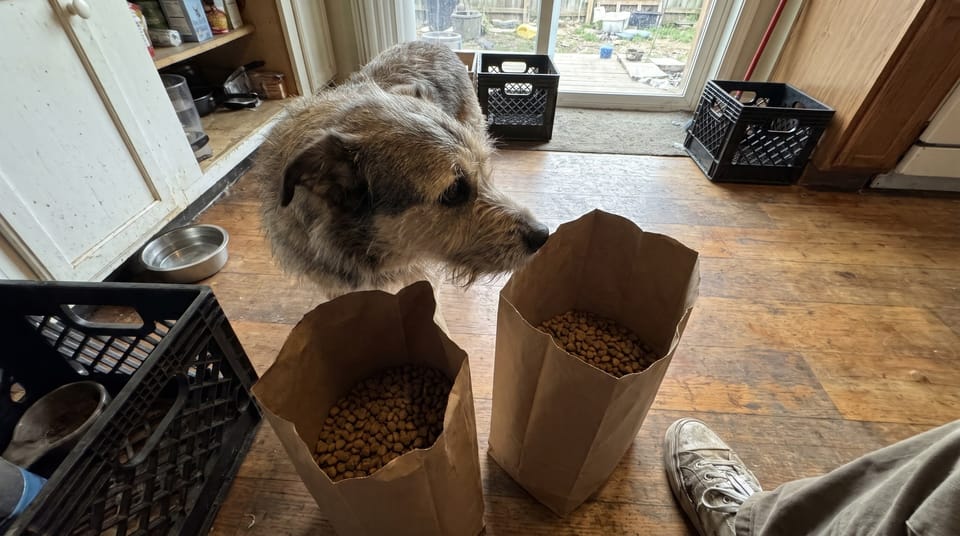
You have a new bag of dog food by the pantry and just enough of the old food left for a few meals. Your dog is ready to investigate. The tricky part is giving that eager stomach time to catch up.
A gradual switch over about a week is a common starting point for an otherwise healthy dog. You mix a little new food into the familiar food, then increase it as long as your dog is eating comfortably and passing normal stools. The calendar is a guide, not a deadline. If stools soften, you can pause instead of pushing ahead.
Start with a small scoop of the new food
Choose a fairly ordinary week, if you can. Boarding, travel, and a house full of visitors can make changes in appetite or bathroom habits harder to sort out. Keep meals at their usual times, and leave fresh water available.
Use this seven-day schedule as a starting point:
- Days 1 and 2: Feed about three parts old food to one part new food.
- Days 3 and 4: Feed equal parts old and new food.
- Days 5 and 6: Feed one part old food to three parts new food.
- Day 7: Feed only the new food if appetite, comfort, and stools are normal.
These proportions describe the mix, not extra food on top of dinner. If both foods have similar calories per cup and your dog normally eats one cup per meal, the first mix would be three-quarters cup old food and one-quarter cup new food.
Check both bags before using that example. A cup of the new food may contain substantially more or fewer calories. If the calorie counts differ, ask your vet to help translate your dog's daily amount into portions of each food.
One slightly soft stool in a dog who otherwise seems well is a reason to hold the current mix and watch closely. Repeated watery stools, vomiting, blood, or a dog who seems unwell belong in a conversation with your vet, rather than another adjustment to the scoop.
Make the portions easy to repeat
Keep enough old food for the transition, plus a little extra in case you need to slow down. Finding an empty bag halfway through is one of the hardest parts of an otherwise simple plan. Start before you reach the last few scoops.
Measure each meal rather than judging by how full the bowl looks. Different kibble shapes can make the same amount look surprisingly different. A measuring cup works for volume; if the feeding directions give weights, a kitchen scale can help you repeat portions.
Keep a short note on your phone with the day's mix, appetite, and stool changes. “Half and half, ate breakfast, soft afternoon poop” is enough. That note also gives your vet something concrete if you need advice.
Keep treats modest and familiar. Skip new chews and rich table scraps during the switch. Otherwise, when your dog has a rough night, you will have several possible food changes to untangle.
Let loose stools set a slower pace
A soft stool can happen during a food change, but it does not prove the new food is unsuitable. It also does not prove the switch caused the problem. Dogs can develop diarrhea for reasons that have nothing to do with their dinner.
Pay attention to the whole dog. Are they interested in breakfast, drinking normally, and comfortable between bathroom trips? Is the stool slightly softer than usual, or are you heading outside repeatedly for watery diarrhea?
For one mildly soft stool with no other changes, stop increasing the new food. Keep the current proportions for another day or two while watching for improvement. If stools return to normal, continue in smaller steps. Some dogs need longer than a week.
If the looseness continues or returns whenever you increase the new food, call your vet before continuing. You may need a different plan rather than a longer version of the same one.
Avoid cycling through several replacement foods or adding a collection of digestive extras. Each change makes it harder to tell what your dog tolerates. Ask your vet before adding supplements or trying home remedies.
Know when the mixing plan needs to stop
Call your vet promptly for repeated watery diarrhea, vomiting, poor appetite, unusual tiredness, or signs of belly pain. Blood in the stool or black, tarry stool also needs prompt attention. Do not wait for the seven-day schedule to finish.
Seek urgent veterinary care if your dog collapses, seems severely weak, has a swollen belly with repeated unsuccessful attempts to vomit, or cannot keep water down.
Even mild diarrhea warrants a call if it lasts more than a day. Call sooner for a puppy, a frail older dog, or a dog with an existing medical condition. Their needs may differ from those of a healthy adult dog.
Leave room for a different plan
If your vet prescribed the new food, follow their transition instructions. Ask how to handle any loose stools, especially if the food is part of treatment for an existing problem.
If you have already run out of the old food, you have not ruined anything. Avoid compensating with a larger meal or several unfamiliar foods. Ask your vet how best to proceed, particularly if your dog has a sensitive stomach.
Once your dog is fully on the new food, keep measuring meals and watching appetite and stools over the next several days. Save the bag's feeding information and calorie count so you have them handy if portions need adjusting.