
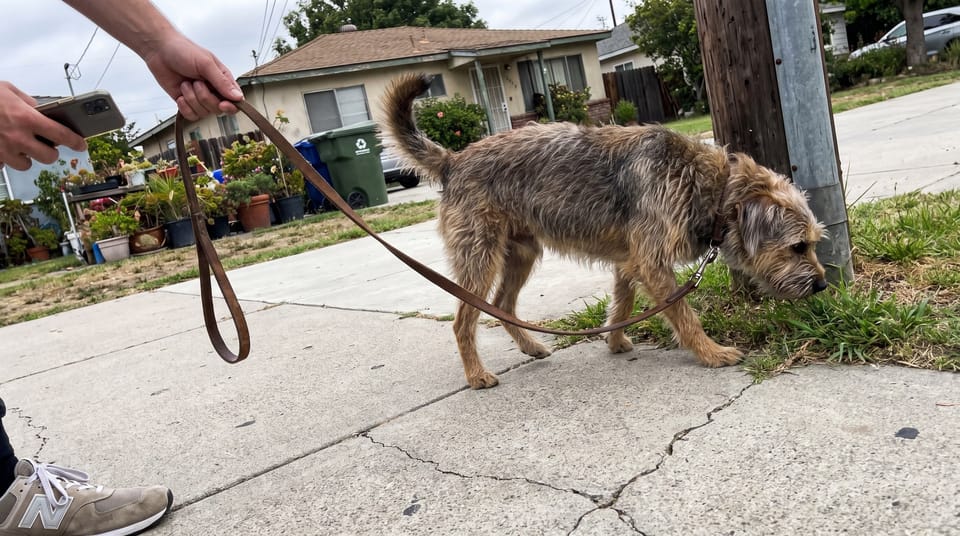
You head outside for a pleasant walk, and your dog heads straight for the next mailbox with you attached. Before you reach the corner, your shoulder is working harder than your legs.
Loose-leash walking starts with a small lesson: a relaxed leash is your dog’s cue that you can keep moving together. You can teach that in two or three minutes at a time. You do not need to turn every outing into a lesson or ask your dog to ignore every interesting smell.
Start with three easy steps
Begin inside your home or on a quiet stretch of driveway. Use a regular six-foot leash attached to a comfortable, well-fitted harness. Have about 10 pea-sized treats ready in a pocket you can reach easily. You can use pieces of your dog’s regular food if your dog enjoys them enough to participate.
Choose whichever side feels comfortable, then:
- Stand still with enough leash for a loose curve between you and your dog.
- When your dog is near your chosen side and the leash is slack, say “yes” and give a treat beside your leg.
- Take one step. If the leash stays loose, say “yes” and reward again.
- Try two steps, then three, rewarding before your dog reaches the end of the leash.
Deliver the treat where you want your dog to return, close to your side. Avoid reaching forward to feed a dog who is already charging ahead.
After two minutes, say “all done” and take a break. A few comfortable steps are enough for your first session.
If the leash tightens, stop gently instead of pulling back. Invite your dog toward you with a cheerful sound. When your dog turns and the leash loosens, take one easy step together and reward beside your leg. If your dog cannot turn back, move farther from the distraction and make the next attempt easier.
That is your starting routine: a few steps, a reward, and a calm reset when needed.
Make the reward easy to earn
Outside, your dog is competing with smells, movement, and sounds for attention. Begin somewhere pleasantly boring, such as the same short stretch of sidewalk near your home at a quiet time.
Reward every step or two at first. That may feel generous, but you are showing your dog exactly what works. Keep treats small so you can reward often without handing out a whole snack each time.
Keep your reward hand empty between treats when possible. Mark the loose leash with “yes,” then reach for the food. Otherwise, you may end up with a dog who follows your hand only while a treat is visible.
Once several short stretches feel easy, try three or four steps between rewards. Mix in easier repetitions, too. You might reward after two steps, then four, then one.
If pulling increases, shorten the distance between rewards. You have useful information: that stretch was harder than your dog could comfortably manage today.
Your dog does not have to stare at you or stay perfectly level with your knee. Looking around and walking a little ahead can fit the goal, provided the leash stays slack.
Use sniffing as part of the walk
Sometimes the best reward is permission to investigate a patch of grass. When your dog notices an interesting spot, stop far enough away that you still have a little slack.
Wait for a brief glance toward you or invite your dog closer. Then say “go sniff” and walk together toward the spot. Keep your pace comfortable rather than rushing to prevent tension.
Give your dog time to explore. For an ordinary neighborhood walk, you might alternate two minutes of practice with several minutes of sniffing. You can also practice for just one minute after your dog has had a bathroom break.
When it is time to leave, say “let’s go” once, turn slightly, and reward your dog for joining you. If your dog stays absorbed, pause and try a cheerful invitation from closer by. Repeating the cue louder usually adds noise without making the task clearer.
Reset before frustration takes over
Pulling often means the situation has become too exciting or difficult. Watch for the moment before it happens: your dog speeds up, leans forward, or fixes attention on something ahead.
Use that moment to change direction gently, offer a reward near your leg, or cross to a quieter area when it is safe.
If your dog is already pulling hard toward another dog, create distance. Do not insist on a tidy walking lesson right beside the distraction. Turn away together and reward any attention your dog can offer once you have more space.
Avoid jerking the leash, dragging your dog into position, or waiting through a long struggle. If stopping repeatedly leaves you both frustrated, head somewhere easier or end the practice.
Keep the habit small enough to repeat
Try two or three short sessions spread through your day. One can happen in the hallway, another near your door, and another during your walk.
Keep necessary bathroom trips simple. Choose the easiest available route and reward loose moments without expecting a full lesson.
Notice small improvements: your dog returns sooner, manages a few more relaxed steps, or checks in before reaching the end of the leash. Those changes count even when the whole walk is still uneven.
End a session after an easy success while you both have patience left. Tomorrow, start with those same few steps and give your dog another chance to get them right.