
At a glance
- Group
- Working
- Size
- Large
- Weight
- 88–110 lb
- Height
- 23.5–27.5 in
- Lifespan
- 9–12 years
Temperament
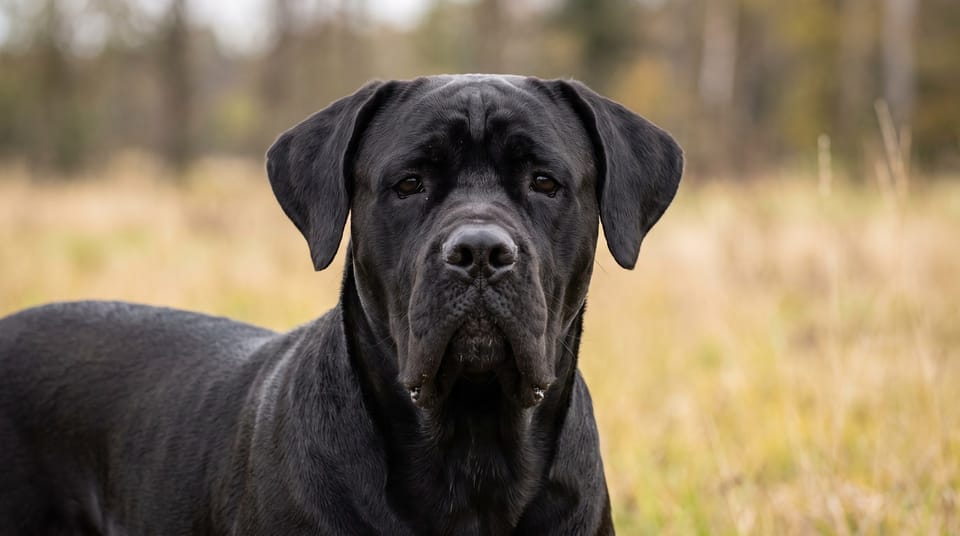
The name is pronounced "KAH-neh KOR-so," and it comes from a Latin root meaning something close to "guardian dog." That tells you what you are getting. The Cane Corso is an Italian farm guardian, descended from Roman war dogs, who spent centuries protecting property and livestock and holding wild boar. He is a serious dog.
With his own family, a well-bred Corso is calm, affectionate and surprisingly sensitive. He stays close, often leaning on you or lying where he can see every door, and he is tuned in to your mood to a degree that surprises new owners. Many are quiet in the house, communicating in snorts, grumbles and sighs more than barks.
With everyone else he is aloof and watchful. He does not need visitors to pet him and may not want them to. His instinct to guard is strong and switches on by itself as he matures, usually between one and two years old. Your job is not to build that instinct. It is to manage it.
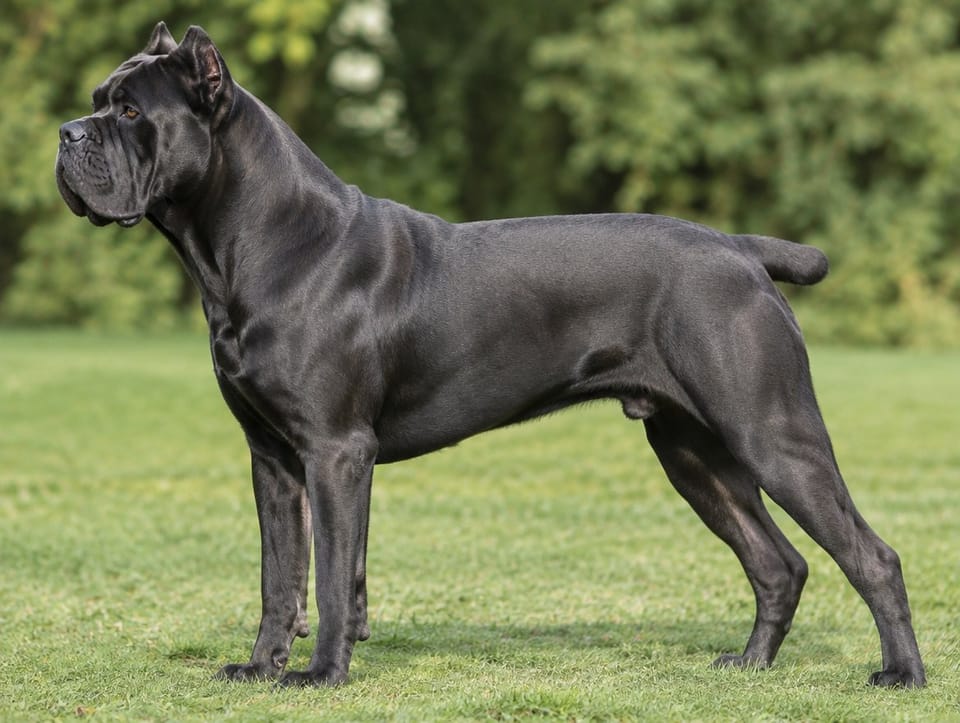
Here are the hard parts, plainly. A Corso stands up to 27.5 inches at the shoulder and commonly weighs around 100 pounds, nearly all of it muscle. He is confident and will take charge of a household that does not give him clear rules. Poorly raised or poorly bred, he can be dangerous. Many landlords, insurers and some local laws restrict the breed.
He can be devoted to children in his own family, but he is too large and too protective for a home with toddlers or a steady stream of visiting kids.
Exercise and activity
A Corso is more athletic than the other mastiff breeds and needs to use it. Plan on an hour to an hour and a half a day for an adult, split between morning and evening: brisk walks of a mile or two, hiking, or jogging once he is fully grown.
Exercise alone is not enough. He was bred to work alongside a person and needs a job to keep his mind settled. Obedience drills, tracking, scent work, carrying a pack and structured tug games all serve. A bored Corso digs, chews and may start making his own decisions about who belongs near your fence.
A securely fenced yard is close to essential. Make it solid and tall; six feet is a sensible minimum. He should not be left out there all day, though. A Corso left alone to patrol a boundary practices exactly the behavior you least want.
Protect his joints while he grows. Keep puppy exercise short and gentle for the first 18 months, with no forced running or repeated jumping. Because large, deep-chested dogs are at risk of bloat, ask your vet how to time meals around exercise.
Grooming and shedding
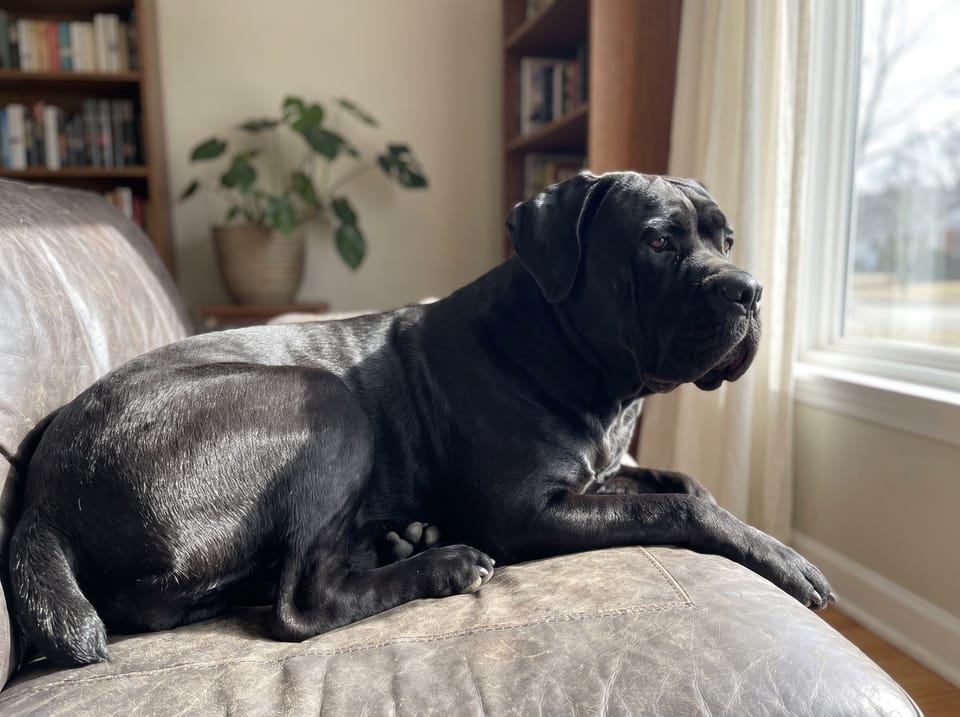
The coat is short, stiff and dense, with a light undercoat that thickens in winter. Brush once a week with a rubber mitt or medium-bristle brush, and daily for a couple of weeks in spring when the undercoat sheds. He sheds more than the short coat leads people to expect, though less than a double-coated shepherd.
Bathe every two months or so. Trim nails every three to four weeks, check ears weekly and brush teeth several times a week.
There is some drool, mostly after drinking, in hot weather and when food appears. Keep a towel near the water bowl.
Begin handling his paws, mouth and ears in his first week home. A Corso who has learned to stand quietly for nail trims as a 20-pound puppy is a very different proposition from one who has not.
Training
Cane Corsos are intelligent and want to work with their person, and in experienced hands they train very well. The difficulty is not intelligence. It is that he is strong-willed, matures slowly and will be physically stronger than you by his first birthday.
Socialization is the most important thing you will do, and the window is short. Before he is four months old, and continuing through his second year, introduce him calmly to a wide range of people, places, sounds and steady dogs. The aim is not a dog who loves strangers. It is a dog who is neutral and relaxed around them. Invite visitors to your home often, so he learns that guests are normal.
Enroll in a puppy class, then work with a trainer who knows guardian breeds. Use rewards, firm and fair rules, and total consistency across the household. Decide the rules before the puppy arrives. Something that seems cute at 20 pounds, such as jumping up or guarding a toy, is a real problem at 100.
Do not use harsh or confrontational methods. They damage the trust this breed runs on. And do not do protection or "guard" training with a family dog.
Many Corsos do not tolerate other dogs of the same sex, and dog parks are generally a poor choice.
We do not recommend this breed for a first-time owner.
Health watchlist
Cane Corsos typically live 9 to 12 years.
Hip dysplasia is the best-known problem, and elbow dysplasia also occurs. Keep your dog lean, particularly during growth, to ease the load on his joints.
Bloat, in which the stomach fills with gas and can twist, is a life-threatening emergency in large, deep-chested breeds. Learn the signs from your vet ahead of time.
Idiopathic epilepsy is seen in the breed, as is demodectic mange, a skin condition. Eyelid problems are common: lids that roll in or droop out, and cherry eye. Some heart conditions also occur.
The Cane Corso Association of America's recommended screening for breeding dogs covers hips, elbows, kneecaps and heart, plus DNA tests for two inherited diseases known in the breed. Ask to see results for both parents.
Temperament is inherited too. Meet the parents, or at least the mother. They should be calm and confident with you there, neither fearful nor aggressive. Walk away from breeders who advertise extreme size or aggression.
Talk to your vet about growth rate, joint care and a health plan for a large-breed dog.
Is this breed right for you?
A great fit if
- you have raised and trained large guardian breeds before
- you want a loyal, protective dog who is closely bonded to the household
- you own your home and have a securely fenced yard
- you will invest in socialization and training for at least two years
- your household is calm and predictable
Think twice if
- this is your first dog
- you have small children or many visitors
- you rent, or your insurer restricts certain breeds
- you want a sociable dog for parks and cafes
- you could not physically control a 100-pound dog
Similar breeds
 RottweilerA powerful, devoted guardian who is calm and loving at home but needs an experienced, steady owner.
 MastiffA calm, devoted, drooling giant who guards by instinct, costs a lot to keep and has a short life.
 Doberman PinscherA sleek, devoted, highly trainable guardian that needs daily hard exercise and an experienced owner.