At a glance
- Group
- Working
- Size
- Large
- Weight
- 70–115 lb
- Height
- 23–27.5 in
- Lifespan
- 7–10 years
Temperament
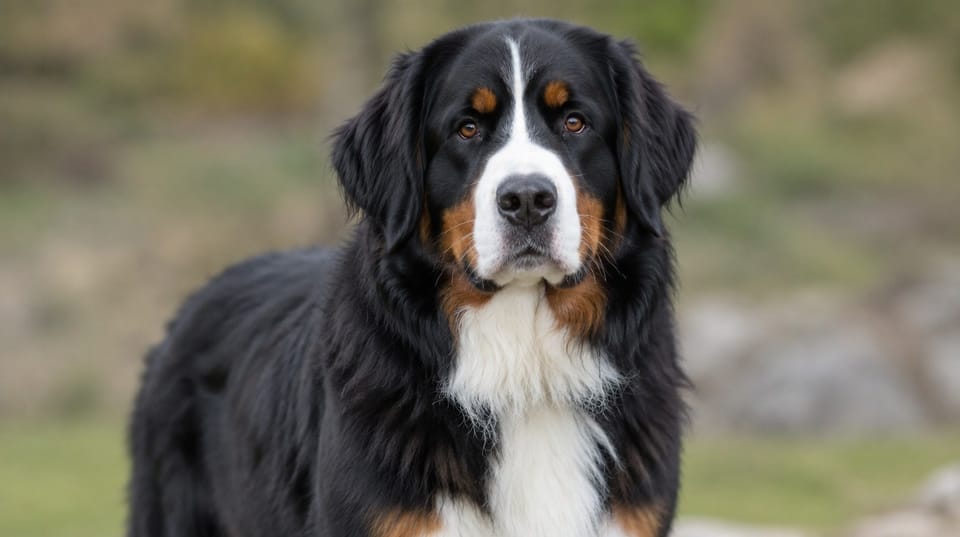
A Bernese Mountain Dog would like to be touching you. He will sit on your feet, lean his full weight against your legs and, if you allow it, climb halfway onto the couch and call that a lap. He is a farm dog from the Swiss canton of Bern, bred to pull carts and move cattle, and he brings a farm dog's calm, good-natured steadiness into the house.
Berners are gentle and affectionate with their families and famously good with children. They are placid indoors once grown up. Many are a little reserved with strangers at first, then warm up. A Berner is alert enough to bark when someone arrives, but he is not a guard dog and not a noisy one.
He matures slowly. Expect a big, clumsy, sometimes mouthy adolescent until he is two or three years old. A happy 90-pound teenager can knock a small child over with his tail alone, so supervise.
Berners are deeply attached to their people. They are not dogs to leave in a yard or alone all day. One who is shut out or left for long hours becomes miserable, and a miserable giant-sized dog chews, digs and barks. Most get along well with other dogs and with the family cat.
Exercise and activity
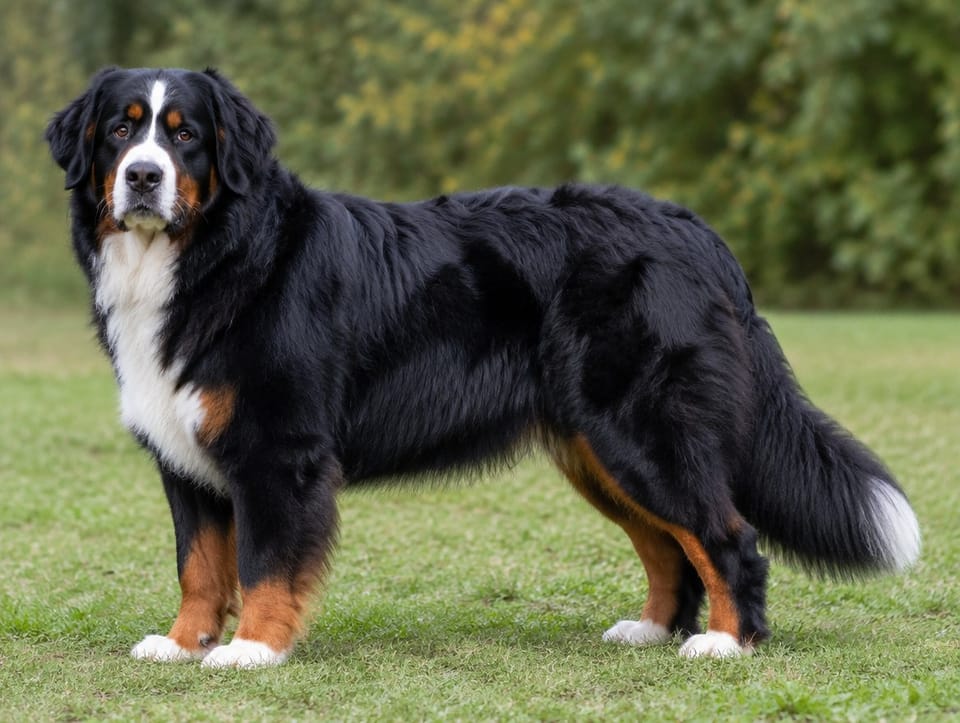
A Berner needs moderate exercise: around 45 minutes to an hour a day for an adult, as a couple of steady walks. He is a strong dog with good stamina at a walking pace. He is not a sprinter or a jogging partner.
What he loves is having a job and being outdoors with you. Hiking in cool weather, pulling a cart or wagon, which is called drafting and has its own events, and carrying a pack all suit him. Many Berners do well in obedience, rally and tracking.
Heat is the first hard part. That thick black coat was made for Alpine winters, and Berners suffer in warm weather. Above about 75 degrees, keep exercise short and confined to early morning or late evening, and give him shade, water and a cool floor to lie on. If you live somewhere hot, air conditioning is a necessity for this breed. In snow, on the other hand, he is in his element and may refuse to come inside.
Protect his joints while he grows. Keep puppy walks short, avoid stairs and jumping where you can, and do not let him get heavy. Ask your vet how to build up exercise. Because large, deep-chested dogs are at risk of bloat, ask about meal timing around activity too.
Grooming and shedding
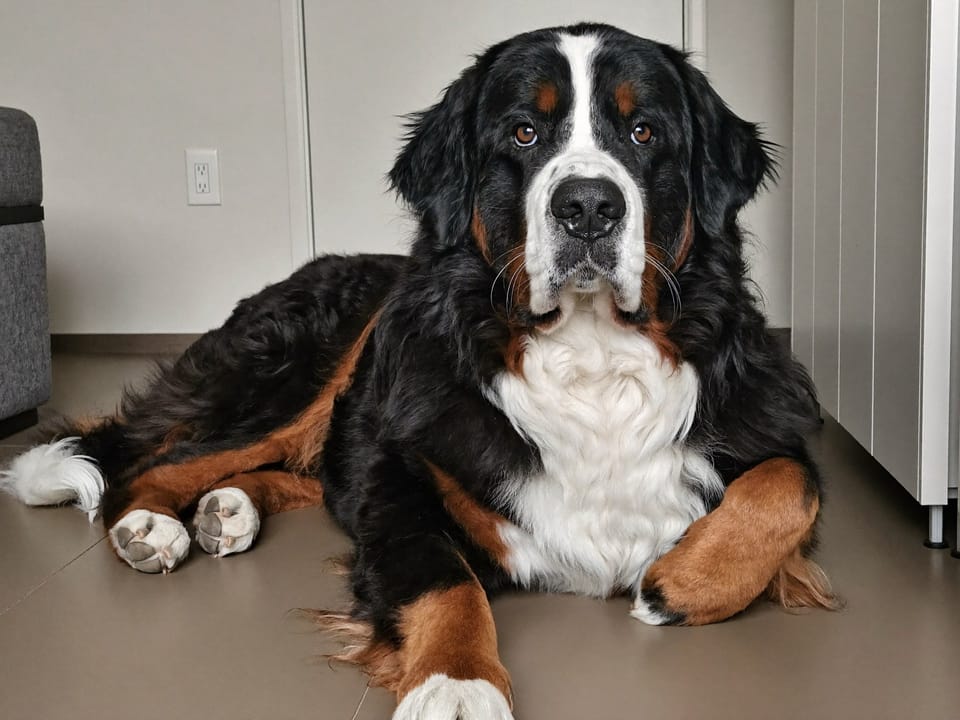
Berners shed heavily all year, and twice a year the undercoat comes out in drifts. If hair on your clothes, floors and food bothers you, this is the wrong dog.
The coat is long, thick and silky, with a woolly undercoat. Brush two or three times a week for 15 to 20 minutes, and every day during the spring and fall sheds. Use an undercoat rake and a comb, and check behind the ears and in the feathering on the legs for tangles.
A bath every two to three months is enough for most. Drying a wet Berner takes time, and a high-velocity dryer is a worthwhile purchase. Do not shave him. The coat insulates him and protects his skin.
Expect a house that is rarely spotless. Berners bring in mud, leaves and snow on their coats and feet, and some drool after drinking.
Trim nails every three to four weeks, clean ears weekly and brush teeth several times a week. Start all of it in puppyhood. You cannot wrestle a full-grown Berner into a nail trim.
Training
Berners want to please and are easy to motivate with praise and food. They are intelligent and willing, if not fast. Give him a moment to think and he will usually get there.
They are also soft-natured. A raised voice or rough handling upsets a Berner deeply and can make him shut down. Calm, kind, reward-based training is the only approach worth using.
Because of his eventual size, manners have to be in place early. Loose-leash walking is the priority. A full-grown male can weigh 115 pounds, and he was bred to pull. Also teach him not to jump up, to wait at doors and to settle on a mat.
Socialize him thoroughly. Some Berners are naturally shy, and a puppy who does not meet enough people, dogs and places can grow into a fearful adult. Take him to puppy class, bring him along on errands, and keep the experiences gentle and positive through his long adolescence.
With good guidance, a Berner can suit a first-time owner better than most giant breeds. Just be honest with yourself about handling his size.
Health watchlist
This is the second hard part, and the most painful one. Bernese Mountain Dogs have short lives. Seven to 10 years is typical, and many are lost younger.
Cancer is the main reason. The breed has a high rate of several cancers, including an aggressive type called histiocytic sarcoma. There is no simple screening test that rules it out, so ask a breeder how long dogs in their lines have lived and what they died of.
Hip and elbow dysplasia are common and can cause lameness and arthritis. Bloat, in which the stomach fills with gas and may twist, is an emergency. Learn the warning signs from your vet. Degenerative myelopathy, a spinal cord disease of older dogs, occurs in the breed, as do heart and eye conditions.
The Bernese Mountain Dog Club of America recommends that breeding dogs have hip and elbow evaluations, a cardiac exam, an eye exam by a veterinary ophthalmologist, and DNA tests for degenerative myelopathy. Many breeders record results in Berner-Garde, a public health database for the breed. Ask to see the parents' records.
Vet care for a dog this size costs more across the board. Many owners insure their puppy early.
Talk to your vet about growth, joint care and what to watch for as your dog ages.
Is this breed right for you?
A great fit if
- you want a calm, affectionate, gentle giant who loves the whole family
- you live somewhere with cool summers or real winters
- you have a house with room for a very large dog
- someone is home most of the day
- you enjoy steady walks and hikes more than running
Think twice if
- you live in a hot climate
- you cannot stand dog hair or a muddy floor
- you live in a small apartment or up several flights of stairs
- losing a dog at seven or eight would be too hard on your family
- you are away for a full working day
- high vet and food bills would be a strain
Similar breeds
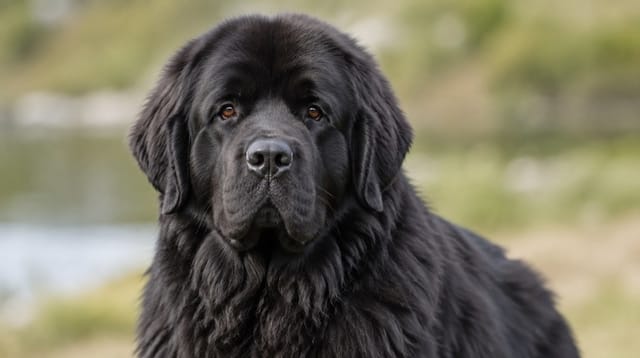 NewfoundlandA huge, sweet-natured, patient family dog who drools, sheds heavily, hates heat and lives only 9-10 years.
 Golden RetrieverA friendly, eager-to-please family dog that needs daily exercise and regular brushing.
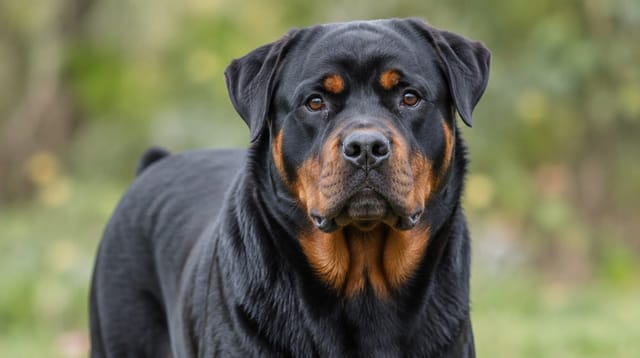 RottweilerA powerful, devoted guardian who is calm and loving at home but needs an experienced, steady owner.